Does Gambling Harm Look Like a 3D-Printed Whirlpool? We Asked Experts What They Think
New South Wales Office of Responsible Gambling
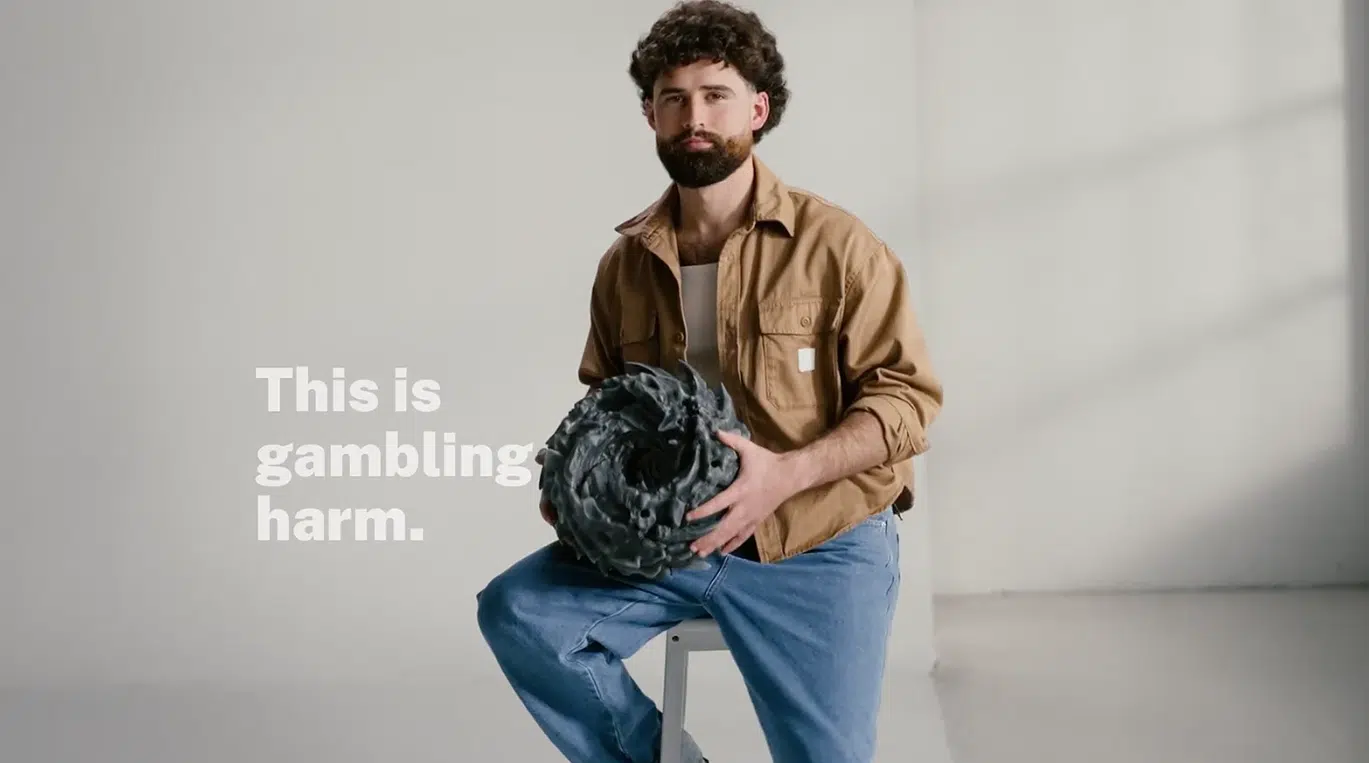
“It’s hard to start a conversation about gambling harm when we can’t see it,” a new campaign run in Australia begins. Campaigners created an image of a 3D-printed whirlpool. Gaming America spoke with harm-reduction advocates to get their views on the visualization.
Creative agency Think HQ came up with the image for the New South Wales (NSW) Office of Responsible Gambling’s campaign for GambleAware Week.

“I’m extremely proud of the outcome, and the positive change that this campaign will surely make to people and their loved ones experiencing gambling harm,” said Wellison D’Assuncao, Creative Director at Think HQ.
Alison Parkinson, Director of the NSW Office of Responsible Gambling, said the campaign is aimed at “encouraging open conversations and reminding people that they don’t have to face gambling harm alone.”
Whirlpool Analogy Is ‘Incredibly Accurate’
“Having lived through gambling addiction myself for nearly 30 years, I can tell you that the whirlpool analogy is incredibly accurate,” said Matt Bowyer.
Bowyer became famous for accepting bets from Ippei Mizuhara, Shohei Ohtani’s interpreter. While admitting to running an illegal gambling business, Bowyer said he was also addicted to gambling.
“Once you start heading down that dark, destructive path, it can feel like you’re being pulled deeper and deeper, often without even realizing how much damage you’re doing to yourself and the people who love you,” he told Gaming America.
Since his release from prison, Bowyer has been focused on helping others overcome gambling problems and turning adversity into accountability and growth.
“The whirlpool description really resonates with me, though I imagine it isn’t everyone’s experience,” said Jaime Costello, the former Director of Programs at the National Council on Problem Gambling (NCPG).
Costello left the NCPG last month, citing the workplace culture. She told Gaming America that the division between responsible gambling groups is harming efforts to address problem gambling.
But she believes NSW’s campaign is powerful, particularly as it includes individuals telling their own lived experiences.
“The pairing of the visual with the real faces is what makes it hit home for me,” she added. “It may well be the first time anyone has tried to show what gambling harm looks like. Kudos to GambleAware in NSW.”
Researcher Philip Newall agreed that the presence of those with lived experience could be powerful.
“It is consistent with my research, which showed that first-person descriptions of harm can be an effective way of reducing gambling urges among people watching the video,” he told Gaming America.
No Substance To Gimmick, Says Gambling Addicted Soccer Player
However, not everyone agrees that the image is a powerful one. Former professional soccer player Tony Kelly says his career was ruined by a gambling addiction that “consumed” him.
“I don’t think it is a powerful image, and personally I don’t think it has any real substance to it. I get the whirlpool gimmick, but we need to see real-life imagery,” he told Gaming America.
Better images, Kelly says, would be parents standing over their sons’ graveside or a partner picking their husband up from prison.
“These would be more impactful and meaningful; we are talking about lived experience here, so let’s show what lived experience people have been through,” he added.
Piece Of Art, Not A Behavioral Tool
“It’s a beautiful piece of art. I’m not sure it’s a behavioural tool,” said Dr. Mary Donohue, founder of the Digital Wellness Centre.
The Digital Wellness Centre is an organization that aims to reduce problem gambling by offering gamblers moments to step back from their destructive behavior. Dr. Donohue calls these minibreaks, which can improve decision-making.
She said the whirlpool piece could be viewed merely as a symbolic sculpture.
“When people want to hang it on the wall, that’s a sign the campaign is being admired, not acted on. The better it looks, the more it risks being appreciated instead of used,” she said.
“A whirlpool captures the pull, the way a person gets drawn in and finds it hard to climb out. But harm often looks quieter than that. It’s the missed dinner, the hidden phone, and the ‘just one more’ at 2 a.m. Most people don’t feel a dramatic current. They feel a slow drift, which is part of why it goes unnoticed for so long,” she added.
She went on to say that any campaigns should be judged not by how they look, but by the actions people take after seeing them.
“If I were judging any harm-awareness campaign, mine included, I’d ask one question: what did the person do in the five minutes after they saw it? Out of everyone who watched, how many called a helpline, took a break, or changed what they were doing, and who is counting? That’s the shift I’d like to see across the industry. The next generation of campaigns will be judged by what people do, not by what they watch,” she said.
The full campaign images and videos can be viewed here.
Players trust our reporting due to our commitment to unbiased and professional evaluations of the iGaming sector. We track hundreds of platforms and industry updates daily to ensure our news feed and leaderboards reflect the most recent market shifts. With nearly two decades of experience within iGaming, our team provides a wealth of expert knowledge. This long-standing expertise enables us to deliver thorough, reliable news and guidance to our readers.
Latest News