The NCAA Is Suing DraftKings Over March Madness. Now They’re Fighting Over How Fast to Settle It.
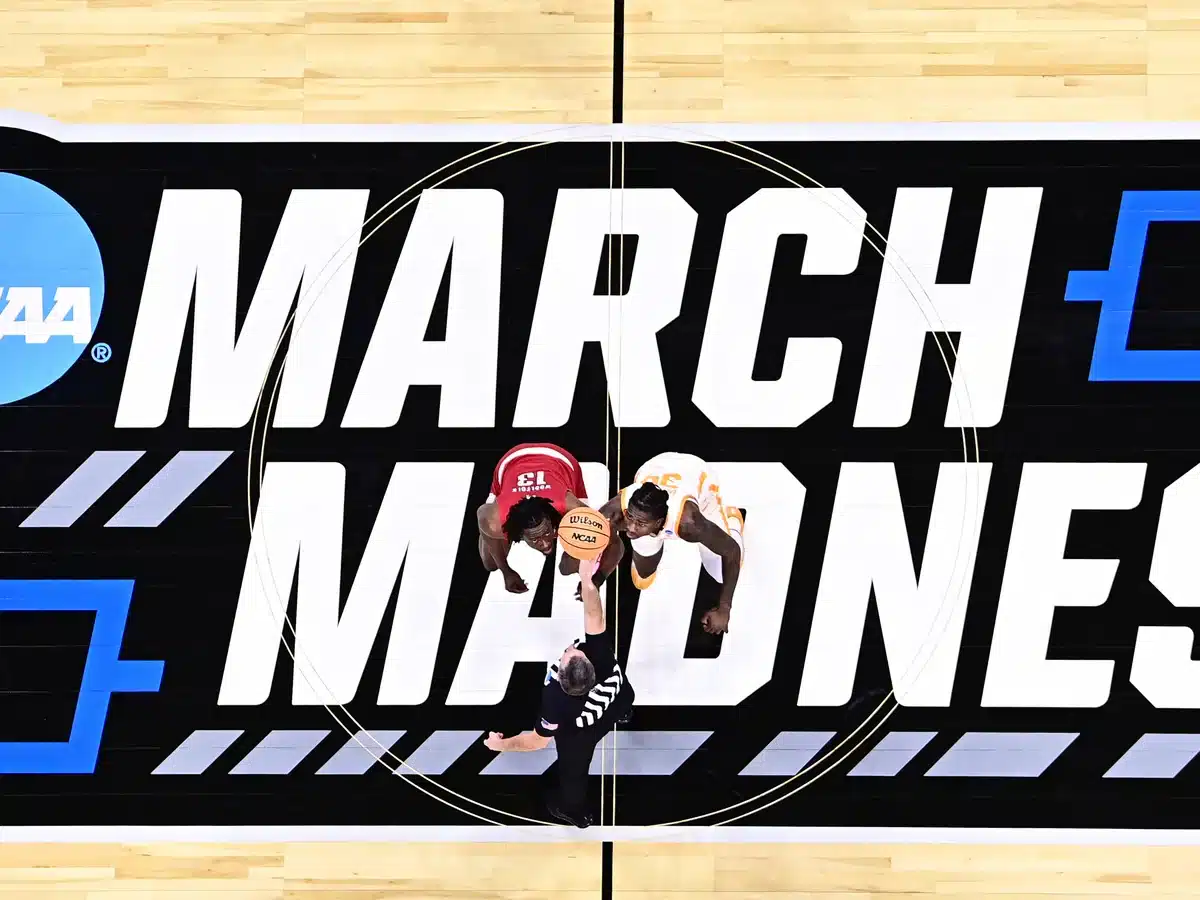
The NCAA and DraftKings are now fighting over how quickly to bring their March Madness trademark lawsuit to trial, with the NCAA pushing for a February 2027 date.
The tournament ended a month ago. The legal fight it spawned is just getting started.
On March 20, the NCAA filed suit against DraftKings in the U.S. District Court for the Southern District of Indiana, accusing the Boston-based sportsbook of trademark infringement for using March Madness, Final Four, Elite Eight, and Sweet Sixteen on its betting app without authorization. The NCAA said DraftKings had been embedding its marks and logos directly into betting menus and promotional materials, arguing that the company was trying to exacerbate consumer confusion and reinforce a false association with NCAA sponsorship to capitalize on the goodwill of its tournament brands.
DraftKings’ response was immediate and legally direct: “DraftKings does not use the term March Madness as a trademark, but rather uses it in plain text and as a fair use in the same manner that other tournaments are displayed, such as the NIT, in order to accurately identify the different tournaments and their respective games. This is protected speech under the First Amendment and is not a violation of any brand’s trademark.”
The judge denied the NCAA’s request for a preliminary injunction but noted the organization may still prove its case at trial. The pretrial conference is currently set for June 1. That scheduling detail is now the source of a separate argument.
The NCAA Wants to Move Fast. DraftKings Does Not.
On April 15, NCAA lawyers filed a motion requesting an accelerated schedule to go to trial by February 2027. The reasoning was straightforward and commercially motivated: without a faster timeline, DraftKings would simply run the same playbook next March.
“DraftKings’ challenged conduct is closely tied to the annual rhythm of the marquee collegiate sporting events, during which consumer engagement is at its peak, and the value of the NCAA Basketball Marks is at its highest,” the motion stated. “Absent an accelerated timeline, DraftKings is likely to continue to exploit that cycle, causing ongoing harm to the NCAA and depriving it of a meaningful opportunity to vindicate its rights before another high-visibility tournament season commences.”
The logic has merit. If the case drags into 2028, DraftKings will have used the disputed marks through two more full tournament cycles while the lawsuit winds through the courts. The commercial value of the NCAA’s tournament brands is almost entirely seasonal, which means the damage, if damage is what it is, compounds annually in a way that a damages award years later may not fully address.
DraftKings responded by calling the proposed schedule “unrealistic,” and its objections were more than procedural posturing. The company’s lawyers argued that even a favorable verdict in February 2027 would not provide the resolution the NCAA is seeking, because, according to the NCAA’s own estimate, a 10-day trial would be followed by lengthy proceedings to determine a final remedy. Getting to a verdict quickly is not the same thing as getting to a resolution quickly.
More substantively, DraftKings argued that the discovery period would require more time than the November 13 deadline proposed by the NCAA. And the specific discovery the company flagged is worth attention: “Discovery will also necessarily encompass the longstanding commercial relationships between the NCAA, its member schools, and athletic conferences, and the gaming industry, including Genius Sports as well as partnerships directly with sportsbooks.”
That line is not accidental. DraftKings is pointing to something the NCAA would prefer not to have examined too closely in a trademark-tarnishment case built on the argument that the organization has “purposefully avoided any appearance of affiliation with gambling companies.”
The Tarnishment Theory and Its Complications
The NCAA’s trademark claims rest on two distinct legal theories. The first is standard infringement: DraftKings used protected marks without permission in a way likely to confuse consumers about the source or sponsorship of its products. The second is tarnishment: associating the marks with gambling services damages their reputation.
The tarnishment theory is where the case gets complicated. Tarnishment requires showing that the association with the defendant’s product harms the mark’s reputation in the eyes of the relevant consumer. The NCAA’s position is that its marks carry a specific meaning, collegiate athletic excellence and integrity, and that appearing on a sportsbook app undermines that meaning.
DraftKings’ counterargument will almost certainly point out that the association between March Madness and sports betting is not something DraftKings created. The 2026 NCAA Tournament was projected to generate approximately $4 billion in legal wagers, making it one of the largest betting events of the year. If the phrase March Madness has been culturally associated with sports wagering for years, displayed on every major sportsbook’s app during the tournament without objection, it becomes difficult to argue that DraftKings’ specific use is the source of any tarnishment. The NCAA filed a lawsuit against DraftKings. It was not the only sportsbook using those terms.
The relationship between the NCAA and the gaming industry is also more entangled than the lawsuit’s framing suggests. The organization has data licensing deals that benefit from the same betting ecosystem it is now arguing corrupts its marks. The discovery DraftKings wants to conduct into those relationships is not a stalling tactic. It is the foundation of a defense.
What Happens Next
The NCAA filed a reply to DraftKings’ opposition on Monday, arguing the defendant is simply trying to delay and reiterating its request for an accelerated schedule. The June 1 pretrial conference is now the immediate focal point, where the court will set the actual timeline.
Whatever schedule the judge imposes will considerably shape the dynamics. If the trial proceeds in February 2027, as the NCAA wants, the legal uncertainty will hang over the 2027 tournament and force DraftKings to make real decisions about how to display its basketball markets with the threat of contempt proceedings if it uses the disputed marks and loses. If the timeline extends to 2028 or beyond, the commercial calculus favors the sportsbook, which can continue operating as it has while the case slowly develops.
The underlying legal question, where the line sits between nominative fair use of a trademark to accurately describe a product and infringing use that suggests sponsorship or affiliation, is genuinely unsettled in the context of sports betting apps. The outcome will matter beyond this case. Every major sportsbook displays the names of leagues and tournaments prominently. The NCAA is not the only rights holder watching.
Players trust our reporting due to our commitment to unbiased and professional evaluations of the iGaming sector. We track hundreds of platforms and industry updates daily to ensure our news feed and leaderboards reflect the most recent market shifts. With nearly two decades of experience within iGaming, our team provides a wealth of expert knowledge. This long-standing expertise enables us to deliver thorough, reliable news and guidance to our readers.
Latest News