How Six Years of Trying to Build a Lake of the Ozarks Casino Ended in a Lawsuit Over Fake Wire Transfers
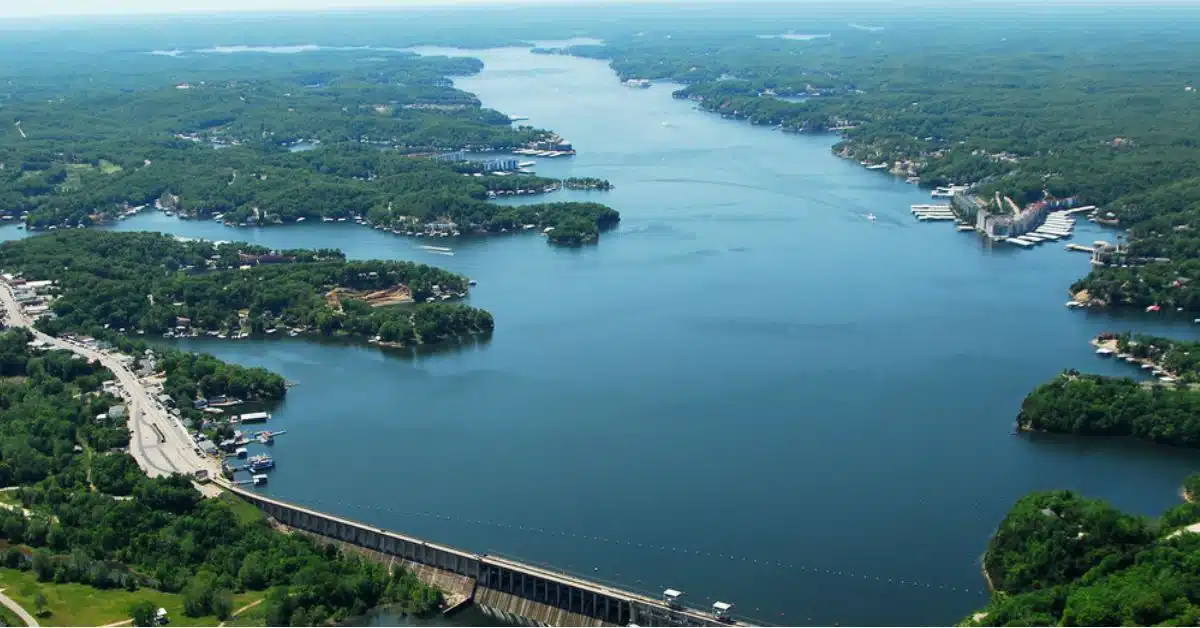
The Lake of the Ozarks has been a Missouri tourist destination since the 1930s, drawing millions of visitors annually to its 1,150 miles of shoreline.
For the last six years, a group of private investors has been trying to add a casino to that landscape. Missouri’s constitution limits casino gaming to the waters of the Missouri and Mississippi rivers. Changing that requires a statewide vote, and getting a question to voters requires gathering more than 200,000 signatures from across Missouri’s congressional districts. The investors have tried twice and failed both times. Now they are facing a $1.6 million federal lawsuit from the signature-gathering company that says it was hired, worked in good faith, and never got paid, after being shown wire transfer screenshots the lawsuit alleges were fabricated.
The Lake of the Ozarks casino campaign is seemingly over, at least for now. What it leaves behind is a cautionary illustration of how expensive and fragile ballot initiative campaigns can become when funding runs dry at the worst possible moment.
The Timeline: Six Years, Four Attempts, and Two Campaigns
2020: The group originally known as Osage River Gaming and Conventions begins lobbying the Missouri General Assembly to pass legislation placing a constitutional amendment on the ballot that would allow casino gaming on the Osage River. Four consecutive legislative attempts fail to advance.
2023: Having exhausted the legislative route, the group pivots to an initiative petition campaign, collecting signatures directly from Missouri voters to place the question on the November 2024 ballot. Bally’s Corporation is announced as the development partner. A site on Highway 54 near the Osage River is identified. Revenue projections and job creation figures are released publicly.
Summer 2024: More than 320,000 signatures are submitted to the Missouri Secretary of State, well above the threshold on paper. Missouri’s initiative petition process requires a proportionate distribution across congressional districts, not just a raw signature total. After verification, the signatures fall short of the required distribution. The campaign fails to qualify for the November 2024 ballot.
November 2024: Missouri voters approve a different constitutional amendment legalizing sports betting statewide, 52% to 48%, demonstrating appetite for gambling expansion in at least one form. The casino question, had it qualified, would have faced voters in this same environment.
Late 2024 to Early 2025: The investment group rebrands as Lake of the Ozarks Community Gaming and announces plans to try again for the November 2026 ballot. Principals including Andy Prewitt express optimism, saying they will start earlier and encounter fewer obstacles. Osage Nation separately announces a competing proposal: a $100 million tribal casino on 28 acres near Lake Ozark, utilizing its federal rights under IGRA without needing a constitutional amendment or a statewide vote.
March 2026: With the primary signature-gathering contractor falling behind pace, Lake of the Ozarks Community Gaming hires Groundgame Political Solutions LLC as a secondary contractor. Groundgame’s owner, Meghan Cox, later alleges in her lawsuit that to convince her firm to take on the emergency engagement, representatives showed her screenshots of wire transfers demonstrating that a $20 million investor funding round was imminent and that payment was coming.
April 2026: The campaign halts, and the Lake of the Ozarks Community Gaming tells Groundgame to stop gathering signatures. By that point, the group has collected only a fraction of the signatures needed and has missed the May 15 deadline to qualify for the November 2026 ballot. Groundgame alleges the promised wire transfers never occurred and the screenshots showing them were fabricated. Settlement discussions produce an offer of $1.4 million against a claimed balance of approximately $1.6 million. The parties do not reach agreement.
June 5, 2026: Groundgame files suit in federal court, naming Lake of the Ozarks Community Gaming, Jeff Tegethoff, Andy Prewitt, and several related entities and individuals as defendants. The lawsuit demands $1,611,550.24 plus interest, or that amount plus $30,000 in liquidated damages and late fees, plus attorney costs. A jury trial is demanded.
Summer 2026: There will be no Lake of the Ozarks casino referendum in November 2026. The Osage Nation’s competing tribal casino project continues to advance separately, with no constitutional amendment or voter approval required.
A Lack of Funds at the Root of a Number of Issues
The fabricated wire transfer allegation, if proven, would be the most serious individual act in a campaign that appears to have collapsed under financial pressure. Cox’s lawsuit describes a firm that committed significant resources, including $1 million of her own personal funds, based on representations about investor money that never arrived. Whether those representations were deliberate misrepresentations or optimistic projections that proved wrong is something a jury will evaluate.
The broader structural problem is more mundane but equally instructive. Ballot initiative campaigns are expensive, front-loaded, and irreversible once the signature-gathering clock starts. Groundgame’s core claim is that it was hired, did the work, and did not get paid because the money the investors told them was coming did not materialize in time. That pattern details commitments made in anticipation of funding that does not arrive, and has derailed more ballot campaigns than outright bad faith.
The 2024 attempt spent several million dollars on signature gathering and came up short on district distribution. The 2026 attempt apparently ran out of money before it came close to the signature threshold. Six years of campaign expenses, consultant fees, legal work, site development costs, and the Bally’s partnership have produced no casino license and no ballot question, and have now produced a federal lawsuit.
Investors Have a Long Road Ahead to See This Project Through
The Osage Nation’s tribal casino project does not need the outcome of the Groundgame lawsuit or a statewide vote to proceed. Under IGRA, the Osage Nation has the right to operate gaming on its tribal land without a Missouri constitutional amendment. Its Lake Ozark location, at the junction of Bagnell Dam Boulevard and Osage Beach Parkway on the site of a former Quality Inn Hotel, is already under development. When it opens, it will be the only casino at the Lake of the Ozarks, with a local gaming monopoly created not by winning a ballot campaign but by being the only party that did not need one.
For the private investors, the path forward is unclear. Another constitutional amendment campaign would require resolved litigation, new funding, rebuilt contractor relationships, and a fourth attempt at a signature-gathering process that has failed twice under the current legal framework. That is a long road from a $1.6 million lawsuit over unpaid bills and allegedly fabricated wire transfers.
Players trust our reporting due to our commitment to unbiased and professional evaluations of the iGaming sector. We track hundreds of platforms and industry updates daily to ensure our news feed and leaderboards reflect the most recent market shifts. With nearly two decades of experience within iGaming, our team provides a wealth of expert knowledge. This long-standing expertise enables us to deliver thorough, reliable news and guidance to our readers.
Latest News