
Oklahoma Sports Betting Is Closer Than It Has Ever Been, But The Governor Remains a Roadblock
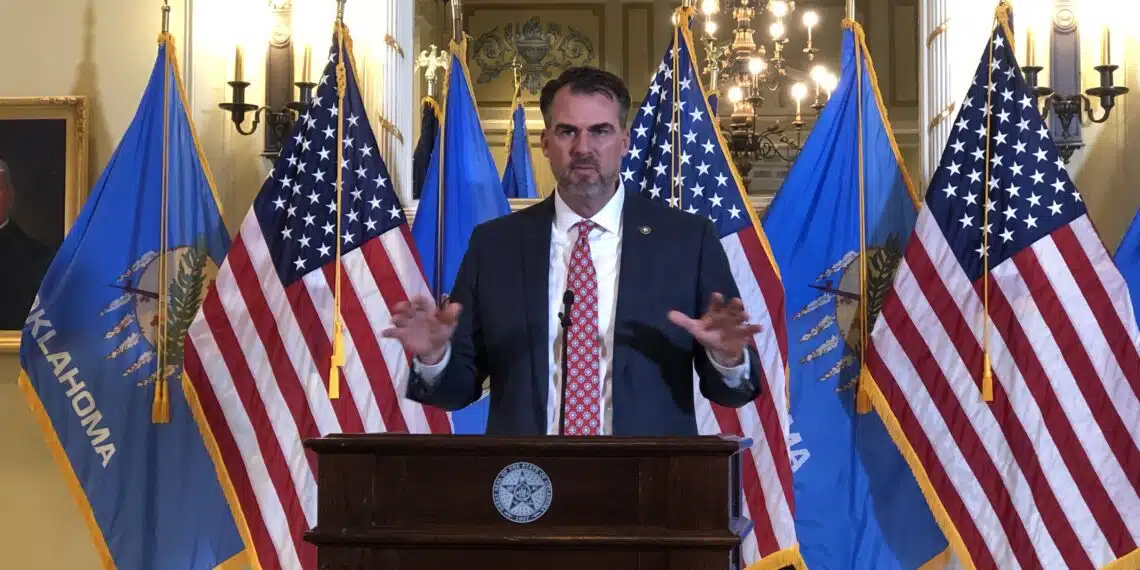
Oklahoma lawmakers have been trying to legalize sports betting for years. And yet Oklahoma remains one of eleven states without a functioning sports betting market, because Governor Kevin Stitt and the tribes have never agreed on the terms.
The tribes have generally wanted sports betting in Oklahoma. The legislature has generally wanted it. The public has generally wanted it. The state already has one of the largest tribal casino networks in the country, with more than 130 casinos operated by 35 tribal nations. But, there is still no sports betting in Oklahoma.
That dynamic may finally be changing. On Tuesday, Sen. Bill Coleman and Rep. Ken Luttrell filed a substitute amendment to House Bill 1047, announcing that they had secured backing from a supermajority of tribes within the Oklahoma Indian Gaming Association, the state’s public universities, and the Oklahoma City Thunder.
“This is a big day for Oklahoma,” Coleman said. “We’re closer than we’ve ever been to legalizing sports betting. This new legislation is the product of thousands of hours of negotiations over many years.”
A Senate vote is expected this week.
What the Bill Would Do
The substitute would legalize in-person and mobile sports wagering through a supplement to the state’s Model Gaming Compact. Oklahoma tribes would retain the exclusive right to offer gaming in the state and could negotiate with leading national sportsbook platforms such as FanDuel and DraftKings. All wagering would be legally attributed to tribal lands where the servers are located.
The state would receive an 8% fee on adjusted sports betting revenue. Revenue tied to NBA and WNBA wagers would be directed to early childhood literacy programs. The remaining funds would be split among higher education, student development programs, workforce initiatives, and a tourism fund leveraging the Thunder’s global reach. A fixed monthly deposit would go to problem gambling treatment and education services.
The tribal jurisdiction structure represents one of the key negotiating points that had previously blocked progress. The Cherokee Nation and parts of the Oklahoma Indian Gaming Association had disagreed over whether tribes’ sports-betting jurisdiction should be limited to their formal boundaries. Cherokee Nation Principal Chief Chuck Hoskin Jr. indicated in recent weeks that the Cherokee Nation was not fully aligned with the OIGA’s proposal. Whether the new amendment has resolved that internal tribal disagreement will be critical to watch as the Senate vote approaches.
Eight Years in the Making for Oklahoma Sports Betting
The bill’s history reflects how stubbornly this issue has resisted resolution. Luttrell has been working on sports betting legislation for eight years. The House passed the original version of HB 1047 last session before it stalled in the Senate. Even when a previous version cleared a Senate committee, it was done with an amendment that struck its enacting clause, effectively gutting it. Stitt subsequently vetoed related legislation and vowed to veto any bill that would limit online sports wagering to tribal-only platforms.
Coleman’s reference to “legally questionable prediction markets” in his statement was notable. It signals that lawmakers are framing tribal sports betting not just as an economic opportunity but as a consumer protection measure. Oklahomans are already gambling on sports through offshore platforms and prediction market apps. The argument that regulation is preferable to prohibition has gained traction across the legislature, even among members who are personally skeptical of gambling expansion.
House Speaker Kyle Hilbert put it plainly: “I honestly am not a big fan of gambling, personally. However, it’s a situation with sportsbooks where everybody is doing it already, and there are avenues to do it, and it’s happening on the dark web and foreign markets. If it’s going to happen, then it should happen in a way that is regulated and in the light.”
The Governor Remains the Central Variable
The stakeholder alignment behind this amendment is more significant than anything Oklahoma has seen on this issue. But it does not resolve the fundamental political obstacle.
Stitt has said he supports sports betting, but only under a free market system, not one limited to tribal control. A spokesperson for the governor said, “Governor Stitt has been clear that he will only support a free market approach to sports betting in Oklahoma. The Governor is not interested in expanding Democrat Gov. Brad Henry’s bad gaming compact that lacks transparency and fair market rates.”
That position has not changed. And with the tribal compact model at the center of HB 1047, any version of this bill that reaches Stitt’s desk appears to face the same veto risk that has killed previous efforts.
The one legislative escape hatch is a companion bill. Luttrell and Coleman are also authors of HB 1101, which contains the same proposal but sends the issue directly to state voters. A referendum route would let the legislature work around Stitt entirely during his final year in office. Whether that mechanism becomes necessary depends on what happens in the Senate this week.
Players trust our reporting due to our commitment to unbiased and professional evaluations of the iGaming sector. We track hundreds of platforms and industry updates daily to ensure our news feed and leaderboards reflect the most recent market shifts. With nearly two decades of experience within iGaming, our team provides a wealth of expert knowledge. This long-standing expertise enables us to deliver thorough, reliable news and guidance to our readers.
Latest News