Pritzker Plan Would Merge Illinois Gaming and Racing Boards, Eliminating Public Meetings
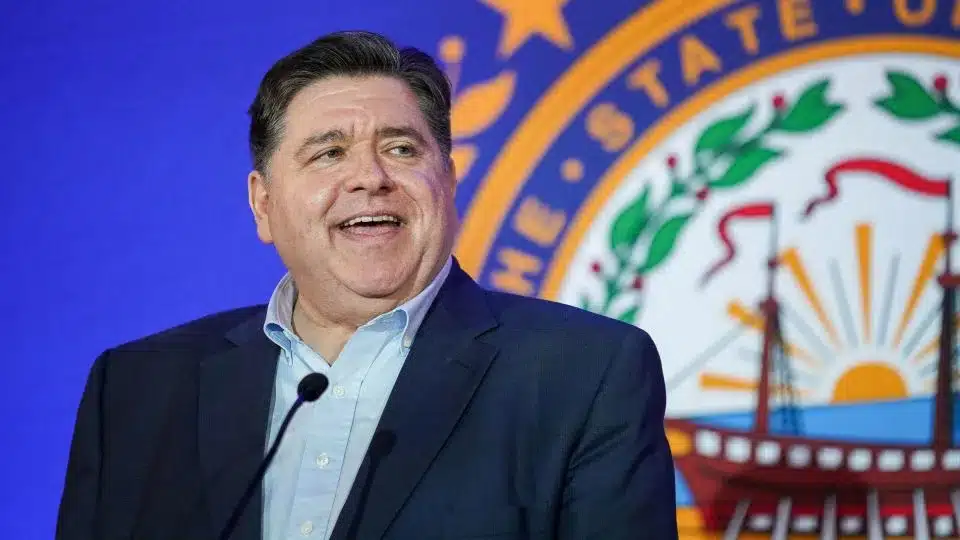
Illinois Governor JB Pritzker wants to consolidate the state’s two gambling regulators into a single executive branch department.
This reorganization would effectively end the public meeting structure that has governed gaming oversight in the state for decades. The proposal is included in Pritzker’s fiscal year 2027 budget and would take effect July 1 if the legislature approves it.
The plan has drawn immediate scrutiny from transparency advocates, given that it arrives as Illinois manages one of the most expansive and complex gambling markets in the country and as the Gaming Board has faced a series of documented integrity failures during Pritzker’s own tenure.
What the Reorganization Would Do
Under the current structure, the Illinois Gaming Board is governed by five members appointed by the governor. Those members deliberate and vote in public sessions on licensing decisions, operator qualifications, disciplinary actions, and other consequential matters. Anyone from the public can attend those meetings. The Illinois Racing Board operates on a similar model. Like many states, the Illinois Gaming Board is in legal battles over how prediction markets will operate in the state.
Pritzker’s plan would eliminate both boards entirely. Their functions would be folded into a new entity called the Department of Gaming Regulation and Enforcement, which would assume all powers and responsibilities currently held by both regulators. The new department would be led by an executive director and two assistant directors, operating as a standard arm of the executive branch rather than as a quasi-independent board.
That structural change means no board members, no public votes, and no regular public meetings. Decisions on gaming licenses, operator suitability, disciplinary complaints, and racing regulation would all move behind closed doors, handled administratively within a department that reports directly to the governor.
The new department would oversee tax collection and regulation across sports betting, casino gambling, video gaming, horse racing, and off-track wagering.
The Transparency Concern
The elimination of public meetings is the central point of contention. For decades, public board sessions have allowed journalists, industry participants, community members, and watchdogs to observe how consequential decisions are being made about who gets gaming licenses and who gets disciplined. Removing that forum consolidates decision-making authority within the executive branch, one step further from public scrutiny.
Pritzker’s office pushed back on the framing. A spokesman said the merger is designed to streamline oversight and improve efficiency, arguing that splitting similar regulatory functions across two separate boards creates inconsistency rather than accountability.
The governor’s office also stated that all information currently available through the Gaming Board’s processes, including licensing actions, disciplinary matters, disclosure statements, and enforcement activities, would remain publicly accessible under the new structure.
That claim addresses document availability but not the live deliberative process. Whether staff recommendations would still be publicly debated and voted on by accountable decision-makers, or simply issued as administrative determinations, is a distinction that critics say matters enormously.
State Senator Bill Cunningham, a South Side Democrat who handles gambling legislation in his chamber, said he supports consolidation in principle but emphasized the importance of preserving some form of public oversight. “One of the criticisms of both the racing board and gaming board over the years has been that they move very slowly,” Cunningham said, acknowledging the efficiency argument while stopping short of full endorsement of the transparency tradeoffs.
The Context: A Board Already Under Pressure
The reorganization proposal arrives against a backdrop that makes the question of transparency particularly pointed. The Chicago Sun-Times has documented a series of integrity failures at the Gaming Board during Pritzker’s tenure. Most prominently, the construction site for the Bally’s Chicago casino used D&P Construction Co. for waste hauling despite FBI statements linking the company to organized crime. The same company’s presence on a proposed Rosemont casino site decades ago contributed to that project being blocked by the Gaming Board, which then awarded the license to what became Rivers Casino in Des Plaines.
The Gaming Board has also faced broader criticism for allowing figures with ties to organized crime to access Illinois gaming facilities, a core function of the regulator that the board’s own record suggests has been inconsistently carried out.
It is in this environment that Pritzker is proposing to shift oversight from a publicly deliberating board to an executive department under his direct chain of command. The governor himself has had personal casino investments, though he and his aides have declined to provide details on the extent of those holdings.
The Racing Board Rationale
The administrative argument for merging the two boards is more straightforward on the racing side. The Illinois horse racing industry has contracted significantly, and maintaining a separate regulatory structure for a declining sector entails costs that are increasingly difficult to justify.
Pritzker’s budget also proposes table game tax changes that would generate an estimated $120 million in net new revenue by adjusting the tax rate structure at 15 of the state’s 16 operating casinos. The Bally’s Chicago casino is excluded, as it operates under its own tax framework.
Those revenue pressures make consolidation attractive from a budget standpoint. The question is whether efficiency gains in the racing sector justify applying the same structural changes to oversight of casinos, video gaming, and sports betting, where the regulatory stakes are considerably higher.
The legislation needed to implement the merger is still being developed behind closed doors. The Gaming Board’s next scheduled public meeting is April 23, two days from now.
Players trust our reporting due to our commitment to unbiased and professional evaluations of the iGaming sector. We track hundreds of platforms and industry updates daily to ensure our news feed and leaderboards reflect the most recent market shifts. With nearly two decades of experience within iGaming, our team provides a wealth of expert knowledge. This long-standing expertise enables us to deliver thorough, reliable news and guidance to our readers.
Latest News