White House Staff Warned Not to Use Insider Information on Prediction Markets
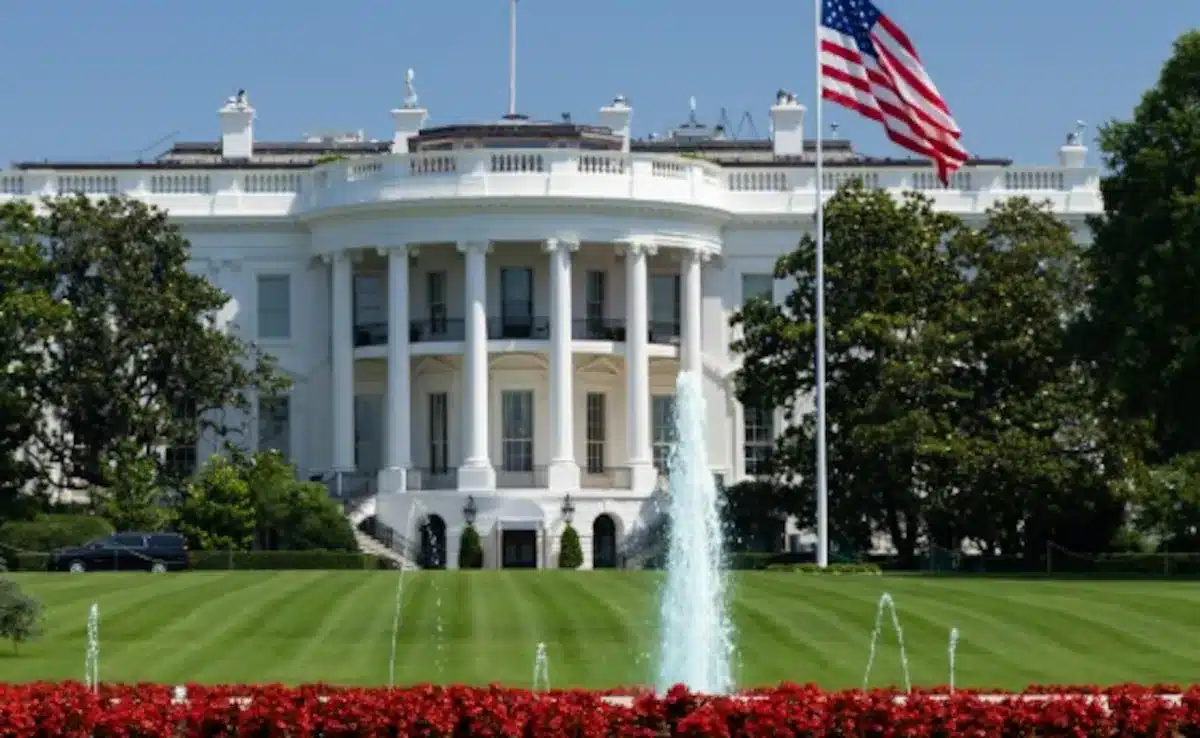
The White House told its own staff last month not to use insider information to place bets on prediction markets.
The internal email was sent on March 24, one day after President Trump announced a five-day pause on his threat to strike Iranian power plants and energy infrastructure. The timing was not coincidental.
The email was sent in direct response to press reports raising concerns about whether government officials were using non-public knowledge of diplomatic and military developments to profit on platforms like Kalshi and Polymarket.
Polymarket has announced steps to create market surveillance for insider trading, but results have yet to be reported.
What the White House Has Said
White House spokesman Davis Ingle pushed back on the reporting. “Any implication that Administration officials are engaged in such activity without evidence is baseless and irresponsible reporting,” he told the BBC. Ingle added that all federal employees are already subject to government ethics guidelines that prohibit the use of insider information for financial gain. “The only special interest that will ever guide President Trump is the best interest of the American people,” he said.
The White House did not dispute that the email was sent. The denial focused on whether the warning reflected actual wrongdoing rather than the existence of the concern itself.
A Pattern of Suspicious Timing
The March 24 email fits into a longer pattern of suspicious betting activity around US government decisions that has drawn increasing attention over the past several months.
In January, a single anonymous gambler made nearly half a million dollars on Polymarket after correctly predicting the capture of Venezuelan President Nicolás Maduro just before it was officially announced. The account carried a blockchain identifier but no identity. It was never established who placed the bet or how they might have known about the US military operation in advance.
The Iran situation produced similar concerns. Prediction markets tracking a US-Iran ceasefire saw a cluster of newly created accounts place concentrated bets before Trump’s Truth Social post about productive talks with Tehran was published.
Analysts flagged the wallet-splitting pattern as consistent with either a large investor hiding their position or someone with access to non-public diplomatic information.
Congressional Pressure and Possible Intervention
The pattern has attracted bipartisan attention on Capitol Hill, though with different emphases. This week, Democratic Congressman Ritchie Torres, a member of the House Financial Services Committee, sent a letter to the Commodity Futures Trading Commission calling for an investigation into suspicious trades on prediction markets.
The CFTC regulates derivatives trading, the category under which prediction markets operate. The Trump administration’s CFTC has been among the most vocal defenders of prediction markets, arguing that federal law preempts state-level gambling enforcement and actively suing states that have tried to restrict the platforms. The same regulator is now being asked by Congress to investigate potentially illegal insider trading on those same platforms.
In March, Democratic Senate leaders introduced legislation to completely ban prediction-market betting on war or military action.
Senator Andy Kim of New Jersey, one of the bill’s supporters, said corruption and exploitation are thriving within the gaps and loopholes of the prediction market system. “This manipulation leaves the select few winning big, at the expense of working Americans,” he said.
The Scale of the Market
Prediction markets now host more than $44 billion in trades. Sports wagering makes up the majority of volume. But the political and geopolitical contract categories, which allow users to bet on central bank rate decisions, election results, military actions, and diplomatic outcomes, are the segments generating the most controversy.
Those categories are precisely the ones most exposed to insider information risk. A trader with knowledge of a forthcoming policy announcement, a ceasefire negotiation, or a military operation has an informational edge that no amount of public research could replicate.
Unlike stock markets, where insider trading is a federal crime with established enforcement mechanisms, prediction markets operate in a regulatory gray zone where the rules are still being written in real time.
The White House’s internal warning acknowledges that reality. Whether it produces accountability or simply creates a paper trail is a separate question.
Players trust our reporting due to our commitment to unbiased and professional evaluations of the iGaming sector. We track hundreds of platforms and industry updates daily to ensure our news feed and leaderboards reflect the most recent market shifts. With nearly two decades of experience within iGaming, our team provides a wealth of expert knowledge. This long-standing expertise enables us to deliver thorough, reliable news and guidance to our readers.
Latest News