

Maryland Committee Advances First Sweepstakes Casino Ban Bill Amid Broader Push
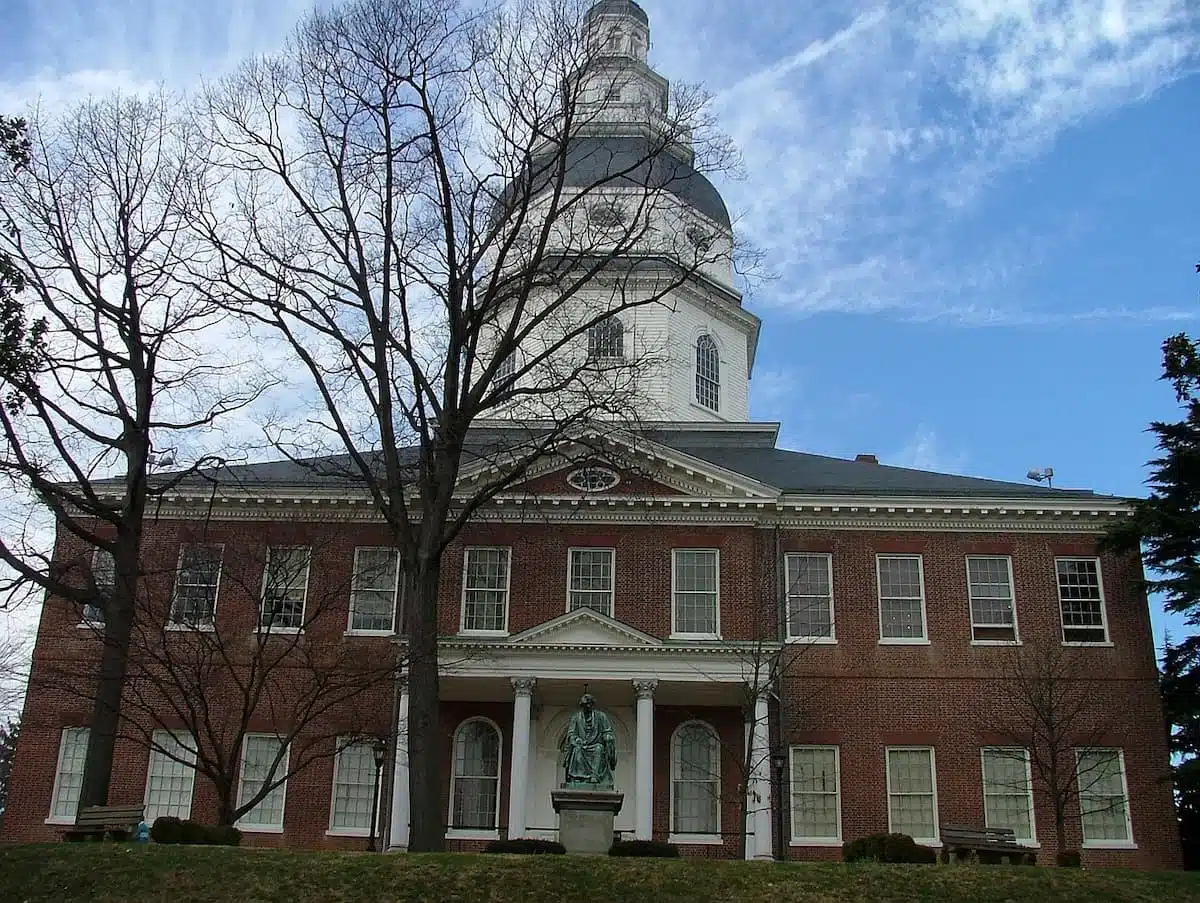
Image by PublicDomainPictures from Pixabay
One of four active sweepstakes casino ban bills in Maryland has advanced from a committee, as the House Ways and Means Committee voted to move forward with House Bill 295, a measure that would prohibit illegal “interactive games.”
Bill Targets ‘Interactive Games’
The bill creates a new criminal prohibition on “interactive games,” defined as any online or mobile game that “utilizes multiple currency systems of payment allowing the player to exchange the currency for any prize or award or cash or cash equivalents” and “simulates casino-style gaming… lottery games… or sports wagering.”
The bill explicitly excludes only games that “solely award noncash prizes.”
During the March 18 session, lawmakers adopted amendments to clarify some enforcement language. These include specifying that a person is subject to penalties only for known violations and directing certain fines to the state’s problem gambling fund.
The bill ultimately advanced favorably with amendments, despite some opposition within the committee.
Regulators: Illegal Market ‘Thriving’ in Maryland
The March 18 vote followed a Feb. 5 hearing, during which state gaming regulators and industry stakeholders argued that the bill is necessary to curb illegal gambling.
Officials from the Maryland Lottery and Gaming Control Agency (MLGCA) said illegal operators are expanding in the absence of legalized iGaming. The agency has testified that it has sent more than 80 cease-and-desist letters, with roughly 25% of operators complying.
They also emphasized that unregulated platforms do not pay taxes or incorporate consumer protections.
Stakeholders: Ban vs. Regulation
Casino operators and industry groups have strongly backed the bill, saying that sweepstakes casinos effectively replicate regulated iGaming without oversight. They pointed to games such as slots, blackjack, and roulette, which are available at the platforms through dual-currency systems.
The Sports Betting Alliance also cited the scale of the market, estimating that billions of dollars are wagered annually in unregulated online gaming in Maryland. At the same time, the casino industry is reporting declining revenue.
Sweepstakes casino operators have argued that the bill would prohibit legitimate entertainment products. They say the platforms are for entertainment and free-to-play, and that banning them would push users to illegal offshore platforms.
The industry has urged lawmakers to regulate, not ban, the sector.
Part of Broader Legislative Push
HB 295 is one of four sweepstakes casino-related bills currently under consideration in Maryland. In the House, the Judiciary committee heard testimony on HB 1226 on March 5.
In the Senate, HB 295’s companion bill, SB 112, was the first to receive a hearing on Jan. 28. Lawmakers heard testimony from MLGCA representatives, who said the law’s ambiguities allow illegal gambling to grow. Notably, some lawmakers questioned whether regulation is the right path rather than a ban.
Another Senate bill, SB 652, received a hearing on March 11. The proposal explicitly defines “multi-currency systems” and aims to prohibit them. As with the hearings on the other bills, testimony included support from the MLGCA and casino operators, while the sweepstakes casino industry opposed it.
None of the bills had a vote after their initial committee hearings. Now, HB 295 becomes the first to advance. However, it faces a tight timeline, as the chamber crossover deadline is March 23. That means the House must pass the bill by that date for it to move to the Senate.
Ways and Means Did Not Vote on iGaming
While it advanced HB 295, the House Ways and Means Committee did not vote on iGaming legislation.
On March 5, lawmakers heard testimony on House Bill 1255, which would authorize a voter referendum on iGaming, and HB 1343, which establishes an iGaming framework.
Del. Caylin Young, the bill’s sponsor, framed online casinos as a possible revenue source to fund education.
Notably, the iGaming bills received significant opposition testimony from casino operators, labor unions, problem gambling groups, and tourism groups.
Chair Del. Jheanelle K. Wilkins noted that there could have been confusion on whether the meeting was public, as there were no testimonies in support. She said the committee will be open to receiving written testimonies.
Players trust our reporting due to our commitment to unbiased and professional evaluations of the iGaming sector. We track hundreds of platforms and industry updates daily to ensure our news feed and leaderboards reflect the most recent market shifts. With nearly two decades of experience within iGaming, our team provides a wealth of expert knowledge. This long-standing expertise enables us to deliver thorough, reliable news and guidance to our readers.
Latest News