Generation next: How can today’s casinos appeal to modern gamers?

Oliver Lovat, Denstone Group CEO and Gaming America regular columnist, dissects the new strategic dimension in hospitality development.
From the earliest casino in Venice in 1638, to the palaces of modern Macau, all over the world casinos have sold one thing; the opportunity for players to play games of chance, games of skill, and to take risks betting against the odds. In a world that has changed in almost every way, the games of cards, dice and spinning wheels that have offered a unique adrenaline thrill to millions of players have not. What has changed, however, is the customers that play them, the places they go to and the way they engage with the games.
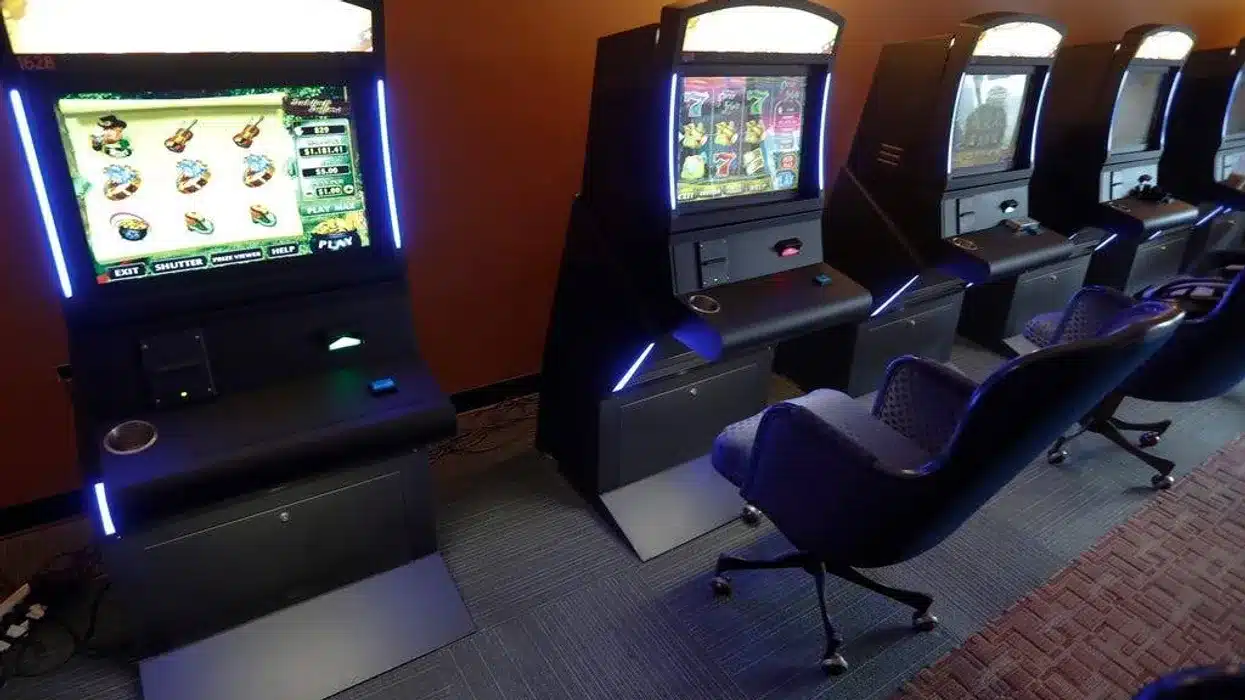
As we in this industry know, the rapid advancement of technology and proliferation of land-based gaming has rendered the shape of the industry practically unrecognizable from 30 years ago. The mechanical marvels of slot machines now possess less technology than the phones players carry in their pockets and sports betting counters have been replaced by apps that are instantly accessible. Where once a casino conjured images of a smoke-filled pit, across the globe, entertainment palaces are now achieving record gaming revenues and unimaginable non-gaming performance. Las Vegas is at near record visitation – with an entirely unpredictable customer profile.
Casino development overview
Let us go back to what we call the“Golden Age” of Las Vegas casino development. From the late 1940s and 1950s, the casinos themselves were formulaic, offering casino games, entertainment, food and beverage and, most importantly, hotel rooms. It was the remote location of Las Vegas and the requirement of the hotel that altered the way casinos evolved in north America.
What the relative remoteness of Las Vegas provided were the two things that casino operators need for success – time and space. Being far away from home, there is greater time for customers to spend in a resort, and the sparse desert town offered sizable parcels of land that could be built and programmed to attract customers. Las Vegas’ time and space allowed operators to garner revenues that were not possible in other places.
Early casino development strategy was predominantly top-down. The resorts were shaped by the owners or key managers, many of whom where gamblers themselves, or shared many commonalities with the customers they sought to attract; therefore, they programmed what would attract gamblers; white men between 40 and 60 years old.Those customers had gone through the Great Depression, maybe two World Wars and were seeking a sense of escape from rapid suburbanization. Inspired by European casinos, such as The Kurhaus, and incorporating Miami and Californian elegance and post-war perceptions of luxury, we saw golf courses, lounges, gourmet dining, entertainment, indulgence and glamor.
In the early 1960s, Sinatra added style; the mid 1960s, Sarno added spectacle; and by the late 1960s, Kerkorian added scale. That’s what the customer wanted and that’s what Las Vegas got. Fast forward to the 1980s and 1990s, Steve Wynn had analyzed, codified and structured the style, spectacle and scale, and The Mirage synthesized the offering, setting the megaresort development template. The following boom catered for American Baby Boomers aged between 40-60 years old, the largest demographic and one rapidly generating and accumulating wealth. It was this customer that was also coming of age in the time of the first generation of Tribal development across the USA.
Due to the rapid growth of visitation to Las Vegas, the market began to specialize and segment, narrowing from inclusive to exclusive, with 1998’s Bellagio the first megaresort for wealthy folk, but Hard Rock, Palms and Excalibur among many of new additions to the market, each with a specific segmented customer in mind. As the Baby Boomer moved out, their children moved in as Encore, Aria and The Cosmopolitan of Las Vegas dominated with Generation X customers, who today range between 40-60 years old. It is hard to believe, but as the older members of Generation X are eyeing retirement, the Millennial generation (1981-1996) is fully in range, aged between 28-43, and is joined by early Gen Z (or Zoomers) in finding Las Vegas to be as compelling a destination as their grandparents once did.
The recently published LVCVA 2023 visitor profile highlights the ongoing success of Las Vegas’ operators in attracting the next generations of customers while maintaining the loyalty of Gen X as the Boomers age out. By any objective measure, Las Vegas casinos have succeeded in multi-generational business transition, where many other industries have failed.
The expansion dilemma
For many years, there was a complex relationship between Las Vegas-centric operators and Tribal and regional gaming. The earliest Native American iterations grew from enhanced bingo halls, purposed to allow customers to play gambling games on Tribal land. After the Indian Gaming Regulatory Act of 1988, we saw the likes of Foxwoods and Mohegan Sun emerge, which leaned on Las Vegas’ megaresort model, plus moderate expansions across Tribal lands. In 1999, Wynn’s Mirage Resorts opened the luxury resort, Beau Rivage in Biloxi, the largest hotel in the country outside Nevada. The early years were challenging.
Las Vegas operator, Boyd, which had focused on the locals market, expanded its customer intimacy (and high-repeat business) model nationally. Memphis-based Harrah’s developed a national network of regional properties, which ultimately led to investment in Las Vegas at The Rio and then Caesars Palace. Dozens of regional operators emerged in specific markets, notably Penn, Ameristar, Pinnacle, Red Rock, Eldorado. These properties focused predominantly on gaming customers in the Baby Boomer generation, with non-gaming revenues a fraction of what was being realized in Las Vegas.
By response, and as Tribal resources increased, the emergence of true destination resorts, such as Pechanga, Thunder Valley, Viejas and Yaamava’ in California, and Winstar, Durant, Soaring Eagle and the Seminole’s Hard Rock in Florida, saw Tribal properties become the largest and most profitable resorts in the nation, diversifying revenues and appealing to both Boomer and Gen X customers. The time and space equation changed further.
Many of the older Tribal properties have diminished in relevance and revenues, as the newer, amenity-laden resorts – many with hotels – have supplanted them. Las Vegas operators, Wynn, Caesars and MGM, have also invested in regional and urban markets, exporting some of the spatial strategies employed in Las Vegas, but without the associated time factor that travelers to Las Vegas enjoy. There is an ongoing debate about how Tribal and regional properties are transitioning from one customer to the next generation. Some have made it, others have not. The answers are not formulaic and deeper analysis into offering and customer alignment is often required.
Loyalty: the importance of customer lifetime value It is somewhat curious that convicted criminal Benny Binion, who once operated Binion’s Horseshoe in Downtown’s Glitter Gulch, and highly respected academic Roland Rust should be mentioned in the same sentence; but Binion’s intuition and Rust’s empirical rigor come to the same conclusion. “If you wanna get rich, make little people feel like big people… good food cheap, good whiskey cheap and a good gamble.” Binion believed that the key to running a casino was to give your customers (primarily white, male gamblers, in Binion’s case) what they want, emotionally and financially, and they will come back. In multiple papers and decades of analysis, Rust has researched customer satisfaction, customer centricity and customer retention to determine customer lifetime value and profitability. With over 30 years of research, Rust begins with mathematical formulations on investment levels to increase customer loyalty and retention, to the use of AI in customer engagement. His work is highly relevant to the casino industry. However, Rust also writes that not all customers are equal – and that identifying the most desirable, profitable or relevant customers is of high importance.
The most successful businesses – and casinos more than any other – derive strategic competitive advantage by achieving customer loyalty. It is with this consideration that developing a lifetime relationship with customers is vital for casino success. In Las Vegas, engagement with the customer is starting earlier than ever, but the loyalty drivers that once dominated are changing.
Having fun yet?
In late 2023, a report by the UNLV’s Bo Bernhard and Quinton Singleton titled, “Introducing The Fun Economy” was published. Notwithstanding the fact that gambling is a “serious” pursuit in some cultures, the duo note that by combining and classifying Tourism, Sports and Entertainment under a single designation, the “Fun Economy” is valued at $17.3trn, equating to 13.7% of global GDP. They state that global tourism is growing at 5.8% per annum, sport revenues increasing year-on-year and entertainment, in the forms of video gaming, casino gaming, sports betting and live events, are all seeing sector growth. The growth of this sector shines a light on identifying the needs of many under-40s. Gen X has gone through the Great Recession and, along with Millennials and Gen Z, faced political and social upheaval, historic levels of screen-based engagement, and the consequences of separation and isolation during the Covid-19 pandemic years. Contemporary research also shows that Millennials and Gen Z, who have both a heightened emotional intelligence and an inflated level of expectation (having consumed a daily feed of social media imagery and staged narratives) are seeking immediate gratification and a need to visibly share their experiences – either positively or negatively.
It would therefore seem that the highly programmed and experientially concentrated environment found in Las Vegas is having some resonance. Indeed, here visitors are bombarded with multi-sensory engagement, forced interactions with strangers, play interactive games with humans, experiential discovery, witness the best shows and entertainers in the greatest venues and communally celebrate or commiserate at sporting events. Moreover, with friends and family more disparate, the remoteness of Las Vegas once again provides that central point to celebrate those key life events that are of increasing importance.
Based on Las Vegas’ recent success, have we found the secret to attracting the next generation of customer?
Developing happy
As a development and strategy professional, I obsess about the concept of time and space, not just the economics of resorts and casinos, but what we need to attract the customers we seek, and ensure our projects are successful and sustainable. I think about what our customers will do, what brands we want to align with, what amenities we need, how spaces make us feel, hoping to align the physical environment to the emotional needs and loyalty drivers of the customer. Whether the casino is in Las Vegas, Louisiana, London or Phnom Penh, the customer centricity concepts found in Binion’s saloon or Rust’s classroom are essential. However, investing significant capital into a new project, understanding the next generation of customers should also be paramount in our thinking. For those working in casino development, operations and strategy, or have an interest in this sector, these are my summarized thoughts:
1. Who is our customer; what are their needs? From the early ages of Las Vegas, providing escape from suburbia, injecting style, spectacle and scale, to entertainment, empowerment and ultimately self-actualization, the top-performing casino resorts have always been about more than the casino floor. The best properties tell us a little about the person that creates them, but more about the customers that use them.
2. The next generation of customer is dominated by Millennials and Gen Z. This group has a higher emotional intelligence than their grandparents. Yes, they crave the action, but if you can make people smile, laugh and be happy, they will love you back. Create belonging, positive reinforcement, community and life-affirming moments. That’s what we do in Las Vegas. It can be done anywhere with a cohesive strategy.
3. If a customer comes once, that’s great, the marketing has worked. But in our business, strategic marketing is all about customer identification and understanding loyalty drivers for repeat visitation. In a competitive environment, you can’t be all things to all people. Choose your customer wisely. Whether it be good whiskey, cheap, or structured benefits; if we don’t identify our customer and put loyalty front and center, nothing else counts.
4. Las Vegas has always existed in both reality and fantasy. For today’s customer more so, as images of the city appear on sportscasts, music videos, social media, influencers and YouTubers. Digital platforms, brand identification and alignment are crucial. Anyone with a smartphone accesses content and – geography allowing – can place a bet on tonight’s game. Today’s – and more importantly – tomorrow’s customer lives in a hybrid world of digital and analogue realities. If you aren’t engaging and building relationships with your customer before they set foot on property, someone else is.
5. For many years there has always been an element of fear about the sustainability of land-based casinos. In Las Vegas, we were fearful of Atlantic City, expansion of Tribal gaming, and then digital gaming being the end of the city. The offer has innovated to be the global center of the “Fun Economy,” which will only grow in years to come as the next generation of customer continues their journey. Others need to watch Las Vegas carefully as the world will inevitably become more competitive, and how resorts adapt to this will be instructive.
There is still a belief in some quarters that hospitality development is simple; if you build it, they will come. But as we have seen, if the offer is not strong enough, simply put – they will not. Modern hospitality development isn’t about gaming; it’s about understanding people and managing space and time. If you get that right, they will come – and keep coming back.
Oliver Lovat is the CEO of The Denstone Group, which offers strategic consultancy in casino and hospitality development. His research topics are Las Vegas Customer Behavior and The Evolution of Competitive Strategy Within Las Vegas Casino Resorts.
Players trust our reporting due to our commitment to unbiased and professional evaluations of the iGaming sector. We track hundreds of platforms and industry updates daily to ensure our news feed and leaderboards reflect the most recent market shifts. With nearly two decades of experience within iGaming, our team provides a wealth of expert knowledge. This long-standing expertise enables us to deliver thorough, reliable news and guidance to our readers.
Latest News