The $500 Billion Trust Gap: Why Half of Americans Suspect Pro Sports Match-Fixing
Key Highlights
- Trust Crisis: 50% of Americans believe pro athletes “often” or “sometimes” fix games today.
- The Handle Threat: Widespread public cynicism poses an existential risk to market liquidity.
- Integrity Gap: High-profile scandals like Jontay Porter fuel a narrative of systemic corruption.
The legal sports betting boom was built on a simple promise: regulate gambling, bring it into the light, and protect the integrity of the games.
But as we move through 2026, new polling suggests that promise is under severe strain.
According to a recent Deseret News survey, 50% of Americans believe professional athletes “often” or “sometimes” fix games.
For an industry that depends entirely on competitive legitimacy, that figure is not just troubling—it is existential. Because when bettors doubt the integrity of the product, the handle becomes secondary and trust becomes the real wager.
A Public Split Down the Middle
The Deseret News data reveals a deep undercurrent of cynicism about modern sports:
- 50% suspect fixing at the professional level.
- 38% believe college athletes are susceptible to game manipulation.
- Younger demographics, the primary acquisition target for sportsbooks, show the highest levels of skepticism.
This last data point is the most concerning for long-term growth. Gen Z and younger Millennials have grown up in a fully integrated betting ecosystem.
When point spreads and live odds are embedded directly into the broadcast, the proximity appears to erode rather than bolster confidence.
The “Ohtani–Porter” Effect: Narrative Momentum
Public distrust rarely materializes in a vacuum; it follows the headlines. Three landmark scandals have acted as a catalyst for this shift in sentiment:
- The Jontay Porter Ban: The NBA’s lifetime ban of the Raptors’ forward for betting on his own “unders” provided a “smoking gun” for skeptics.
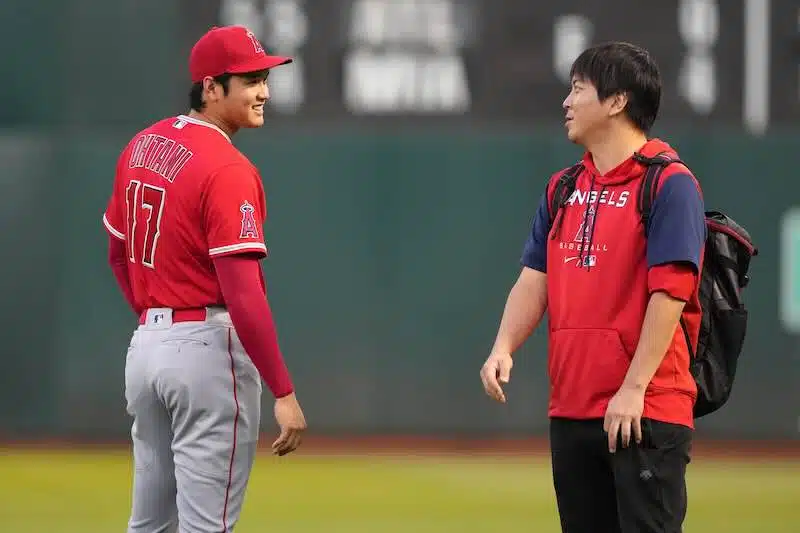
- The Mizuhara Case: The federal investigation involving Shohei Ohtani’s former interpreter exposed how illegal gambling can touch even the most insulated global icons.
- Terry Rozier Scandal: A federal investigation into suspicious betting patterns tied to a 2023 performance by Terry Rozier intensified concerns about prop-bet vulnerabilities, even without proven league-wide corruption.
While none of these cases proved widespread league-wide corruption, perception does not operate on legal thresholds. It operates on narrative momentum.
Now, many sportsbooks offer injury insurance to combat concerns over players leaving games early, but that doesn’t completely solve the problem.
The Micro-Betting Problem: Expanding the “Surface Area”
Modern sportsbooks offer thousands of betting markets per game. Micro-bets and player props, wagering on a single rebound, a strikeout, or pitch velocity allows for “fractional” corruption.
A player can influence a micro-outcome without altering the final score. This creates a structural vulnerability where integrity exposure is no longer binary (win or lose); it is constant.
From a risk perspective, every play is now a potential point of failure in the eyes of a cynical public.
Industry Consequences: Beyond the Numbers
If 50% of Americans believe games are fixed, several downstream effects are inevitable:
- Regulatory Escalation: Public skepticism invites legislative “over-correction.” We are already seeing states like Ohio and Louisiana restrict college player props. This trend will likely accelerate as politicians seek to “protect” the game from perceived rot.
- The Handle Ceiling: While high-frequency “sharps” understand variance, the “casual” bettor—the engine of growth—may simply opt out if they believe the deck is stacked against them.
- League Leverage: Pro leagues now have significant ammunition to demand higher “integrity fees,” arguing that the reputational risk to their brand requires more expensive, invasive oversight.
The Path Forward: Transparency Over Technology
The industry’s standard defense—touted geofencing and AI-driven anomaly detection from firms like Sportradar and U.S. Integrity—is no longer sufficient.
These are compliance tools, not trust builders.
To bridge the gap, the industry must pivot toward Radical Transparency:
- Publish Investigation Summaries: Share anonymized data on how many integrity alerts are flagged and successfully resolved.
- Athlete Insulation: Move from “education” to “protection,” highlighting the physical and digital barriers that separate athletes from gambling markets.
- Broadcast Decoupling: Rethink the integration of live odds. When every missed free throw is framed through a betting lens, fans naturally interpret randomness as intent.
The Bottom Line
Legal sports betting was marketed as a cleansing force, a way to drag gambling out of the shadows. But the Deseret News poll reveals that the shadows remain. Integrity is not a checkbox; it is the industry’s oxygen.
If skepticism hardens into a cultural consensus, the next scandal won’t just result in a ban, it will result in a mass exodus of the betting public.
Players trust our reporting due to our commitment to unbiased and professional evaluations of the iGaming sector. We track hundreds of platforms and industry updates daily to ensure our news feed and leaderboards reflect the most recent market shifts. With nearly two decades of experience within iGaming, our team provides a wealth of expert knowledge. This long-standing expertise enables us to deliver thorough, reliable news and guidance to our readers.
Latest News