Parlaying tradition with growth: Tribal agility

With new threats and competition constantly growing, Gaming America explores how Tribes can try to stay agile and ensure their Sovereignty.
In recent years, there have been significant moments of expansion for US gaming, transforming what was originally seen as a brick-and-mortar-reliant space into a consistent revenue driver across multiple platforms. On February 19, the American Gaming Association (AGA) reported that total commercial gaming revenue in the US for 2024 reached $71.9bn, which would increase to approximately $115bn with estimated results from Tribal gaming. Online gaming, including mobile sports betting and iGaming, accounted for 30% of nationwide commercial gaming revenue throughout the year, generating a new annual record of $21.54bn.
At the time of writing, 38 states within the US along with the District of Colombia allow some form of sports betting to residents, while 30 of the states where sports betting has been legalized offer online access to sportsbooks. Since 2018, when the Professional and Amateur Sports Protection Act (PASPA) was judicially overturned by the US Supreme Court, sports betting has generated unimaginable growth throughout the country. The sports betting industry witnessed $13.71bn in gross gaming revenue (GGR) throughout 2024 and has totaled more than $40bn in GGR since PASPA was overturned.
The full-year 2024 figure generated by sports wagering represents an increase of 25.4% from the previous record of $11.04bn set during 2023. In the fall specifically, the sports calendar helped propel operators to its most lucrative quarter on record for the sixth consecutive year, earning $3.66bn and increasing 7.3% from the previous record set during the fourth quarter of 2023. iGaming revenue grew 28.7% year-over-year to $8.41bn across the seven states in the US where online gaming has been authorized, while each market excluding Rhode Island – having only legalized iGaming during 2024 – achieved new annual revenue records.
Tribes and the regulators who represent each respective community have been working for years to expand Tribal gaming into forms that would introduce sports betting and iGaming where certain states allow for it. While the industry continues to expand at an unforgiving rate for regulators, Tribal sovereignty has remained at the forefront of discussions no matter the size in which land-based facilities, sportsbooks or online casinos have grown over the years. Through dedication to their respective communities and constant adaptation, Tribal regulators have shown on numerous occasions how the best interests of their Tribes and members will always be the primary focus regarding gaming’s expansion.
Strength in numbers
While Tribes attempt to work hand-in-hand to gain experience and better prepare for gaming industry expansion, the amount of new competition that enters the space can become overwhelming as consumer demand grows along with it. During 2024, a number of verticals made their presence known, such as daily fantasy sports (DFS), which has been on the rise for quite some time, or an offering like sweepstakes casinos that has seemingly brought an equal amount of fear to regulators as opportunity. The latest gaming industry challenges constantly keep Tribes and regulators on their toes, but finding ways to unite and enhance knowledge is a tradition that will stand the test of time for Tribal communities.
Regulators discussed prioritizing Tribal sovereignty within the gaming industry as part of a Global Gaming Expo (G2E) educational breakout session held in Las Vegas during October 2024. Washington Indian Gaming Association (WIGA) Executive Director Rebecca George, who was also able to speak further with Gaming America on the subject, shared her thoughts with attendees of the panel.

“[Protecting Tribal sovereignty] is first and foremost at the front of Tribal leaders’ minds. And they understand that we’re stronger together. I think we all have a common goal, a common purpose and shared vision for what we want. We appreciate those things, and I think we have learned throughout the years that we have very strong contacts because of our willingness to share information and to work together strongly,” George said.
Minnesota Indian Gaming Association Executive Director Andy Platto also spoke during the breakout session, referencing how the sports betting industry specifically has changed over the past 15 years, for Tribes located within his state. He noted how Minnesota Tribes have come together to gain a better understanding of the sports betting market, as well as how Tribal leaders have begun sharing prior knowledge and experiences to educate communities where legal sports betting is still under consideration.
After the Commodity Futures Trading Commission (CFTC) sought feedback on prediction markets, 18 entities sent letters to the Commission during February 2025, 10 of which stemmed from either Tribal groups or individual Tribes, including the Indian Gaming Association (IGA). Serving as an inter-Tribal association of 124 federally recognized Indian Tribes “committed to advancing the lives of Indian peoples economically, socially and politically,” IGA is one of many regulatory resources meant to protect and preserve Tribal sovereignty.
“IGA strongly urges the CFTC to make it clear that Sports Contracts are prohibited from being listed or made available for clearing or trading. (The) trading of Sports Contracts is gaming, violates state and federal law and is contrary to public policy for various reasons,” IGA said in a statement to the CFTC.
“Importantly, allowing Sports Contracts to be listed and traded will interfere with the sovereign right of Tribes and states to exercise police power to regulate gaming within their respective territories, a right long recognized by courts throughout the US. Listing and trading Sports Contracts will siphon critically needed revenue that supports Tribal and state governments and their citizens by providing an end-run around Tribal and state regulation of sports betting.”
Prediction markets allow players to buy and sell shares on the outcome of a future event, even if the prop bet does not hold any relation to sports, such as “Will the film ‘Wicked’ gross more than $500m domestically by January 9 2025?” which carried outcome prices of “yes” for $0.27 and “no” for $0.75. With prediction markets falling closer in line with that of a stock market than sports betting offering, Tribal gaming groups such as IGA continue to voice opposition to protect the Tribes each represents, as seen throughout all verticals of the gaming industry.
“It really comes down to individual Tribal state relationships and really learning from each other, especially in the vendor space, where I think other associations like ours have begun sharing information nationwide about what these vendors are doing, or not doing, in Indian country, which has become really vital to the conversation,” George said.
“We’ve seen these big guys try to plough through Indian country, but we can put up a big stop sign that shows them there’s no way through this except by working with Tribal regulators and the communities. Having all of us nationwide be in communication has at least slowed folks’ ability to blow through Tribal sovereignty and gaming.”
Challenging new verticals
As stated above, the gaming industry is an ever-changing space that waits for no one, whether it is the expansion of iGaming forcing land-based operators to adapt, or what is seen today with the practices undertaken by Tribal regulators.
Throughout 2024 and continuing into 2025, there have been several new verticals attempting to stake their claim as the hottest offering to be introduced to the gaming scene, such as DFS, sweepstakes, prediction markets, iGaming or the recent growth of Class II games in certain Tribal properties.
The quickening transition of what gaming offerings are most popular with players creates a sense of adaptation throughout every branch of the gaming industry, but most importantly for Tribes, where members continuously rely on revenue generated from gambling.
With over $30m of estimated GGR having been accumulated from Tribal gaming, the space is still finding success in spite of new competition attempting to find ways around Tribal regulation.
Mohegan Gaming President and CEO Ray Pineault tells Gaming America: “There are many forms of what I would call unregulated gaming going on right now, but Tribal gaming functions in a highly regulated industry. We’re an industry where all the people operating should be held to the highest integrity.
“Anyone who’s entering this field should be held to higher standards; we are working with people’s disposable income. It’s unfortunate that these things are cropping up. They aren’t regulated, and I know states are starting to take it on and address it. They are beginning to take legislative action to either ban them or actually regulate and license them, and I think that’s imperative to keeping the integrity of this industry alive and well.”

Even with certain verticals extending past the reach of regulation, others find growth in more recognized and traditional pathways for regulators, but those representing Tribes where certain states are salivating for new opportunity work tirelessly to keep sovereignty at the forefront.
DFS, for example, is now available in 45 of 50 states across the US, including areas such as Florida, Oklahoma, Washington and California, where many of Tribal gaming’s most prevalent areas also rest. After witnessing an increase of over 25% in GGR throughout 2024, the sports betting industry consistently stands as one of the most successful arms of the gaming tree, especially as its online reach continues to spread.
California, particularly, carries significant interest to sports betting operators of any offering, due to the high public demand from consumers to place wagers on their favorite sports teams. James Siva, Chairman of the California Nations Indian Gaming Association (CNIGA) and Vice Chairman for the Morongo Band of Mission Indians, spoke to Gaming America on the ease some DFS operators have had when it comes to expanding market outreach.
“The larger DFS operators have been able to expand their operations without any hindrance really because they’re operating in this grey area. In some ways, they floated under the Tribal radar even as far as the growth of that industry because a lot of the Tribal operators and regulators have been focused on the more traditional sports betting. There are conversations going on that took both financial and political resources, and a lot of time and effort on the part of regulators,” he explained.
“I give a shout out to Victor Rocha, Conference Chair at IGA, who really put DFS on my radar as well by saying this industry is growing and taking in hundreds of millions if not billions of dollars out of this market; with a form of gaming that, until we have any kind of firm decision, is illegal. Seeing that illegal market grow without any kind of hindrances was an affront to what the Tribes have done in California.
“We pride ourselves on being incredibly well regulated by running safe gaming operations that our customers and team members feel proud to be part of. Without any kind of action being taken by the Attorney General, I don’t really know what’s going to hinder DFS until there is a legal opinion about the actual games being played by consumers.”
The current laws in place for California ban traditional online sportsbook operators from conducting business within the state, but the official verdict for DFS has been left clouded by lawmakers. There are no laws that specifically mark the offering as illegal, but no such laws explicitly state DFS has been deemed legal either.
As of now, DFS operations from sportsbooks such as PrizePicks, DraftKings, Underdog and Sleeper continue to run smoothly in the state, as operators have perceived the non-commitment from California lawmakers as permission to conduct business without any restriction.
“For us in California, the biggest concern is the grey market. It is illegal and it’s being able to grow across the state, whereas I would pretty much guarantee that any Tribal operation conducting a similar activity would be shut down immediately. For them to turn a blind eye and take all of this time to even address the issue, for Tribes it’s very troubling. With DFS, there was an ask from the legislature to get a legal opinion from the Attorney General and the AG turned around and started taking comments on proposed regulations within a matter of weeks,” Siva said.
“So, seeing how this industry is being treated compared to the hoops we have to jump through feels like a slap in the face. They’re taking a big portion of revenue out of the state while operating illegally. For us, again, it’s just an affront to the entire Tribal gaming industry that we built in California from nothing 30 years ago to a $12bn industry based on numbers just coming out of the NIGC for 2024. To have this continue to happen is just an affront to our sovereignty and our exclusivity in the state of California.”
Where the answer lies
As stated, these verticals will continue to grow at an unrelenting rate as long as an avenue exists for revenue to be generated without properly identified regulation from respective state lawmakers. For Tribes, the hope lies in the authorities chosen to represent each. In Oklahoma, Matthew Morgan, Chairman of the Oklahoma Indian Gaming Association (OIGA), continues to work with his fellow state regulators to appease consumer demand while maintaining sovereignty for the communities he represents.
He tells us: “We are a very big proponent in Oklahoma of well-regulated gaming and we understand that the industry is always going to be pushing the boundaries of bringing products to customers. But it has to be done in a way that makes sense under the law, nd it also has to be done in a way that respects our rights underour gaming compact and the Indian Gaming Regulatory Act.”
The Indian Gaming Regulatory Act (IGRA) was enacted by the US Congress on October 17 1988, to regulate the conduct of gaming on Indian lands and establish the National Indian Gaming Commission (NIGC), as well as the regulatory structure for Indian gaming within the US. Tribes have the exclusive right to regulate gaming activity on Indian lands if such activity is not specifically prohibited by federal law and is conducted within a state that does not prohibit the gaming offering. IGRA, along with legislation such as the Indian Gaming Compact Morgan referenced, help Tribal communities continuously drive the revenue necessary to prosper.
“We are respectful of each individual Tribe that OIGA represents, their efforts, operations and drive to move forward and grow their market. At the same time, we also stress that there is a need to uphold a boundary in what we’re looking at in terms of new forms of gaming,” Morgan says.
“In Indian country, we’re very cognizant of the ripple effects one Tribe may cause. Sometimes our patrons don’t understand the line between legal or illegal. They feel if it’s available, then it’s a legal operation, so sometimes what we’ll have to do is educate not only our patrons, but also the policy holders and our law enforcement partners to make sure integrity is maintained. That’s always a concern but, again, our job at OIGA is to express what we believe is the standard and then rely upon our individual members to uphold that standard.”
In the case of Tribes located throughout the state of Washington, the pressure doesn’t mount quite as high as that felt in California or even Oklahoma but the work to keep sovereignty at the forefront remains constant, as the regulator understands what brought everyone to the table in the first place.
George says: “Tribal sovereignty is what brought us to the table, right? Without Tribal sovereignty, without state sovereignty, we wouldn’t be having lottery conversations; we wouldn’t even be having Indian gaming conversations. It’s what gives Tribes the authority to offer games and I think we have to always have that lens, and the understanding of the impacts these businesses have. These aren’t independent, out-of-state gaming corporations, these are governments here in Washington. They’re here to stay and are contributing in big ways to our communities.
“We’ve always taken a very calculated approach when it comes to any kind of expansion. We really care and value what our state wants and Tribes have always been on the cutting edge of technology. I think Tribes are still capable of that, even if we lost a little bit through assimilation, because we have Tribal leaders that have always taken a very thoughtful approach to the offerings at different casinos, in sports betting and online.”
Answers also lie in working with the operators directly so the best interests of Tribes are always made clear to the online casinos or sportsbooks looking to enter the respective areas. Siva, George and Morgan all spoke on how finding common ground with operators is still the most functional way of ensuring the industry can still expand in a healthy manner while the lives and opportunities of Tribal community members continue to advance.
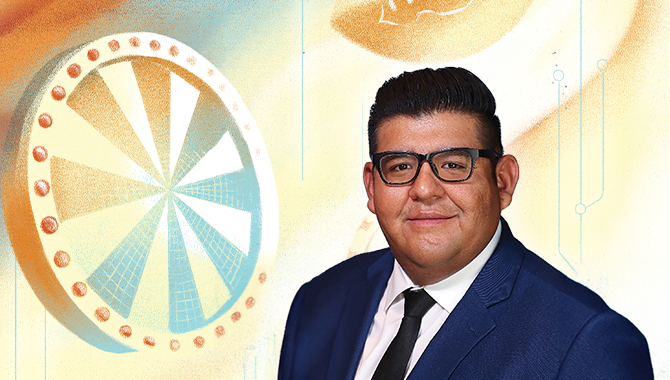
“The first thing is always outreach. Coming to meet with Tribes, explaining their position. Even if we have a disagreement, I’ll call out what I consider to be their legal actions and always leave at least a window open, if not a door open, for the future. We’ve had conflicts with other people in the gaming industry for a long time. We had conflicts with slot operators where they wanted a seat at the table, when we were first getting started, and we outright rejected that; which can end up similar to these recent attempts at expansion,” Siva said.
“If gaming is going to expand in California, it’ll have to be connected to Tribes, whether some kind of partnership or shared equity. I say it over and over again, the Tribes are the operators. Anyone else coming in who wants to provide a service or to be a vendor, those are conversations we can have. Do your research, come out, meet with different Tribal leaders, meet with different regulators, different operators, but do so respectfully. That first encounter can greatly affect your future endeavors with any specific Tribe.
“We’re heavy on trust and respect, so if you come in working to gain that trust, it can go a long way. But if you come with the wrong attitude, preaching or dictating what Tribes are going to do, you’re dead on arrival.”
Sovereign pursuit
Casinos and gaming facilities have played a crucial role in bolstering Tribal economies and supporting essential services within communities for decades. With the evolving landscape of online gaming and sports betting, Tribes are seizing opportunities to extend gaming offerings beyond the retail casino floor.
As more of these operators and Tribes work in partnership to help properties adapt revolutionized gaming offerings, new pathways for economic growth, expansion and strengthening sovereignty also begin to open. Doing so has never been a simple process for Tribes, as those who have contributed will note, but it is still a natural step in adapting to this industry, one that will continue to prove beneficial if conducted in a proper manner.
“Everything we do is focused on the Tribe and focused on the generations to come. That’s the mantra we carry forward at Mohegan, making sure we learn from generations of the past to provide for the generations that will follow,” Pineault said.
“We want to make sure we’re staying ahead and up to date with all the innovations andtechnology, while making sure to provide platforms and experiences for our guests that truly excite and engage n a responsible manner.”
Tribal gaming was a $41.9bn industry as of 2023 (with 2024 figures yet to come). This figure will only continue to grow as new verticals are accepted and desired by the communities in which these regulators represent. While legislation such as IGRA and state compacts help warrant some level of defense from operators looking to expand in rapid succession, it’s still up to Tribes to maintain consistent adaptation no matter how quickly the industry can shift at times.
By the early portion of April 2025, Tribal gaming conferences and tradeshows such as IGA and CNIGA will have passed, with the introduction of new offerings set to be released throughout the year brought forth by suppliers and operators alike. The 2025 calendar flip doesn’t just signal an additional year of success for the everchanginggaming industry, but a reminder to Tribes and regulators that the desire for expansion is ever-present and showing itself in numerous forms.
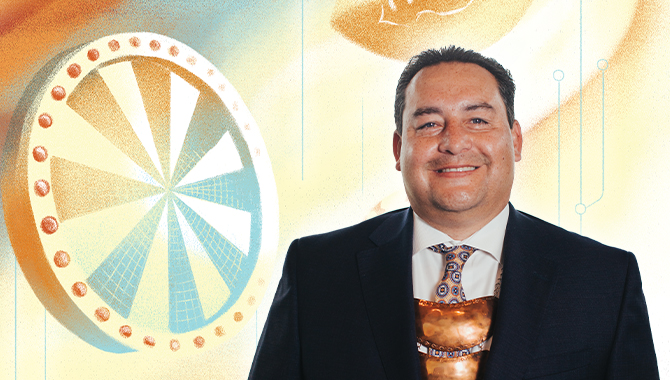
Morgan says: “That’s something we’re always going to see, especially in our industry being such a technology and entertainment-driven space. You’re always having people, like I say, push the envelope. But in a way that can be helpful because it helps our industry grow while being mindful of what impact it has on communities. If somebody’s doing something unsavory, a bad apple, we know the consequences to be suffered and can push back from that.
“Tribes are very leery in what they decide and I think a lot of that goes back to why we’re empowered in the first place to operate gaming operations within Indian country. It was a way to have economic development for our Tribes, give back to programs and services and have that relationship with Tribal government officials. A lot of our regulatory bodies are made up by individual Tribal members and it’s not just a job for them.
“It’s personal, even if they want to see the industry be successful too. I can’t brag enough about the job they do; they are some of the most educated and sophisticated regulators I have encountered in my 20-plus years within Tribal gaming.”
The adaptation of Tribes has helped set a precedent throughout gaming that sovereignty is to always be respected, especially in situations where operators are attempting to introduce previously unrecognized offerings. A natural evolution from the industry is always to be expected from Tribal communities and their properties, as exemplified by the latest innovations in both technology and online gaming in recent years. Tribal regulators are responsible for ensuring sovereignty is invariably protected while this growth occurs, as the tradition and livelihood of their people can be tested by those who see regulation as a matter of choice.
In an ever-changing gaming industry, Tribes habitually find ways to adapt no matter what new vertical or challenge is presented, because that is what native members have been doing for decades. As technology grows, though, so does new competition – meaning staying agile is key.
Players trust our reporting due to our commitment to unbiased and professional evaluations of the iGaming sector. We track hundreds of platforms and industry updates daily to ensure our news feed and leaderboards reflect the most recent market shifts. With nearly two decades of experience within iGaming, our team provides a wealth of expert knowledge. This long-standing expertise enables us to deliver thorough, reliable news and guidance to our readers.
Latest News