Q&A: Interblock CEO John Connelly on product development and philosophy
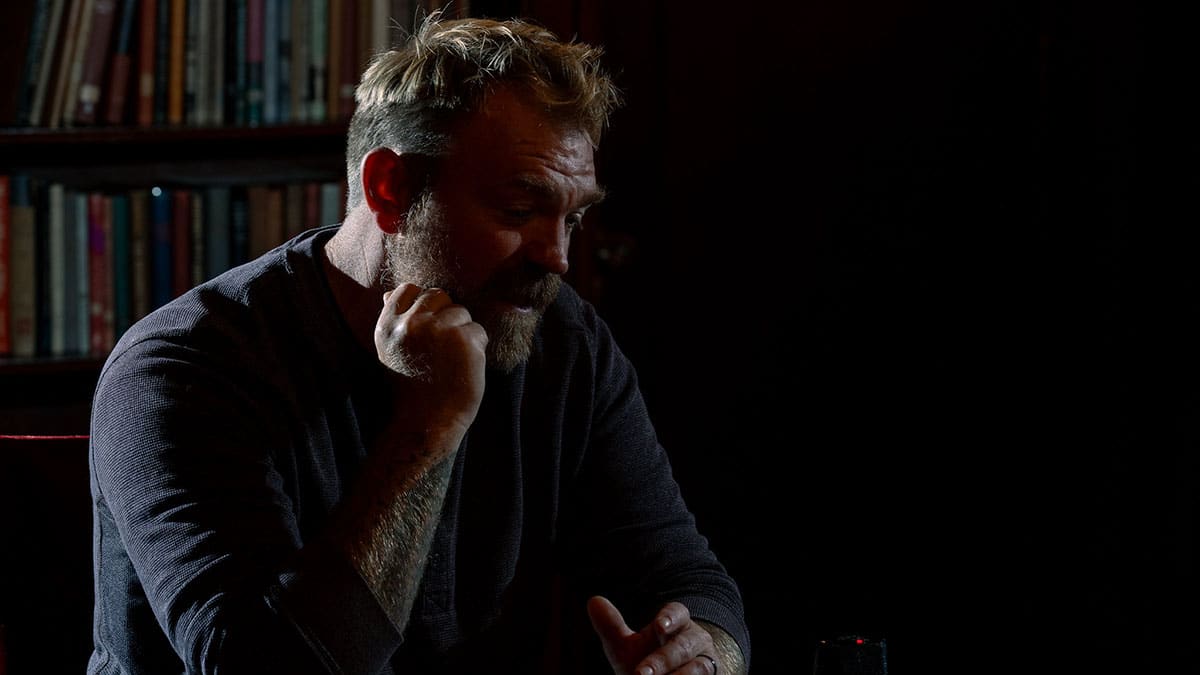
Gaming America sat down with Interblock Global CEO John Connelly to discuss the company’s design philosophy and product development process.
Could you tell us Interblock’s product design philosophy in three words and explain why?
We’re always innovating. We have a culture within the company that we do our best to not follow. It doesn’t mean we don’t admire innovation from other companies, and sometimes take those ideas and concepts and try to build upon them, we’re not beyond that. But we do our best to innovate. Second, we’re always looking for technological efficiencies. How we use technology, combined with innovation, to create efficiencies in different ways.
The third word? I would say, we do our best from a player diversification standpoint. As the electronic table game (ETG) space evolves, we learn the types of players and, quite frankly, we’re still learning. There are far more types of players interested in ETGs than we envisioned. So we’re constantly trying to diversify our R&D portfolio to address different player demographics.
Are there any brands in or outside of gaming that have influenced or inspired how you design your ETGs?
This isn’t perhaps the most traditional definition of branding. But I would say the live table game industry that has existed for well over a century is the foundation from which we build. We’re not looking to replace blackjack, craps, roulette or baccarat. We’re looking to take those brands and use the three words we just discussed to evolve those brands for a new generation of player, and the global environment we live in today.
What does the design process look like when you’re creating a new product from Interblock, from conception to launch?
The good news, or bad news, is that it’s not as [based] in a flow chart as you would envision. Ideas and concepts come from a plethora of places. A more textbook component to what we do is once we identify a concept or innovation we believe could be successful, we will do competitive gap analysis, market studies and build out what we call a requirement document. From that, we have discussions on whether we think this should go to the next step, because we have far more ideas than we do engineering resources.
We have to make sure we are data driven in our thought process. I don’t believe the company 25 years ago was as data driven as it is today. It was a lot more gut feeling and emotion, which can be a key differentiating factor, but shouldn’t be the driver. We use data-driven decision making and then based on the concepts that are brought to the table, we have a committee that reviews those concepts, prioritises them, builds out a requirement document and a scope of work. Then we decide where or if it would fit into the product road map.
Quite frankly, there’s a bunch of other steps associated with that. It’s not just if it can fit into a product road map and we like the concept, we then look within our own company and our own portfolio. Is it creative or deluded to the overall company and strategy?
When you’re designing ETGs, what factors do you have to consider and are there any that aren’t widely talked about?
I call it leapfrogging. We’re constantly trying to leapfrog the industry in a calculated manner. In doing so, we tend to lean towards concepts and ideas that are non-commoditized, meaning if anybody else was to see or experience those concepts, they would not be able to follow quickly, with the thought process that we can out-develop the industry. We can out-innovate because all we do is one thing.
A lot of people follow Interblock and try to copy what we do. Especially in the past four or five years, we’ve been focusing our efforts on and choosing concepts we know are not easy for someone to copy and follow, which tends to put you more into a mechanical, electrical, hardware area versus software and graphical.
Software and graphics are emphatically easier to copy and follow. So, if you notice our product portfolio and what we’ve been doing, there’s some cutting-edge technology we’ve been using, such as live dice recognition, which has been the Holy Grail for decades. We are in the process of launching now. Things like that are drivers in our process.
Could you give me an example of a lesson you’ve learned from an older product that you were able to integrate into something new?
Oh, I can give you dozens of examples! I’ve been in gaming for over 33 years and in a lot of cases, historically, someone will create a game and then move on to the next. If you look at the slot industry and the number of titles created on an annual basis, you’d be shocked by the number of titles that actually drive revenue.
It’s fractional. Most titles never succeed and you move on to the next, and when you do finally find a title that succeeds, you copy it. When it comes to ETGs, you can’t have that mentality because there’s only one blackjack per sé. There are subsets, but blackjack’s blackjack, craps is craps. You don’t have that many bites at the apple.
You have to refine. We’ll have six versions of one product before it goes to market. We’ll beta test numerous times before we feel comfortable in releasing it, which was not the company’s culture 10 years ago.
Today, we’re very methodical in beta testing and if we’re not satisfied we go back to the drawing board, modify and beta test again until it reaches a level where we think it’s achieving its objective. In some cases we’ll pull products that, for whatever reason, did not achieve their objective and we’ve exhausted our ideas.
We table it, we never throw anything away. We table, then as we evolve, we go back and revisit products because we’ll learn something new within a year or two. We’re not the kind of company to just throw anything into the market, and I think the results of that are why we’ve been able to achieve the position we have. It’s quality over quantity.
It directly relates, because you don’t have that many traditional table games to really innovate from per sé. So you need to make sure the concepts you come up with, you perfect them and make them work.
Are there any emerging trends you think could impact the design of ETGs in the next few years?
Yes, yes and yes. People are starting to realize that one of the key omnichannel products in existence today, with the ability to bridge the online gaming and traditional casino space, ties directly to ETGs.
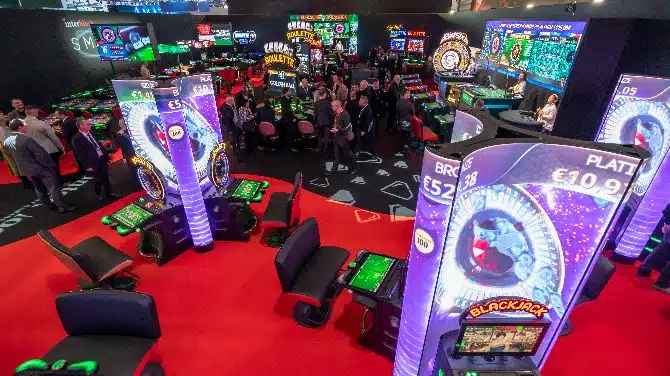
I’ll give you a couple of key data points. When you play online, there are no chips on table games. But if you mentioned taking away chips on a casino floor, people think you’re crazy. However, we just released a product called the Smart Pit, which does not have chips.It’s taking off and players are adapting to it very quickly.
There are so many benefits to not having chips on a casino floor, and we think there’s a strong correlation with online players and ETGs that’s bridging the gap.
Online, you have monitors and screens and faster play action. ETGs have monitors and screens with faster play action. Online gaming is trending, especially with the younger demographic.
What’s interesting on the casino floor: we’re finding that we’re getting not just a male demographic under 45, we’re getting female demographics. Players come over who have always been intimidated to play, wanting to try table games and play it in a more solitary environment.
It seems like because these machines are different, it’s breaking traditional expectations and increasing accessibility.
Well, you try walking up to a traditional table game pit and sitting down when you don’t know what you’re doing! It’s pretty intimidating. We’re seeing a lot of that, hence the growth of Interblock… There’s definitely a demand. We’ll see where it takes us, but it’s exciting.
Players trust our reporting due to our commitment to unbiased and professional evaluations of the iGaming sector. We track hundreds of platforms and industry updates daily to ensure our news feed and leaderboards reflect the most recent market shifts. With nearly two decades of experience within iGaming, our team provides a wealth of expert knowledge. This long-standing expertise enables us to deliver thorough, reliable news and guidance to our readers.
Latest News