Former Chicago Mayor Lightfoot Now Represents Bally’s in Fight Against VGTs
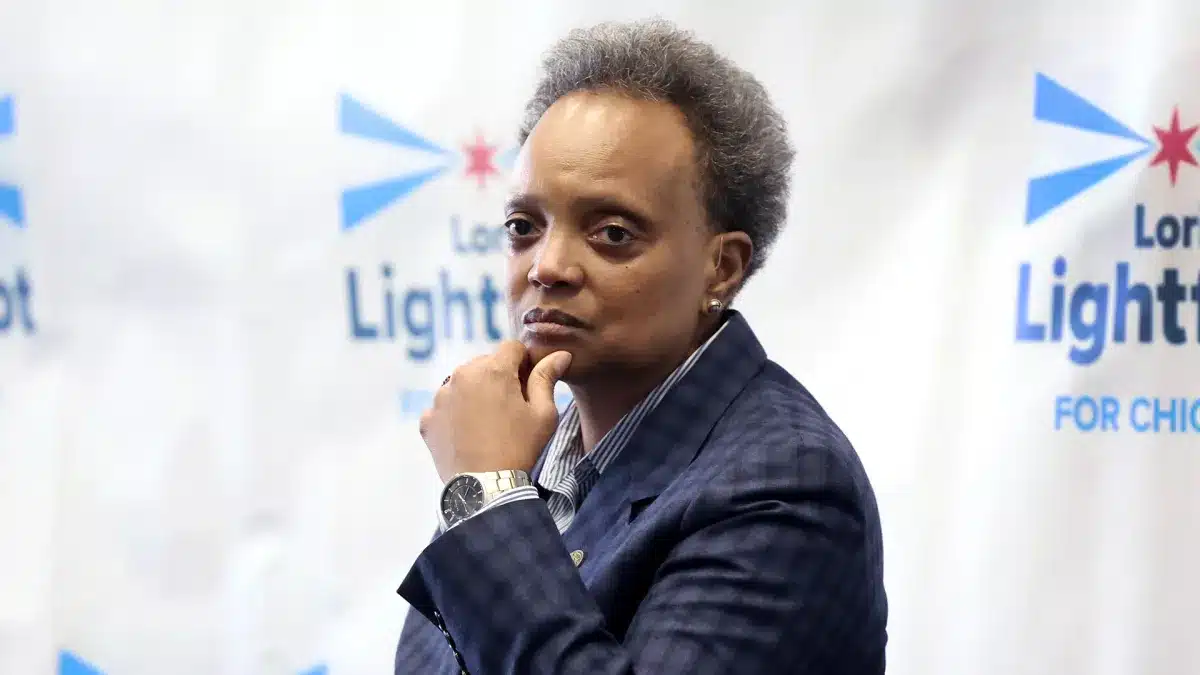
Bally’s has hired former Chicago Mayor Lori Lightfoot’s law firm to help the company pursue a long-threatened lawsuit against the city over its decision to legalize video gambling terminals.
Lightfoot’s firm is alleging that the city violated the casino host agreement Lightfoot herself negotiated as mayor. “We are pleased to have built an excellent and knowledgeable team here in Chicago,” Bally’s said in a statement. “As we ramp up efforts to protect our investment in the city, we have also brought on the strategic counsel of RKF Global PLLC, where former Mayor Lightfoot is a partner.” Lightfoot declined to comment.
The hire lands in the middle of a Chicago VGT fight we have been covering for weeks: Mayor Brandon Johnson trying to keep the machines out of the city despite a budget that already assumes $6.8 million in licensing revenue from them, an Alderman-led effort to force the issue through anyway, and Bally’s warning from the sidelines that legalization would gut the financial terms of its casino deal. Lightfoot’s involvement adds an ethics dimension to a fight that was already politically combustible.
A Conflict of Interest on Lightfoot’s Part, or a Savvy Hire by Bally’s?
David Greising, president and CEO of the Better Government Association, called Lightfoot’s involvement “a pretty bald conflict of interest.” His reading of the city’s ethics ordinance is that a former mayor cannot assist an employer or client on a contract over which they had substantial managerial responsibility for the life of that contract. “She is being hired to represent a client challenging their allegations about an agreement that she negotiated when she was mayor,” Greising said. “It just feels like she’s playing on both sides here.”
Steven Berlin, executive director of the Chicago Board of Ethics, would not comment on Bally’s specific decision but noted that the city’s ethics ordinance generally bars a former mayor, for one year after leaving office, from assisting or representing a new client in subject matters they were personally and substantially involved in while in office. Lightfoot left office in May 2023, which puts the relevant one-year window well behind her. Whether the ethics ordinance’s restriction has any practical teeth more than three years after she left City Hall is a separate question from whether the arrangement looks appropriate, which is the question Greising and others are actually raising.
Ald. Anthony Beale, the City Council’s chief proponent of video gambling terminals, was blunter. “That is a quid pro quo to try to reward somebody who gave them a contract that they never should have gotten in the first place,” Beale said, citing Bally’s weak credit rating, its lack of prior casino construction experience, and its commitment of $40 million to Lightfoot’s administration to help plug a budget hole at the time of the award.
He’s not wrong that Bally’s has a ton on their plate, and it doesn’t all look good. They have a major situation happening in Las Vegas that may cost the Athletics of Major League Baseball quite a bit of money if Bally’s can’t raise funds for the project they agreed to fund and build two years ago. In New York, Bally’s is one of three remaining contenders for a downstate casino license with its $4 billion Ferry Point project in the Bronx, a campus that would deliver a $115 million payout to the Trump Organization if Bally’s secures the license. And of course, Bally’s has this new Chicago project. There are a lot of balls up in the air for Bally’s.
Lightfoot Goes From Signatory to Litigator
Three years ago, Lightfoot secured City Council ratification of her choice of Bally’s by tying the award to $40 million in upfront payments that kept police and fire pensions solvent and helped avoid a pre-election property tax increase. Aldermen Brian Hopkins and Brendan Reilly tried unsuccessfully to block the selection at the time, arguing the proposed River West casino complex would create an impossible traffic bottleneck in an already congested area and that Bally’s had never built a casino from the ground up. They also accused Lightfoot of using a council committee she created to manufacture political cover for a decision she had already made, and criticized her last-minute selection of the landmark Medinah Temple as the temporary casino site.
That means the contract Bally’s is preparing to sue over, and the same person who structured and defended it against those objections in 2022 is now positioned to help the company use that contract against the city that ratified it on her recommendation. Greising noted that questions about the fairness of the original bidding process were never definitively proven, but said: “There is good reason to question the choice, and this just raises more questions about her relationship to Bally’s.”
The Battle Over VGT Legalization in Chicago Continues to Escalate
The VGT legalization dispute itself remains unresolved, and the Lightfoot hire is best understood as an escalation within that fight rather than a separate story. Bally’s has previously warned that lifting Chicago’s video gambling ban would cost the city $74 million in annual revenue and up to 1,050 jobs at its temporary and permanent casinos, and has said the change would force the Johnson administration to renegotiate critical elements of the host agreement, eliminate a yearly $4 million lump-sum payment from Bally’s, and shrink the casino jackpot earmarked for police and fire pensions. Bally’s did come back with an alternative, proposing to install slot machines in Chicago airports.
Johnson himself has raised objections to legalizing video gambling, in part because he believes doing so would violate the city’s host agreement and expose Chicago to exactly the kind of lawsuit Bally’s is now positioning to file.
Johnson, who has been trying to repeal the city’s VGT legalization through the Workforce Development Committee, shares Bally’s underlying legal concern even as the company he would be defending the city against is the one preparing to sue. The politics inside City Hall on this issue do not split cleanly along the obvious lines.
What the Lightfoot hire signals most clearly is that Bally’s threat to sue, which has hung over the VGT debate for months as a warning rather than action, is moving toward execution. A company does not retain a former mayor’s firm, with all the attention and scrutiny that decision invites, unless it intends to use the relationship. Whether that relationship survives the ethical questions being raised about it, or simply becomes one more complicating factor in an already tangled fight over who controls gambling expansion in Chicago, is the next thing to watch.
Players trust our reporting due to our commitment to unbiased and professional evaluations of the iGaming sector. We track hundreds of platforms and industry updates daily to ensure our news feed and leaderboards reflect the most recent market shifts. With nearly two decades of experience within iGaming, our team provides a wealth of expert knowledge. This long-standing expertise enables us to deliver thorough, reliable news and guidance to our readers.
Latest News