New Mexico’s AG Successfully Sued Meta in State Court, and Now He’s Coming for Kalshi
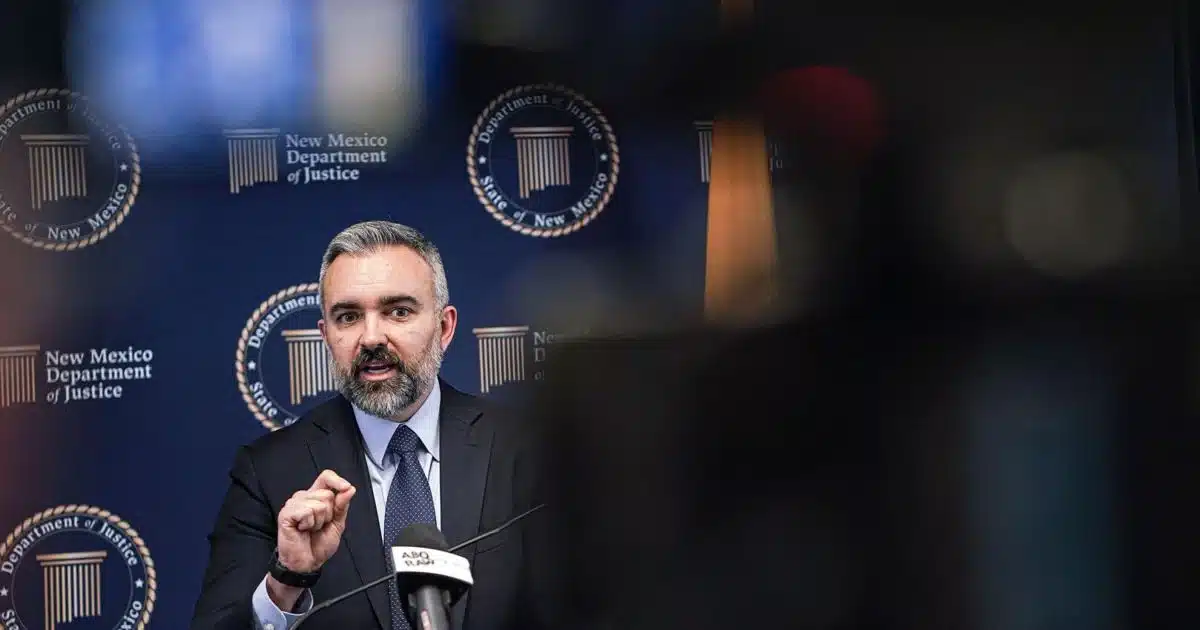
New Mexico’s AG Raúl Torrez just beat Meta in state court. His Kalshi suit is most likely not a coincidence.
On June 4, New Mexico Attorney General Raúl Torrez filed suit against Kalshi in Santa Fe’s First Judicial District Court, alleging the prediction market platform operates as an unlicensed sportsbook in violation of the state’s Gaming Control Act. The complaint seeks a permanent injunction. Torrez wants Kalshi out of New Mexico, and he’s not being shy about it.
That part of the story is straightforward enough, as the emerging battles between states and prediction markets heat up. What’s more interesting is where he filed it, and why that probably matters more than the allegations themselves, as states continue to go on the offensive against prediction market platforms.
States That Sue in State Court Are Playing a Different Game On the Offensive
The pattern in prediction market litigation has been fairly consistent. A state issues a cease-and-desist. Kalshi sues the state in federal court, arguing that its contracts are federally regulated financial instruments under the Commodity Exchange Act and that state law is preempted. The fight moves to federal ground on Kalshi’s terms, with CFTC support.
That’s more or less what happened in New Jersey, where the Third Circuit blocked the state from enforcing its gaming laws against the platform. It’s what’s happening in Minnesota and Rhode Island, where Kalshi has filed federal suits to block state enforcement. States that reach for the C&D tend to end up litigating the jurisdictional question in a venue that is structurally more sympathetic to Kalshi’s argument.
The underlying dispute, and the constant theme regarding prediction market regulation, is about who has authority here: the CFTC, which licensed Kalshi as a designated contract market, or state gaming regulators, who see sports event contracts as sports betting by another name. Federal courts have shown more appetite for the preemption argument. State courts, not unreasonably, tend to affirm that state law governs conduct within their borders. When a state attorney general sues in state court, the jurisdictional question starts on friendlier terrain, in an arena that gives the state a better opportunity to get what they want.
Torrez went straight to state court. So did Wisconsin AG Josh Kaul, who filed against Kalshi, Polymarket, and others in late April. The states that are acting offensively, rather than defensively, are probably making the smarter procedural choice, at least in the short term.
Torrez Already Beat a Tech Giant in State Court This Year
There’s another reason this filing is worth watching beyond the venue question. Torrez isn’t a generic AG taking a swing at a hot regulatory target. He’s coming off one of the more significant consumer protection wins of the year.
In March, a New Mexico jury found Meta liable for harming children’s mental health and violating the state’s Unfair Practices Act, determining that Meta made false or misleading statements and engaged in practices that unfairly took advantage of the vulnerabilities of children. Jurors found thousands of violations, each carrying a potential penalty of $375 million.
That case also stayed in state court, another win for Torrez. Meta attempted removal to federal court and failed. The trial proceeded in Santa Fe, before a New Mexico jury, on New Mexico’s terms, and Torrez won.
It would be strange if that outcome had no effect on how his office approaches tech litigation now. When you’ve seen a major platform company try and fail to escape state court, and then watched a jury hold that company accountable under state consumer protection law, you probably develop some institutional confidence about what state courts can do. Filing against Kalshi in the First Judicial District isn’t just a strategic choice in the abstract. It’s a choice informed by recent, concrete experience, and looks like a playbook reaction for states looking to avoid a federal clash.
The Venue Question Is Still Open, But the Scoreboard Is Starting to Fill In
Of course, none of this means New Mexico wins, and certainly not without a fight. Kalshi will almost certainly argue for removal or challenge the state court’s jurisdiction on preemption grounds. The Tenth Circuit hasn’t weighed in yet on the state-versus-CFTC question, and the separate tribal litigation in New Mexico could create room for divergent appellate opinions on the intersection of commodities law and the Indian Gaming Regulatory Act. The legal landscape is genuinely unsettled and is a massive question mark.
But the early returns do suggest something about strategy. States that play defense, responding to Kalshi’s operations with administrative orders, tend to end up in federal court arguing about preemption. States that play offense, filing affirmative suits in state court under state law, at least get to control the starting position. Whether that advantage holds through appeal is a different question.
Torrez has now sued Meta and Kalshi in the same courthouse and city. He’s 1-0 so far against large platforms that thought federal court was safer ground. Kalshi presumably thinks it can do better than Meta did. It probably can, given the CFTC licensing backstory and the stronger federal hook. But “probably” is doing real work in that sentence, and Torrez clearly knows it.
Players trust our reporting due to our commitment to unbiased and professional evaluations of the iGaming sector. We track hundreds of platforms and industry updates daily to ensure our news feed and leaderboards reflect the most recent market shifts. With nearly two decades of experience within iGaming, our team provides a wealth of expert knowledge. This long-standing expertise enables us to deliver thorough, reliable news and guidance to our readers.
Latest News