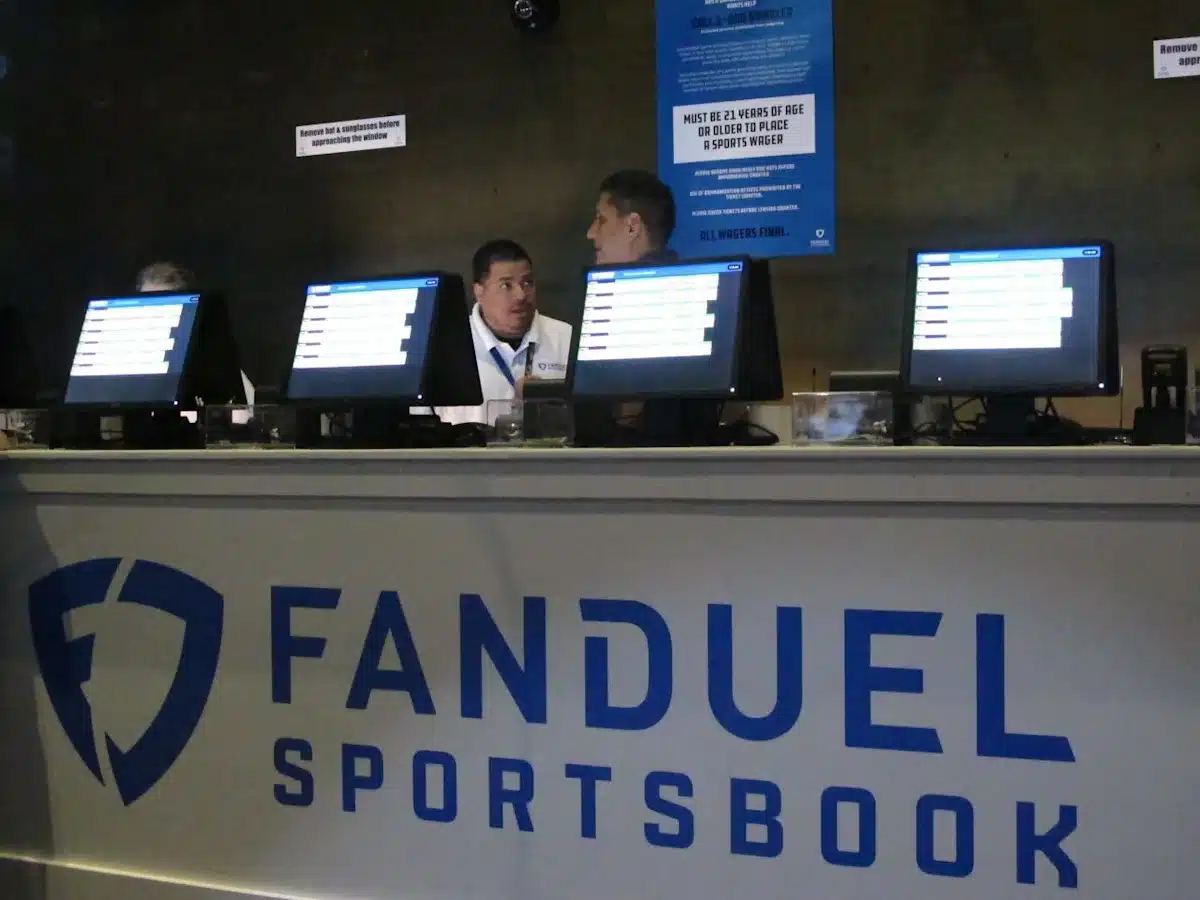
Rhode Island Sports Betting Expansion Heads to Senate

Rhode Island’s Senate votes tomorrow on S3118, which would open the state’s sports betting market to up to five operators.
The Rhode Island Senate is scheduled to vote tomorrow, June 4, on S3118, a bill that would end the state’s sports betting monopoly and replace it with a competitive market of between three and five online operators. The legislation was placed on the Senate calendar on Monday after clearing the committee. If it passes, the bill heads to the House, where a nearly identical version died last year.
The vote comes less than a month after the Rhode Island Lottery tentatively awarded Bally’s the state’s second online sportsbook license under the existing restrictive framework. That selection was the lottery’s response to its own consultant report, which recommended up to six new operators built around the current 51% state revenue share. S3118 would replace the entire structure that produced the Bally’s selection. If it becomes law before IGT’s exclusive contract expires in November 2026, the Bally’s award becomes a placeholder against a market that may look very different by the time it actually launches.
Larger Cut for Operators Would Attract Competition
S3118 was introduced on March 13 by Democratic Senators Frank Ciccone, John Burke, Stefano Famiglietti, and Todd Patalano. Ciccone has been the lead sponsor on every version of the bill since at least 2024. The 2026 version requires the Rhode Island Lottery to award between three and five online sports betting operator contracts through a competitive bidding process when the IGT exclusive deal ends. It would also restructure the revenue split, raising the share allocated to host facilities and significantly increasing the share allocated to operators.
Rhode Island currently takes 51% of online sports betting revenue, the highest rate in the country. The remaining 49% is split between Bally’s, which collects 17% as the retail partner regardless of platform, and the platform operator, which collects 32%. The S3118 framework would substantially raise the operator share, modeled on bills that FanDuel publicly endorsed in both chambers earlier this year.
The argument from FanDuel and DraftKings, both of which have submitted testimony in support of the bill, is that the 32% operator share has been the structural barrier preventing major sportsbooks from entering Rhode Island. That argument is supported by the application history. When the Rhode Island Lottery opened applications for the second operator slot in late 2025, only Bally’s and BetRivers responded. DraftKings, FanDuel, BetMGM, Caesars, Fanatics, and bet365 did not apply.
Contract Renewal Deadline Puts Expansion Plans on the Clock
The 2025 version of this bill, SB 748, passed the Senate by a 30-2 margin and died in the House committee. House Speaker K. Joseph Shekarchi’s stated reason at the time was that the bill was redundant because IGT’s contract was expiring anyway, and the state could restructure during the next contract negotiation. Shekarchi said he would review the legislation after the Senate vote, then let the bill die in committee.
That argument was politically viable a year ago when the contract still had 18 months to run. It is harder to maintain in June 2026. The IGT contract expires in November. The Lottery has already moved forward with selecting Bally’s as a second operator under the existing rules, which would lock in the 51% revenue model for another five years if the contract is signed before S3118 reaches the Governor’s desk. The state’s own consultant, Spectrum Gaming Group, recommended four to six operators in its early-year report. The window for restructuring the market without a new statute is closing fast.
Bill’s Passage Would Leave Bally’s Contract in Limbo
The Bally’s selection from May 8 is the awkward piece sitting in the middle of all of this. The tentative award gives Bally’s a five-year contract to operate the state’s second online sportsbook starting when IGT’s exclusivity ends. Under S3118, that contract would either need to be renegotiated to fit within a 3-to-5 operator framework or potentially be voided in favor of a fresh competitive bidding process.
The Lottery has not publicly addressed how a Bally’s contract would interact with S3118 if both move forward. The most likely outcome, if the bill passes, is that Bally’s keeps one of the available licenses and competes against the new entrants on a restructured revenue split. The 17% retail share Bally’s collects would presumably remain in place. The 32% operator share that Bally’s would have received under the existing framework is the variable most likely to change.
The reason this matters strategically is that Bally’s selection was, in the original framework, an extension of a partial monopoly. The company has already collected the retail share. Adding the operator share gave Bally’s roughly double its prior Rhode Island economics with no new competitor pressure. Under S3118, Bally’s becomes one of several operators competing for share against DraftKings, FanDuel, and others, in a market with a smaller operator margin per dollar of revenue.
Challenges Lie Ahead in the House
The Senate vote tomorrow is the easier of the two hurdles. The same coalition that produced the 30-2 vote last year is still in place, and the bill has gained co-sponsors rather than lost them. The House is where the bill’s fate will actually be decided. Shekarchi has not publicly committed to advancing S3118, and the procedural option that killed the bill last year is still available to him.
It is true that the political case for blocking the bill has weakened with each passing month. The federal lawsuits over prediction markets also play a role.
Rhode Island is currently being sued by Kalshi in federal court, suing Kalshi and Polymarket in state court through Attorney General Peter Neronha, and being sued by the Commodity Futures Trading Commission separately. The state’s argument in those cases is that prediction markets are unlicensed sports betting that competes with the state’s regulated framework. That argument is stronger if Rhode Island’s framework resembles a competitive market with several major operators, and weaker if it resembles a state-protected monopoly with one operator and a placeholder second operator.
The legislative session ends June 30. If S3118 passes the Senate tomorrow and clears the House in the next three weeks, Rhode Island’s sports betting market is going to look fundamentally different by the end of the year. If it stalls in the House again, the Bally’s contract goes into effect under the existing rules, and the state’s restrictive framework remains in effect for another five years. Either outcome reshapes the structure of the cases Rhode Island is fighting on three other fronts.
Players trust our reporting due to our commitment to unbiased and professional evaluations of the iGaming sector. We track hundreds of platforms and industry updates daily to ensure our news feed and leaderboards reflect the most recent market shifts. With nearly two decades of experience within iGaming, our team provides a wealth of expert knowledge. This long-standing expertise enables us to deliver thorough, reliable news and guidance to our readers.
Latest News