Newly Recognized Tribe Could Mean More Gambling for North Carolina
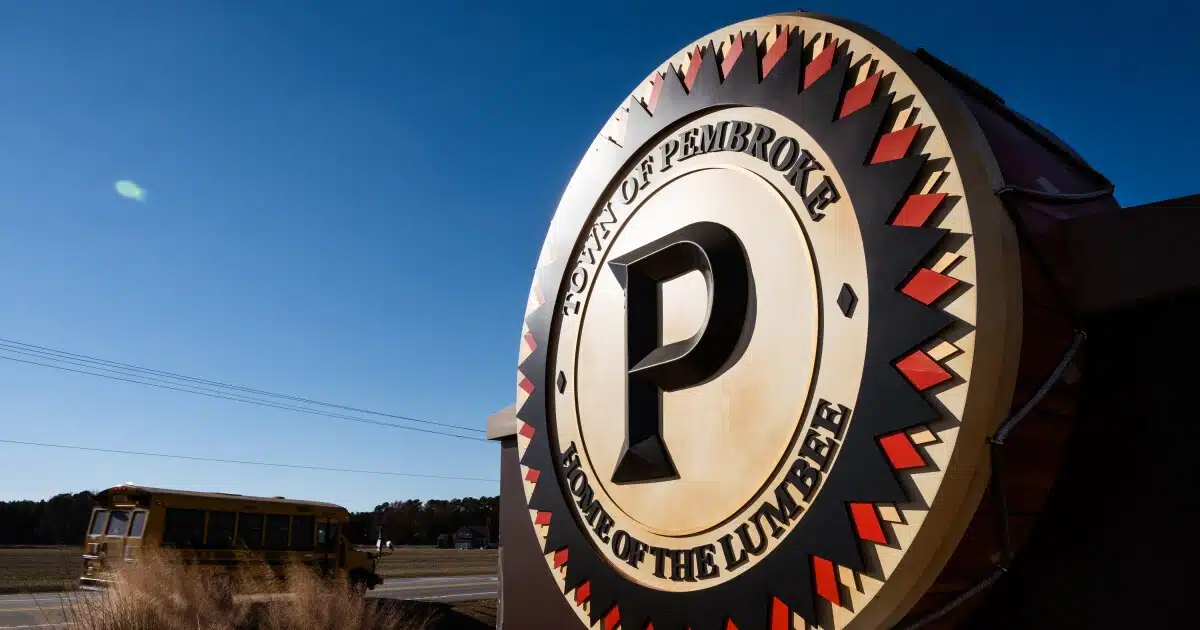
After 137 years of trying, the Lumbee Tribe of North Carolina won full federal recognition in December, tucked into the annual defense spending bill and signed into law with bipartisan Senate support.
The recognition unlocks federal funding streams, access to Bureau of Indian Affairs programs, and healthcare and housing resources that the tribe has long been denied. It also unlocked something else: the legal right to operate a casino.
Last week, the Lumbee Tribal Council passed a resolution to put an amendment to the tribe’s constitution before its members, asking whether to authorize gaming activities on tribal lands. A date for that vote has not been set, but the council’s resolution made clear its view that gaming is in the best interest and welfare of the tribe.
The Lumbee are not moving speculatively. Five days before Congress passed the defense bill that included their recognition, the tribe’s for-profit entity, Lumbee Holdings, purchased a large tract of land along Interstate 95 in Robeson County. On the day of the historic Senate vote itself, it bought more. The two acquisitions together totaled approximately 240 acres near the South Carolina border, at a cost of around $6.8 million. The tribe quickly transferred the land to itself and has begun the process of placing it in federal trust.
With roughly 60,000 enrolled members, the Lumbee is the largest tribe in North Carolina, and all enrolled members will be eligible to vote on the gaming question. Tribal Chairman John Lowery, who is also a Republican member of the state House of Representatives, has been careful to let the democratic process lead while signaling his own direction of travel. “I’ve seen the economic powerhouse that the Eastern Band of Cherokee Indians has become in the western part of the state,” he said, “and the transformative growth of our brothers and sisters, the Catawba.”
What a Lumbee Casino Would Actually Mean
North Carolina currently has three casinos, all in the western part of the state: two operated by the Eastern Band of Cherokee Indians under the Harrah’s brand, and the Catawba Nation’s Two Kings Casino Resort in Kings Mountain, which opened in phases beginning earlier this year and will eventually expand to a $1 billion full resort.
A Lumbee casino would be the first in the eastern half of the state and, crucially, would sit roughly midway between New York City and Miami along I-95, one of the most heavily traveled corridors in the country. There is no major gaming venue along that stretch between New Jersey and Florida, a gap that analysts consider strategically significant.
The region surrounding the tribe’s territory, encompassing Robeson, Scotland, Hoke, and Cumberland counties, has long struggled with population loss, limited economic opportunity, and ongoing recovery from hurricane damage in 2016 and 2018. Lowery has said a casino development could create up to 3,000 permanent jobs. If the membership votes yes and the federal land-into-trust process proceeds, the impact on one of the state’s most economically distressed corners could be considerable.
The South Carolina Pressure Valve
The Lumbee vote is a North Carolina story. Its ripple effects may be felt most acutely across the state line.
South Carolina remains one of the few states in the Southeast with no legal casino gaming and no legal sports betting, a position maintained by a conservative legislature, a governor who has called gambling “bad for our culture,” and fierce opposition from religious groups. But the pressure to reconsider has been building for years, and the geography of the Lumbee situation makes it significantly more urgent.
South Carolina’s only federally recognized tribe, the Catawba Nation, has spent decades seeking permission to operate gaming in the state. The Legislature has repeatedly refused, blocking even limited bingo operations. Eventually, the Catawba pivoted to North Carolina, opening their Kings Mountain casino just across the border from their South Carolina reservation. That casino is already drawing South Carolina residents across the state line. A Lumbee casino on I-95, positioned even closer to the South Carolina border, would apply additional pressure to a state that is already watching its neighbors capture gaming revenue it cannot access.
A bipartisan South Carolina casino bill, focused on an I-95 development near Santee in Orangeburg County, has shown signs of life in the current legislative session but has stalled, with Governor Henry McMaster refusing to back it and religious opposition mounting at the Statehouse.
The Catawba Nation has also inserted itself into those discussions, arguing that any South Carolina casino should involve them, given their long history with the state and their existing investment in regional gaming. Catawba Chief Brian Harris appeared before South Carolina lawmakers to argue that the tribe deserves the opportunity to correct the “crooked past” of a state that denied them gaming rights for decades before they were forced to seek a friendlier environment in North Carolina.
The complication is that South Carolina’s anti-gambling position, always politically convenient, is becoming economically costly. Every year the state declines to act, more of its residents cross into North Carolina to spend money at Catawba Two Kings. If the Lumbee vote passes and a casino opens on I-95 near Lumberton, that corridor of economic leakage extends further south, closer to South Carolina population centers, and harder to ignore in the legislative chamber.
The I-95 Corridor as a Competitive Market
Taken together, the Catawba Two Kings development in Kings Mountain, the prospective Lumbee facility near Lumberton, and the ongoing South Carolina casino debate are reshaping the competitive gaming landscape of the entire mid-Atlantic Southeast in ways that would have been difficult to predict even five years ago. Three states, two of which currently have no commercial casino gaming, are being pulled into an expanding regional market by the momentum of tribal recognition and development on their borders.
For the Lumbee, the tribal vote has not yet taken place, and federal land-into-trust proceedings take time. But the purchase of the land, the speed of the council’s resolution, and the chairman’s public statements suggest the outcome is not deeply in doubt. The question of whether this becomes a casino will be settled by tribal members. The question of whether it reshapes gambling policy across the region may settle on its own.
Players trust our reporting due to our commitment to unbiased and professional evaluations of the iGaming sector. We track hundreds of platforms and industry updates daily to ensure our news feed and leaderboards reflect the most recent market shifts. With nearly two decades of experience within iGaming, our team provides a wealth of expert knowledge. This long-standing expertise enables us to deliver thorough, reliable news and guidance to our readers.
Latest News