
Illinois Sports Betting Wagers Drop 15% After New Tax Takes Effect
Key Highlights
- Illinois sports betting wagers fell 15% year-over-year in September 2025 after a new per-bet tax took effect
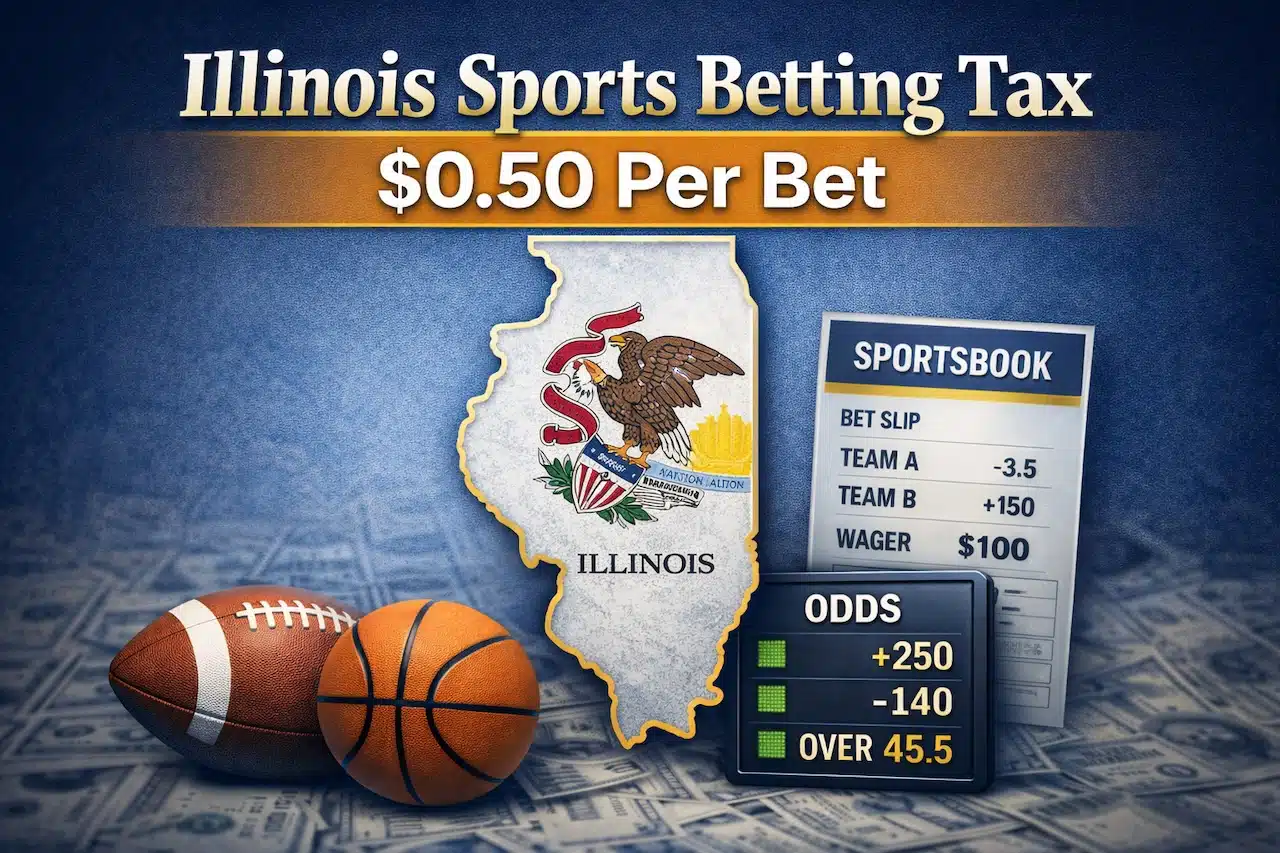
- Major sportsbooks passed the tax directly to bettors, adding a $0.50 fee to every bet
- The new tax structure may be pushing bettors toward offshore sportsbooks and reducing long-term state revenue
Sports fans are finding different ways to place their wagers after the Illinois Gaming Board implemented a new tax on sportsbooks in September 2025, according to a new report. The total number of wagers in September was down 15% year-over-year, a difference of nearly five million bets placed.
Sportsbooks Have Passed Taxes Onto Customers
Illinois introduced a $0.25 tax on the first 20 million bets and a $0.50 tax on every bet thereafter. Top sportsbooks like FanDuel and DraftKings responded by passing on the added costs to their customers with a flat $0.50 fee on every bet.
This has resulted in unintended consequences, forcing players to seek alternatives when shopping for the best odds. Suddenly, there’s fear from regulators that the sports betting market could be moving in the wrong direction.
Bettors Are Turning To Offshore Sportsbooks
Sports Betting Alliance president Joe Maloney said that he was surprised by the data, but doesn’t believe that sports fans have simply stopped betting.
“This is the only jurisdiction across all 30 states with online sports betting where this is actually happening,” Maloney said.
Instead, he believes bettors have turned to offshore sportsbooks to maximize their potential returns and avoid the Illinois sports betting tax.
“Any bettor with any level of sophistication is really paying attention to their costs, right?” Maloney said. “So, when you have the ability to have multiple competitive entrants in the legal regulated marketplace and then a myriad number of options in illegal or unregulated sites, you’re going to go for that best price.”
Why The Illinois Sports Betting Tax Isn’t Working
The decline in total wagers stands out in a national market that has otherwise shown steady growth. Even states like New York, where tax rates are higher than anywhere in the country, are reporting increasing betting volume despite higher tax rates.
The problem in Illinois isn’t that taxes have increased. Instead, the structure of the tax, which is applied on a per-bet basis rather than on sportsbook revenue, has altered the economics for both operators and consumers. For frequent bettors, even small added costs can quickly erode value, making alternatives outside the regulated market more appealing.
“Once the consumers flee this market, there’s no additional tax revenue to go to these important priorities that the state is clearly working on,” he said.
At the end of 2025, the Sports Betting Alliance filed a lawsuit against the city of Chicago seeking to block enforcement of a new law that would impose a tax on member sportsbooks operating within city limits. The ordinance would require legal sportsbooks to enter into a new licensing system and to pay a tax on 10.25% of sports betting revenue generated within the city.
If the trend continues, Illinois may face a difficult reality that higher taxes do not automatically translate into higher revenue. Instead, the state risks pushing bettors beyond the reach of regulators, leaving less consumer protection, less market oversight, and ultimately less money flowing back to the programs the tax was meant to support.
Players trust our reporting due to our commitment to unbiased and professional evaluations of the iGaming sector. We track hundreds of platforms and industry updates daily to ensure our news feed and leaderboards reflect the most recent market shifts. With nearly two decades of experience within iGaming, our team provides a wealth of expert knowledge. This long-standing expertise enables us to deliver thorough, reliable news and guidance to our readers.
Latest News