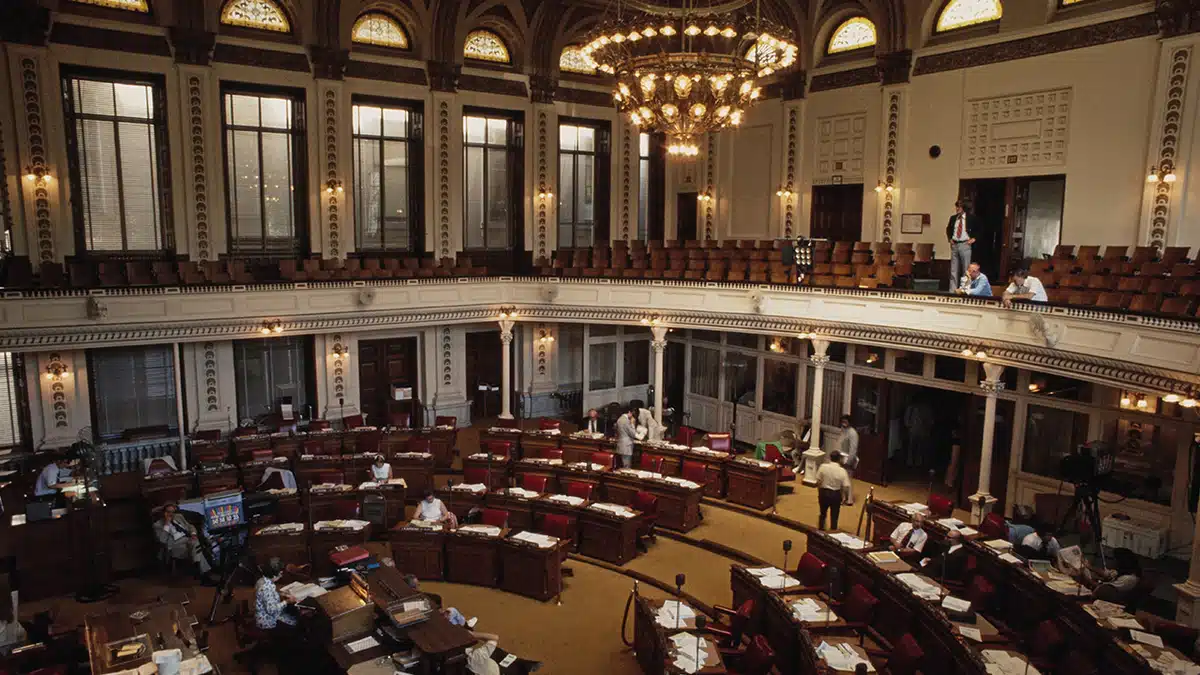
Illinois legislature moves to block Chicago sports betting tax under new bills

Illinois lawmakers have filed bills to preempt Chicago’s proposed sports betting tax, pushing state control over licensing and taxation and arguing local levies exceed municipal authority under state law.
Illinois state legislators are pushing back against the City of Chicago’s attempt to impose a local tax on sports betting revenue, introducing state bills designed to preempt municipal authority and reserve licensing and taxing power for the state.
The legislative action reflects growing concern in Springfield that allowing Chicago to levy its own betting tax could fragment regulation, burden operators, and undermine the broader state-wide sports wagering framework established under the Illinois Sports Wagering Act.
Competing Bills Aim to Strip Local Tax Authority
On January 13, 2026, Senator Patrick Joyce introduced two bills, including Senate Bill 2800 (SB 2800), intended to amend Illinois’ sports betting law to clarify that only the state has authority over sports wagering licensing and revenue taxation.
Under SB 2800, the Sports Wagering Act would be amended so municipal and county governments, including Chicago, could not impose fees, surtaxes or other costs on licensed sports betting operations or their receipts. The bill would take effect immediately upon approval, effectively blocking Chicago’s planned sports betting tax.
State sponsors argue the move is supported by the Illinois Constitution, which allocates taxing authority to the state and limits home-rule power when it conflicts with statewide regulatory schemes.
Local taxes on sports wagering are viewed as an overreach that could discourage operators or drive bettors to unregulated markets.
Chicago’s Tax Plans and Industry Pushback
Chicago officials previously proposed a 10.25 % tax on sports betting revenue as part of the city’s 2026 budget, along with new municipal licensing requirements for sportsbooks. This local policy was intended to help close budget gaps and generate revenue from wagering activity taking place within city limits.
Last year, major sportsbook operators, including DraftKings and FanDuel, filed a lawsuit seeking to block the tax and licensing scheme, arguing it conflicted with state authority and was unconstitutional. That lawsuit was filed just as operators were preparing for the tax to take effect, adding further legal complexity to the dispute.
Chicago’s tax proposal also comes amid statewide concerns that rising costs for bettors, including a graduated state per-bet tax, have reduced overall wagering activity, with reports of declines in betting volume partly tied to fee increases.
State vs. Local Authority in Sports Betting Policy
The push-and-pull between Chicago and Springfield highlights a broader policy question: who gets to set the rules and tax structure for sports betting in Illinois?
Illinois’ current sports wagering law, enacted in 2019, created a state-managed regime with uniform licensing and taxation provisions designed to provide a clear, centralized regulatory framework.
While counties like Cook have applied local tax measures on brick-and-mortar betting, the issue of local taxation on online sports bets has been more contentious, given that the vast majority of wagers, especially in cities like Chicago, occur digitally and cross municipal boundaries.
Proponents of state preemption maintain that uniformity is essential to maintain a competitive, efficient market and to prevent a patchwork of differing regulatory regimes that could deter operators and confuse bettors.
Next Steps and Legislative Outlook
SB 2800 and its companion proposals must still move through committee hearings and floor votes in both chambers of the Illinois General Assembly before becoming law. Lawmakers are expected to debate not only questions of authority but also potential revenue implications, both for Chicago’s budget and for statewide gaming receipts.
If passed, the legislation would effectively block Chicago’s sports betting tax and affirm that sports wagering regulation and taxation remain exclusively the domain of the state.
That outcome would have significant implications for how cities nationwide think about leveraging local taxes on digital gaming revenue in states with centralized regulatory frameworks.
State Lawmakers Reinforce Regulatory Control
As the 2026 session unfolds, Illinois legislators are signaling a strong preference for state-level control over sports betting policy, including taxation and licensing.
By moving to block Chicago’s sports betting tax through amendments to the Sports Wagering Act, lawmakers are seeking clarity and uniformity in a rapidly evolving gaming market.
The impasse also underscores continuing tension between local fiscal needs and statewide regulatory cohesion, a dynamic that could shape sports betting policy well beyond Illinois’ borders.
Players trust our reporting due to our commitment to unbiased and professional evaluations of the iGaming sector. We track hundreds of platforms and industry updates daily to ensure our news feed and leaderboards reflect the most recent market shifts. With nearly two decades of experience within iGaming, our team provides a wealth of expert knowledge. This long-standing expertise enables us to deliver thorough, reliable news and guidance to our readers.
Latest News