Opinion: Million Pound Shot Fails To Land Anti-Gambling Message In Favor of Drama
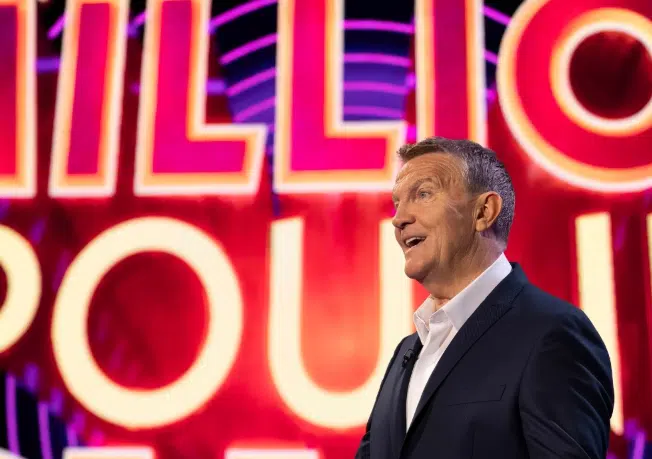
The Million Pound Shot, screened in the UK on Channel 4 on Sunday, presented a game show with a twist: players staked their own cash for a chance to win a life-changing amount of money.
Contestants come with a declared limit of how much they can afford to lose. Unlike other game shows, players have to put in their own bank cards and pay to play for the chance of winning big prizes.
The main contestant, Reece, a teacher, says he is willing to risk a maximum of £1,700, but this is quickly forgotten as the “tricks” of the gambling industry encourage him to go well beyond his means.
The twist is that Reece is not actually gambling his own money. He is a paid actor. This novel attempt to show the risks of gambling misses the mark, as it quickly loses any sense of realism.
After getting one question right, Reece ups his stake from £500 to £2000. It is an unrealistic jump that does little to show the reality of how gambling problems can spiral.
He does not seem to have any sure knowledge of the question. He gets it wrong, and he is quickly down £1,500 overall, almost reaching his limit immediately.
In the next question, he drops his stakes to £200, matching his stated limit. But after an “unbelievable feeling” of winning £800, he goes way overboard again, risking £3,000 on the subsequent question. That is almost double the amount he said he was willing to risk at the start of the show. Remember, at this point, we are only three questions in.
The immediate jump in stakes adds too much drama, meaning the whole show already feels staged. The impact of the underlying message is lost.
Gambling As Instant Addiction
We are led to believe that Reece has gone from a sensible non-gambler with a set limit to losing any sense of control in the matter of minutes. It portrays gambling as a kind of drug that will make you instantly addicted.
Another recent gambling awareness campaign visualized gambling harm as a whirlpool, which also does not quite capture the reality, according to Dr. Mary Donohue.
“Most people don’t feel a dramatic current,” said Dr. Donohue. “They feel a slow drift, which is part of why it goes unnoticed for so long.”
Dr. Donohue runs the Digital Wellness Centre, which aims to reduce gambling harm by improving decision-making among gamblers.
Real-Life Story Shows Slower Drift
The show is based around the real-life story of Patrick Foster, who struggled with gambling addiction for many years, racking up debts of around £250,000 ($335,000).
Foster appears at the end of the show to reveal how things reached a breaking point one year at the Cheltenham Festival. Also a teacher, he had been siphoning money from school funds and felt he had no option but to gamble to recover the losses. He ended up staking everything, £58,000 (around $77.,000) on a horse in the Cheltenham Gold Cup. And he lost it all.
But at this point, Foster had been gambling for 13 years. He began betting as a university student and continued for over a decade before it became an unmanageable problem.
The reality is that most people can gamble in moderation, and it only becomes a problem for a select few.
“In a typical month, around 22.5 million adults in Britain place a bet, whether on the National Lottery, in bookmakers, casinos, bingo halls or online. The overwhelming majority do so safely and responsibly,” said the Betting and Gaming Council (BGC) in a statement in response to the show.
The game show wants to warn viewers that they could develop an addiction, but it feels distant and unrealistic that people would fall into the depths of addiction as quickly as Reece.
Unsuspecting Audience Became Research Subjects
Dr. Donohue was also critical of the show’s deception. While the contestants were paid actors, the audience were unsuspecting members of the public who had not been told of the show’s premise.
“They were people who thought they were coming to a fun night out, and in effect they became research subjects without agreeing to it. They were put through real stress so the producers could capture natural reactions,” she said.
“Our brains are wired to protect others, and watching someone in distress activates the same circuits as feeling it ourselves. Deliberately triggering that in people who didn’t know what they were part of is callous, and it isn’t good advertising either. It shows the people you want to reach that you’ll use them.”
“Flip it around. If a gambling company had done this to an unsuspecting audience, there would be hell to pay, with inquiries and demands for regulators to step in,” Dr. Donohue added.
Losses Disguised As Wins Give Dopamine Hits
Dr. Donohue did admit that the show was effective in highlighting some of the gambling industry’s techniques to keep players betting.
“As an ad it is also far more powerful than most awareness campaigns, because it puts people inside the mechanics,” she said.
While a lot of gambling awareness efforts focus on the amount of money lost, the problem is a behavioral disorder rooted in dopamine-regulation pathology.
“Everything you’ve seen draws on the techniques used by the gambling industry to manipulate its customers,” says show host Bradley Walsh after revealing it was all staged.
One technique is to show losses disguised as wins. At one point, Reece wins £3,000, and the screen lights up, and he celebrates. In fact, he had staked £3,300, so he has actually lost money.
The BGC objected to the allegation that operators disguise losses as wins.
“The rules prohibit celebratory effects in these circumstances, rather than banning every sound or requiring all sounds to be different,” the gambling industry trade body stated.
At the end of the show, viewers see how this works on a gambling platform. The sound of a genuine win on a slots game at Ladbrokes is contrasted with the sound of a player getting back a little money but losing overall. The tone differs slightly; the latter is less intense but still feels like a celebration.
“A brief sound indicating the outcome of a game is not, in itself, evidence of a breach,” said the BGC.
But psychologist Dr. Steven Sharman said the sounds could “trick gamblers into thinking that they’re constantly winning a little bit, rather than constantly losing a little bit.”
Reece compares the rush of winning to the thrill of hitting a six in cricket, but he overplays his reactions. Just one win and he has no qualms about going way past his limits. In reality, it would take repeating this countless times before it truly affects a gambler’s decision-making and ability to retain control.
Other Industry Tricks Highlighted
Another trick is what Dr. Sharman calls the “pain of paying.” The introduction of bonus balls encourages Reece to take more risks.
“When you place some psychological distance between the individual and their perception of the money by tokenizing it, people think they’re spending the tokenized money and end up spending more money,” Dr. Sherman explains.
When Reece was considering quitting, he was offered the chance to unlock a bonus ball. The temptation of the free money led him to keep playing, gambling away £6,000 (around $8,000), almost four times the limit he had set at the outset.
It is an attempt to show how the responsible gambling tools offered by gambling companies may be easily abandoned. However, the speed at which Reece loses control makes the whole show feel unrealistic, and few are likely to heed its warning.
“We welcome scrutiny and recognise that there should be conversations about safer gambling. But that scrutiny must be fair, accurate, and evidence-based,” added the BGC.
Players trust our reporting due to our commitment to unbiased and professional evaluations of the iGaming sector. We track hundreds of platforms and industry updates daily to ensure our news feed and leaderboards reflect the most recent market shifts. With nearly two decades of experience within iGaming, our team provides a wealth of expert knowledge. This long-standing expertise enables us to deliver thorough, reliable news and guidance to our readers.
Latest News