Kalshi Signed With Five MLB Teams, and Four Play Where Sports Betting Is Illegal
Kalshi picked its five favorite MLB teams this week, and the list tells you almost everything about where the company thinks it needs to fight hardest for fans.
The prediction market operator signed multi-year exclusive brand partnerships with the Atlanta Braves, Boston Red Sox, Los Angeles Dodgers, San Diego Padres and San Francisco Giants, according to an announcement from Kalshi.
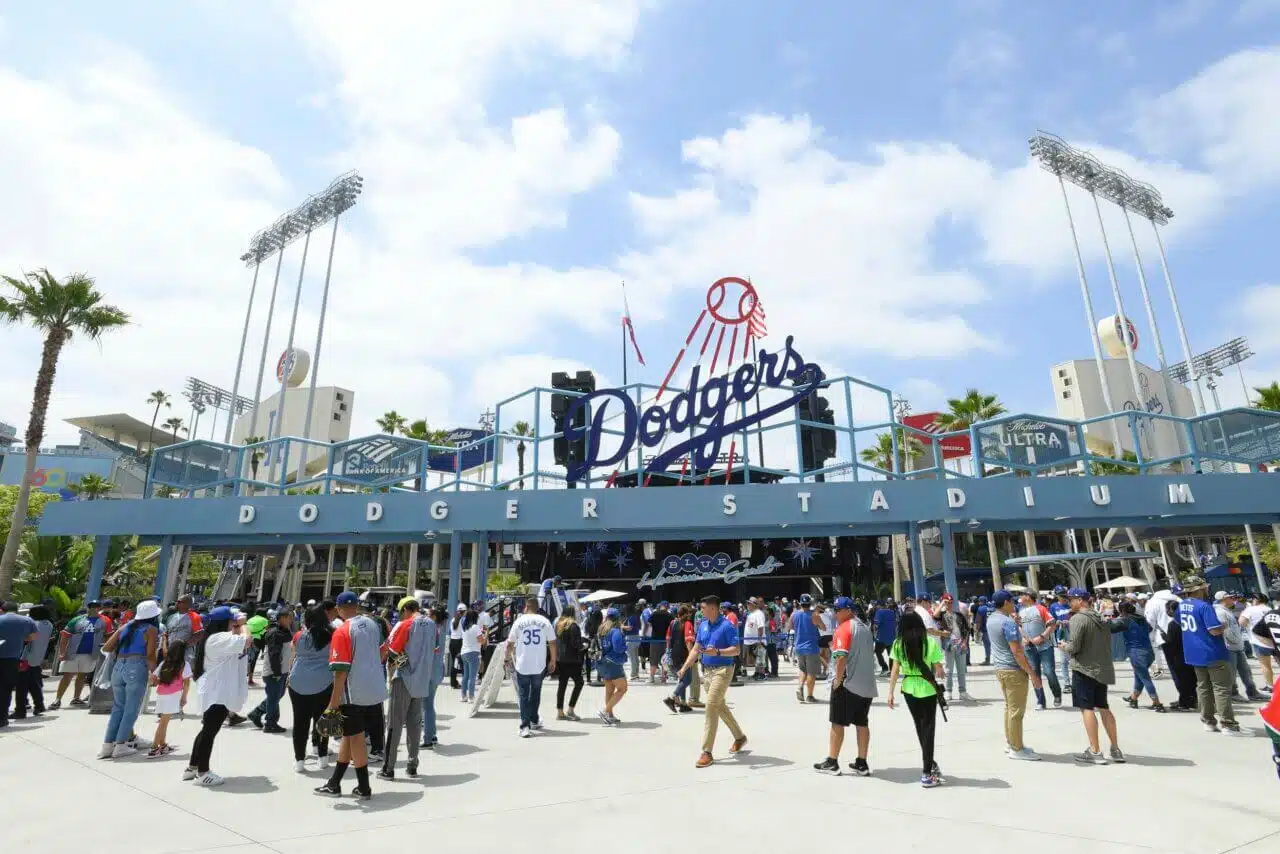
The deals bring in-stadium signage, social media activations, radio spots and fan engagement programming, with the Dodgers arrangement going furthest: LED signage throughout Dodger Stadium, naming rights to the “Gold Glove Bar” and activations in Centerfield Plaza. Baseball trading volume on Kalshi is up 36 times year over year, and Adam Barrick, the company’s head of sports partnerships, framed the push as an extension of existing fandom rather than a new one. “The idea is that fans are already engaging with their favorite teams on Kalshi, so it only makes sense to extend that fandom to some of the most beloved baseball teams in America,” he said.
What Barrick didn’t say is that four of those five fan bases live in states where they can’t legally bet on a baseball game through a licensed sportsbook. That’s not an accident.
Four of Five Teams Play in States Without Legal Sports Betting
Start with the geography. The Dodgers, Padres, and Giants all play in California, a state that has rejected legal sports betting at the ballot box and shows no sign of revisiting the question soon. The Braves play in Georgia, another state with no legal sports betting market. Only the Red Sox sit in a state, Massachusetts, where FanDuel and DraftKings already compete for the same customer.
That’s four of five teams in markets where a regulated sportsbook simply isn’t an option. Kalshi has spent the past year building a version of California specifically, given the state’s population and the intensity of its baseball fandom, into its most important market without ever asking Sacramento for permission.
Federal preemption is the entire legal theory behind that approach: Kalshi argues its contracts are federally regulated financial products under the Commodity Exchange Act, not state-licensed gambling, which is why it can operate in states that have banned sports betting outright. Signing team sponsorships in exactly the states where that argument matters most isn’t subtle. It’s the whole strategy, wearing a jersey. The story takes another step when you realize the league itself, MLB, already has a deal with a prediction market platform.
MLB Already Picked a Partner, and It Wasn’t Kalshi
Here’s the complication: Major League Baseball already has an exclusive, league-wide prediction market partner, and it’s Polymarket, not Kalshi. The league signed Polymarket as its official prediction market exchange in March, a deal that grants exclusive use of MLB marks and logos in prediction products along with Official League Data access through Sportradar.
The Polymarket deal came wrapped in an integrity framework that goes further than most sports-league gambling partnerships. Commissioner Rob Manfred and CFTC Chairman Michael Selig signed a memorandum of understanding establishing confidential information-sharing on integrity matters, regular meetings between the league and the regulator, and restrictions on the riskiest contract types: individual pitches, manager decisions, umpire calls. Any other exchange offering baseball contracts has to meet similar integrity standards. Manfred called protecting on-field integrity the league’s “top priority.”
So Kalshi’s team-level deals aren’t competing with Polymarket for the same rights. They’re built into the gaps Polymarket’s exclusivity doesn’t cover, much like FanDuel holds the separate “Official Sports Betting Partner” designation alongside Polymarket’s “Official Prediction Market Exchange” title. MLB built room for multiple gambling-adjacent categories rather than one winner-take-all sponsor, and Kalshi found the opening at the team level instead of the league level.
Other Leagues Are Handling This Very Differently
MLB’s split-the-difference approach looks especially deliberate next to what other leagues are doing. The NHL signed both Kalshi and Polymarket in October in a clean, league-wide deal covering official data access, use of NHL marks, and virtual signage across the regular season, playoffs, Winter Classic, and Stadium Series. “As prediction markets continue to evolve at a rapid pace, partnering with the two market leaders, Kalshi and Polymarket, provides a tremendous opportunity for the broadest fan engagement during the NHL season,” said Keith Wachtel, the league’s president of business.
The NFL sits at the opposite end of the spectrum. It’s the one major league still refusing to deal with either platform, and it isn’t quiet about why. The league filed a comment letter with the CFTC in late July opposing the agency’s proposed prediction market rules, calling for the minimum trading age to rise to 21 and for outright bans on contracts covering discretionary officiating calls, individual player performance, and anything “knowable in advance,” like a first play call.
The NFL has also warned Congress that markets tied to player transactions invite insider trading: agents and team employees with advance knowledge of a signing have every incentive to trade on it before the announcement drops. None of that has stopped the platforms. Polymarket has built out more than 112 markets on 2026 free agency destinations alone, operating in a space the league has explicitly said it doesn’t want touched. Kalshi has stayed more cautious by comparison, offering Super Bowl futures but no individual player contracts. The NFL wants this activity to stop. Right now, it can’t make that happen. The best they could do was ban prediction market commercials during the most recent Super Bowl.
That leaves four leagues running four different playbooks. The NHL picked both platforms at once. MLB picked one platform at the league level, leaving room underneath for team deals. The NFL is refusing to pick anyone and seems to be losing that fight anyway. The NBA hasn’t decided yet, reportedly still negotiating terms with both Kalshi and Polymarket, with nothing signed as of this writing. Kalshi’s team-by-team MLB strategy only makes sense against that backdrop. It isn’t so much a rejection from the league as a workaround within a structure MLB built on purpose, and a preview of what Kalshi could try next if the NFL’s objections ever stop mattering.
The Dodgers’ Other Casino Partner Isn’t Saying Anything
The sharpest irony is at Dodger Stadium. The Dodgers have held an “official California casino partner” relationship with Yaamava’ Resort & Casino, owned by the San Manuel Band of Mission Indians, for more than 15 years. San Manuel spent roughly $103 million opposing California’s 2022 sports betting ballot initiative and has argued publicly that prediction markets amount to unregulated Class III gambling operating outside tribal compacts, a threat other tribal gaming advocates have raised as prediction markets expand into territory tribes consider their own under the Indian Gaming Regulatory Act.
San Manuel has said nothing publicly about Kalshi’s new arrangement with the same team it has sponsored for a decade and a half. That silence speaks louder than any statement. A tribal gaming operator that spent nine figures fighting to keep sports betting out of California now shares a stadium concourse with the company using federal law to get a version of it back in.
Whether that’s a quiet accommodation or just a fight San Manuel isn’t ready to pick in public, the Dodgers are the one franchise standing in the middle of both the prediction market question and the tribal gaming one at the same time, and neither side seems eager to talk about it yet.
Players trust our reporting due to our commitment to unbiased and professional evaluations of the iGaming sector. We track hundreds of platforms and industry updates daily to ensure our news feed and leaderboards reflect the most recent market shifts. With nearly two decades of experience within iGaming, our team provides a wealth of expert knowledge. This long-standing expertise enables us to deliver thorough, reliable news and guidance to our readers.
Latest News