Arizona Has Lost Six Sportsbooks in Four Years, and Now It’s Looking for New Ones
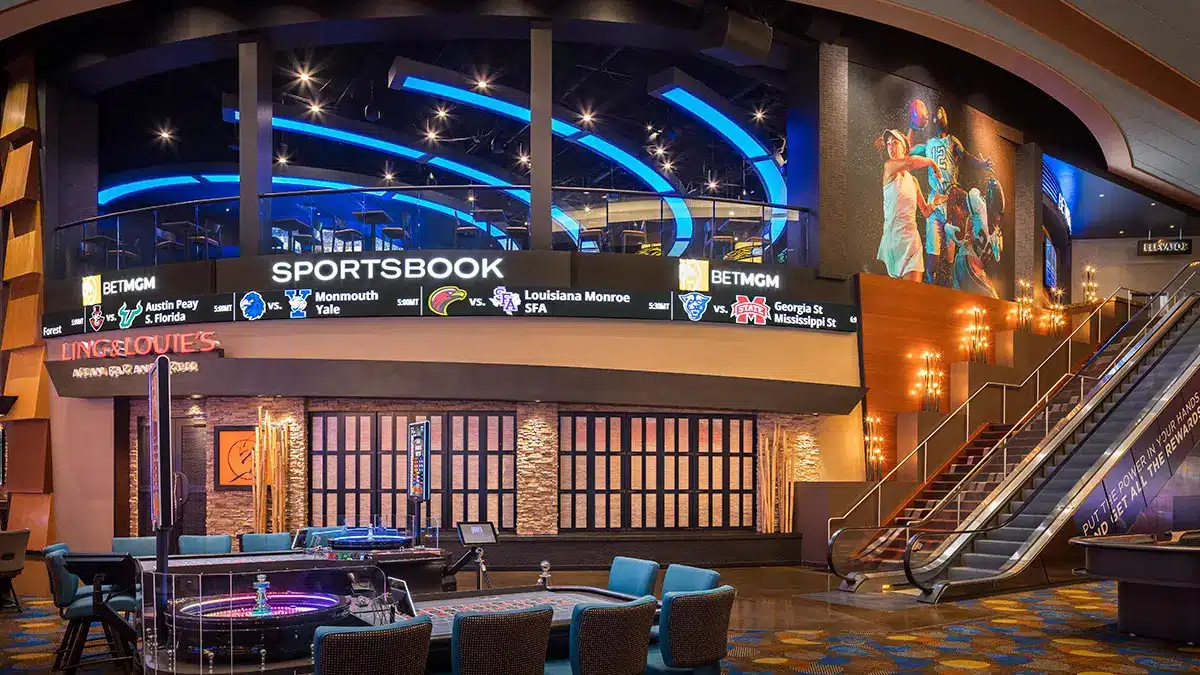
Arizona will accept new sports betting license applications next month to fill six slots left vacant by exiting sportsbook operators.
The Arizona Department of Gaming announced this week that it will open a new application window for event wagering licenses from June 26 through July 10. At least one slot is reserved for a tribal operator and at least one for a professional sports franchise partner, in keeping with the licensing structure Arizona set up when it legalized sports betting in 2021. The state currently has 14 active licensees out of a statutory cap of 20. The application window is intended to fill some of the six open slots.
The majority of outlets will be covering this as part of routine administrative procedures. What is infinitely more interesting is the story of how the slots became available in the first place.
Arizona launched its sports betting market in September 2021 with strong operator interest and a broad licensing structure. The state divided its 20 available licenses equally between Arizona tribes and professional sports franchise partners. Initial demand exceeded supply, with operators paying premium prices to secure partnerships with eligible Arizona entities. By the end of the first year, the market was running at capacity.
Four years later, six of those operators are gone, and the state is actively recruiting sportsbooks. So, what sportsbooks decided to exit the market, and why?
The Exit List Isn’t Exactly a Who’s Who of Top US Sportsbooks
The departures from Arizona over the past three years read like a tour of the sports betting industry’s secondary tier. Betfred, the major UK operator that has been trying to scale a US business since 2020. SuperBook Sports, owned by the Westgate Las Vegas SuperBook, has decades of Nevada heritage. Betway is the international brand that has scaled across European and African markets. Fubo Sportsbook is the offshoot of the FuboTV streaming service that briefly attempted a US sportsbook before its 2023 closure. TwinSpires, the Churchill Downs-owned digital wagering brand, exited US sports betting in 2024. Unibet, the Kindred Group’s flagship product, was shut down in the US in early 2024. WynnBet, the Wynn Resorts sportsbook that was supposed to compete with the largest operators, was instead wound down in most states by 2024.
SaharaBets is the seventh, and its departure was for a different reason. The book lost its sports franchise partner when the NHL’s Arizona Coyotes relocated to Utah in 2024. That detail is its own commentary on the structural risks of the tethered licensing model that Arizona has adopted. A sportsbook can lose its operating authority through no fault of its own if its anchor partner picks up and leaves.
Taken together, the exits represent more than 30% of the licenses Arizona originally awarded. The brands that left were not fly-by-night operators. Although they may not have been leaders of industry, they were international brands, casino-affiliated books, and venture-backed startups. They all decided that the math of competing in Arizona did not work.
Breaking Down the Sportsbook Math in Arizona
The reason is straightforward enough if you look at the revenue distribution. Arizona generated approximately $713 million in sports betting revenue in 2025, putting it sixth in the country. Spread evenly across 14 operators, that would be about $51 million per book per year, which is a viable business at a reasonable operating cost.
Unfortunately for the books, revenue is not spread evenly. DraftKings and FanDuel typically take 70 to 75 percent of revenue in any mature US sports betting market. BetMGM, Caesars, Fanatics, and bet365 absorb most of what is left. The remaining operators compete for somewhere between 5 and 10 percent of total market revenue, divided among eight or more brands. In Arizona’s case, that means the bottom two-thirds of the operator list is dividing roughly $50 to $70 million in annual revenue. At normal sportsbook hold rates and operating costs, that math does not support a national brand with a real marketing budget.
And this is the dynamic that drove the exits. Operators that could not break into the top tier discovered that the second tier was not large enough to support their cost structure. WynnBet, despite being backed by a major casino company, never gained the market share it needed in any state. Betway and Unibet ran the same play and reached the same conclusion. The Arizona departures are not Arizona-specific. They are the same operators that exited New Jersey, Pennsylvania, Michigan, Indiana, Virginia, and several other states in roughly the same period.
Why a New Operator Would Still Pursue an Arizona License
Given all the reasons the exits happened, the question of why any new operator would step into the vacated slots must be asked. The economics that pushed six operators out have not changed. The top two still take three-quarters of the market. The third-tier scrap is still divided into too many ways to support most national brands. The cost of acquiring a tribal or sports franchise partnership is non-trivial, and the regulatory compliance burden in Arizona is real.
But there are three categories of applicants who are plausible and may view Arizona as an opportunity.
The first is operators with a regional or product-specific niche. A book that focuses on horse racing, esports, daily fantasy crossover, or a specific demographic might find Arizona viable, since it is not competing head-to-head with DraftKings on volume. The bar for profitability at that scale is lower and makes enough sense to pursue.
The second is tribal operators looking to formalize a digital presence tied to existing brick-and-mortar operations. Arizona’s structure reserves licenses for tribes, and a tribe with an existing land-based casino has marketing channels and a player database that an outside brand has to build from scratch.
The third is operators willing to pay for optionality rather than immediate revenue. A new entrant might apply for an Arizona license now on the bet that the market structure will shift in the next several years. Acquisition activity, consolidation, regulatory changes, or product expansion could all change the math. Holding a license keeps the option open for the future.
The Prediction Market Question Hovers Over All of It
There is one more piece of context that did not exist when Arizona first awarded its licenses in 2021. Like the rest of the US states, Prediction markets have become a massive talking point in the competitive landscape of sports betting. Prediction markets, operating under federal CFTC jurisdiction, are now offering sports-event contracts in all 50 states, including Arizona, without paying state taxes or holding a state license. The American Gaming Association estimated this week that prediction market platforms have cost states more than $1 billion in tax revenue since the start of 2025.
A new applicant for an Arizona sportsbook license is signing up to pay licensing fees, accept state tax rates, and compete against operators who pay neither. The Arizona Department of Gaming has been aggressive about enforcement against unlicensed gambling, issuing cease-and-desist orders to multiple operators in 2025. The CFTC’s jurisdictional claim over prediction markets is the open regulatory question that the entire US gambling industry is now circling.
Whether prediction markets ultimately get folded into the state regulatory framework, displaced by federal preemption, or fall somewhere in between will determine how the math looks for operators applying to Arizona in June. The application window opens in less than a month. The answer to the larger regulatory question is probably not coming that fast.
Players trust our reporting due to our commitment to unbiased and professional evaluations of the iGaming sector. We track hundreds of platforms and industry updates daily to ensure our news feed and leaderboards reflect the most recent market shifts. With nearly two decades of experience within iGaming, our team provides a wealth of expert knowledge. This long-standing expertise enables us to deliver thorough, reliable news and guidance to our readers.
Latest News