Nevada Wants to Ban Prediction Markets. It Also Wants Prediction-Style Slots.
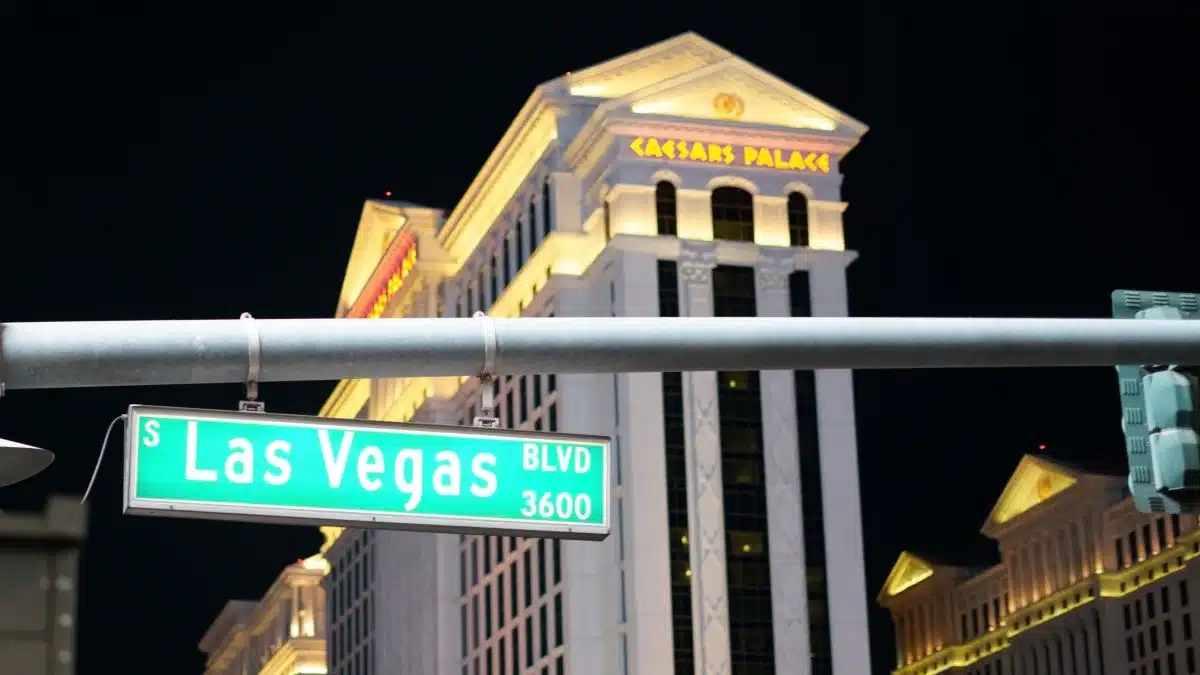
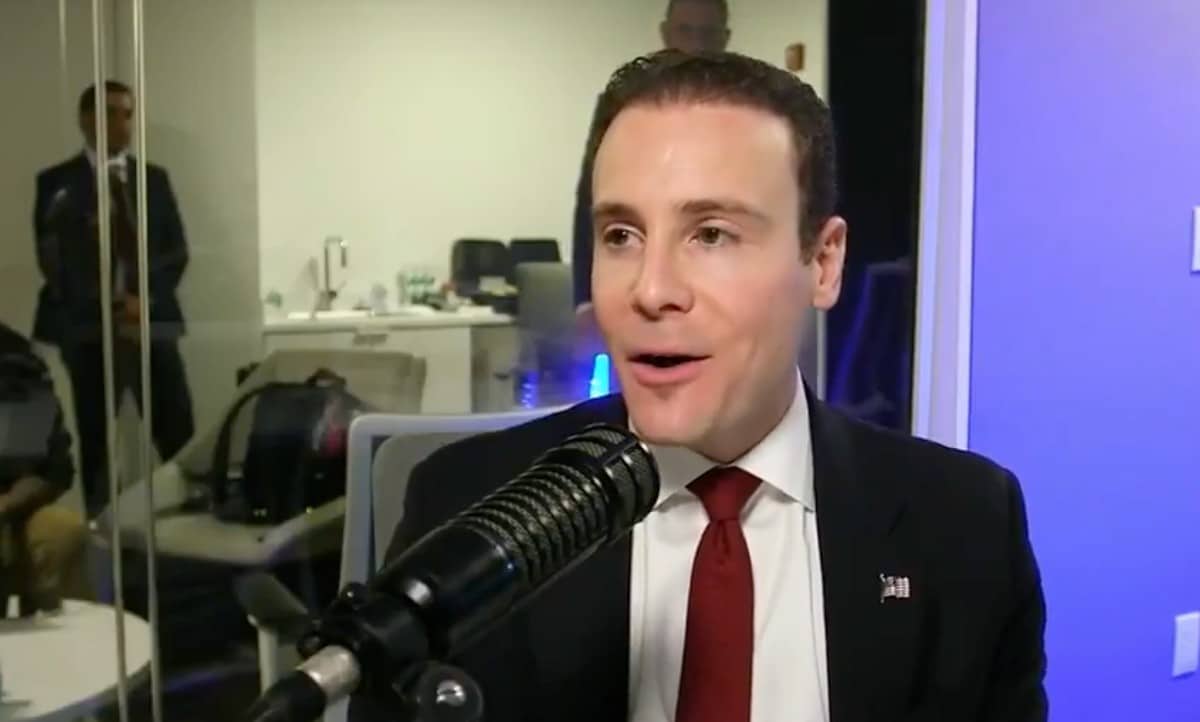
Nevada Gaming Control Board Chair Mike Dreitzer revealed the state is evaluating a prediction-style slot machine product even as Nevada continues its legal battle against prediction market platforms.
The Nevada Gaming Control Board has spent the better part of 2026 in court trying to keep Kalshi off the state’s casino floors. It has filed complaints, obtained restraining orders, argued before the Ninth Circuit, and maintained consistently that prediction market products are gambling and must comply with state gaming law. That position has not changed.
What has changed is what NGCB Chair Mike Dreitzer said out loud last week.
Speaking at the Economic Club of Las Vegas, Dreitzer told gaming executives that he had seen a five-reel spinning slot machine driven by prediction outcomes at ICE Barcelona earlier this year, and that the Board is currently evaluating a prediction-style product. “We are currently looking at a prediction-style product,” he said, without naming the manufacturer under consideration. “We’re okay with that innovation, as long as you do it in accordance with laws and regulations.”
That last clause is doing significant work. The distinction Dreitzer is drawing is not between prediction markets and prediction-style products. It is between products that comply with Nevada’s licensing framework and products that do not. From the Board’s perspective, those two sentences are entirely consistent. From the outside, they look like the state trying to have it both ways.
The Argument Nevada Is Actually Making
To be fair to Dreitzer, the argument is coherent if you follow it carefully. Nevada’s objection to Kalshi is not that prediction-style mechanics are inherently wrong. It is that Kalshi is offering what the state considers a gambling product while claiming CFTC jurisdiction exempts it from state gaming law.
Dreitzer has previously warned that prediction market operators outside state licensing frameworks could ultimately set up casino-like products entirely unregulated by states. The concern is not prediction mechanics themselves but the precedent of allowing a class of product to operate in a gaming-adjacent space without state oversight, consumer protections, or the regulatory accountability that Nevada’s framework requires.
A licensed prediction-style slot machine, approved through Nevada’s test lab, subject to gaming board oversight, operated by a licensed casino, and available only to patrons physically present on a regulated floor, is a fundamentally different animal from a CFTC-registered exchange offering sports event contracts to anyone with a smartphone in all 50 states. The regulatory DNA is entirely different even if the surface experience looks similar.
The Innovation Problem Dreitzer Is Solving
The prediction-style product comment landed inside a broader speech about Nevada falling behind on gaming innovation, and that context matters for understanding why Dreitzer is saying it.
“Frankly, Nevada has fallen behind on innovation and technology. We’ve been late to the party with respect to getting newer products approved through the test lab in ways that are apparent and consistent,” Dreitzer said. He pointed to manufacturers who had told the Board that products could not pass through Nevada because the approval process could take a year. “With Governor Lombardo’s leadership, I’ve picked up that mantle to say we’re going to streamline it.”
The Board has brought in new leadership in its test lab, introduced a new set of regulations it describes as overdue, and is actively working to create what Dreitzer called “an environment of the latest and greatest of gaming technology.” He found 30-year-old regulations that no longer made sense, including instances where the Board was asking licensees for information it did not use.
The innovation urgency is not abstract. Nevada’s gaming industry has faced well-documented challenges over the past year, with visitor numbers in Las Vegas down and competition from regional markets intensifying. The controversial yet innovative DK Replay, the Hard Rock motorsports product, and the expanding prediction market ecosystem have demonstrated consumer appetite for the mechanics underlying prediction-driven gaming. If that appetite is going to exist regardless, Nevada has a clear interest in ensuring its licensed operators can serve it.
What a Licensed Prediction-Style Slot Actually Is
The product Dreitzer saw at ICE Barcelona is worth understanding on its own terms. A five-reel spinning slot machine driven by predicted outcomes is not a prediction market. It does not involve event contracts, binary payouts, or CFTC jurisdiction. It is a slot machine whose reel outcomes are determined by real-world event data rather than by a random number generator, structured and presented in the familiar visual language of a slot machine.
This is the same conceptual territory as historical horse racing machines, which determine outcomes from a library of past races rather than a live RNG. It is also the territory that DraftKings is exploring with DK Replay, that Hard Rock explored with its motorsports product in Florida, and that Sportradar’s Playradar division is building infrastructure to serve. The use of real-world event data as a substitute for randomness in casino products is an emerging category that multiple companies are approaching from different angles simultaneously.
The regulatory distinction that matters is this: a slot machine using prediction mechanics goes through the Nevada test lab, gets certified, sits on a licensed casino floor, and is subject to every consumer protection obligation that Nevada gaming law imposes. A CFTC-registered exchange offering the same underlying bet over a mobile app does not. That is the line Dreitzer is drawing.
The Irony That Remains
Even granting all of that, the optics of Nevada’s simultaneous positions are not easy to dismiss. The state’s argument in court is that prediction market products are gambling and should be regulated as such. The regulator’s statement at an industry conference is that prediction-style products are worth bringing to Nevada’s regulated gambling floors. A litigant arguing in the Ninth Circuit that prediction-style mechanics belong under state gaming law while simultaneously evaluating those same mechanics for approval under state gaming law is making a stronger argument for the latter position than it may intend.
The most generous reading of Dreitzer’s comments is that he is describing the regulatory framework’s proper function: prediction mechanics, like all gambling mechanics, should flow through licensed channels, and Nevada is ready to process them through those channels for legitimate operators. The less generous reading is that Nevada wants to preserve its monopoly on gambling infrastructure and is willing to adopt the mechanics it is suing to exclude, as long as the revenue flows through its own licensees.
Both readings are probably partially true, which is generally how gaming regulation works.
Players trust our reporting due to our commitment to unbiased and professional evaluations of the iGaming sector. We track hundreds of platforms and industry updates daily to ensure our news feed and leaderboards reflect the most recent market shifts. With nearly two decades of experience within iGaming, our team provides a wealth of expert knowledge. This long-standing expertise enables us to deliver thorough, reliable news and guidance to our readers.
Latest News