Nevada Court Forces Kalshi to Geofence Sports and Election Markets
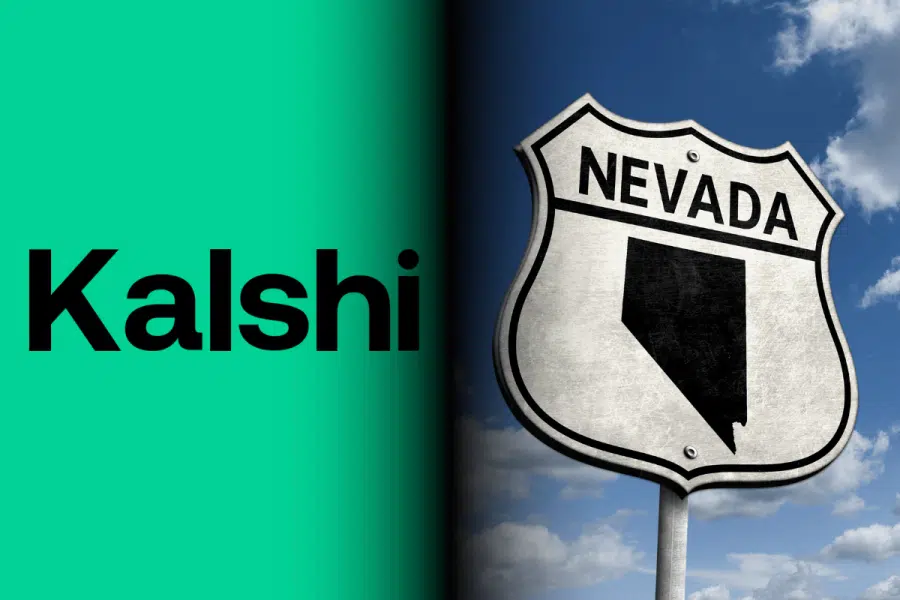
A Nevada court has issued a temporary restraining order barring Kalshi from offering sports, entertainment, and election contracts in the state, marking the first forced geofence of its core products.
Kalshi has been forced out of Nevada. A state court granted a temporary restraining order on March 20 at the request of the Nevada Gaming Control Board.
The order prohibits Kalshi from offering contracts tied to sports, elections, and entertainment events within the state. It marks the first time Kalshi has been legally compelled to geofence its core products in any state. Kalshi and Nevada have been in court for months now in a high-stakes battle that could set a serious precedent for prediction markets in the US.
The TRO is in effect for 14 days. A hearing is scheduled for April 3.
Nevada’s Legal Argument
The NGCB has long maintained that Kalshi is operating without a Nevada gaming license in violation of state statutes. The regulator’s position is that sports event contracts constitute wagering activity under Nevada law. The board cited NRS 463.0193 and NRS 463.01962 as the relevant statutes.
NGCB Chairman Mike Dreitzer addressed Kalshi’s claim that its products are legal in all 50 states directly. “Kalshi has repeatedly stated that its operations are legal in 50 states, which is clearly not true,” he said. He described the board’s enforcement action as a statutory duty to protect the public and to ensure that wagering in Nevada takes place through licensed books.
Nevada law is not lenient on unlicensed gambling. Under NRS 463.160, operating an unlicensed gambling business is a felony. It carries fines of up to $50,000 and imprisonment of up to 10 years. Observers have noted that Nevada could pursue criminal charges under that statute in addition to the civil TRO.
Kalshi Complies Under Protest
Kalshi confirmed it has restricted access to sports, entertainment, and election markets for Nevada users. In an email to affected users, the company said the restriction is temporary and geographically isolated. Other product categories, including crypto, weather, and world news markets, remain available. Users with pending positions in restricted markets can sell those positions or allow them to resolve but cannot open new ones.
Kalshi was clear about its disagreement with the order. The company described the situation as unprecedented and said it is confident in its legal position. It also encouraged Nevada users to contact their state representatives to express support for prediction markets. The company framed licensed sportsbooks as a model designed to penalize winners and maximize user losses, contrasting that with what it described as open and fair access on its own platform.
An Escalating Legal Situation
The Nevada TRO arrives as Kalshi faces mounting legal pressure from multiple directions simultaneously.
Arizona became the first state to pursue criminal charges against Kalshi just days before the Nevada order. On the same day as the Nevada TRO, a federal judge in Arizona denied Kalshi’s request for emergency relief and raised questions about whether the case belongs in federal court at all. Florida Governor Ron DeSantis has also suggested his state is examining whether prediction markets comply with existing law, potentially adding another front to the litigation map.
Also on March 20, Kalshi co-founders Tarek Mansour and Luana Lopes Lara, along with Chief Compliance Officer Joshua Beardsley, were named in a federal class-action lawsuit filed in Georgia. Additional class-action complaints have been filed in other jurisdictions.
What Happens Next
If Kalshi prevails at the April 3 hearing, the geofence could be lifted and its Nevada products restored. If the court converts the TRO into a preliminary injunction, the restrictions remain in place pending further litigation. Kalshi could appeal either outcome. The CFTC may also seek to intervene, given Kalshi’s core argument that its contracts fall under exclusive federal derivatives jurisdiction.
Nevada’s action is significant beyond its immediate effect. It demonstrates that state regulators are willing and able to force platform-level geofencing even while federal legal questions remain unresolved. Other states that have been considering enforcement actions are watching the April 3 outcome closely.
Players trust our reporting due to our commitment to unbiased and professional evaluations of the iGaming sector. We track hundreds of platforms and industry updates daily to ensure our news feed and leaderboards reflect the most recent market shifts. With nearly two decades of experience within iGaming, our team provides a wealth of expert knowledge. This long-standing expertise enables us to deliver thorough, reliable news and guidance to our readers.
Latest News