

Minnesota Lawmakers Introduce Bills Targeting Sweeps Casinos and Prediction Markets
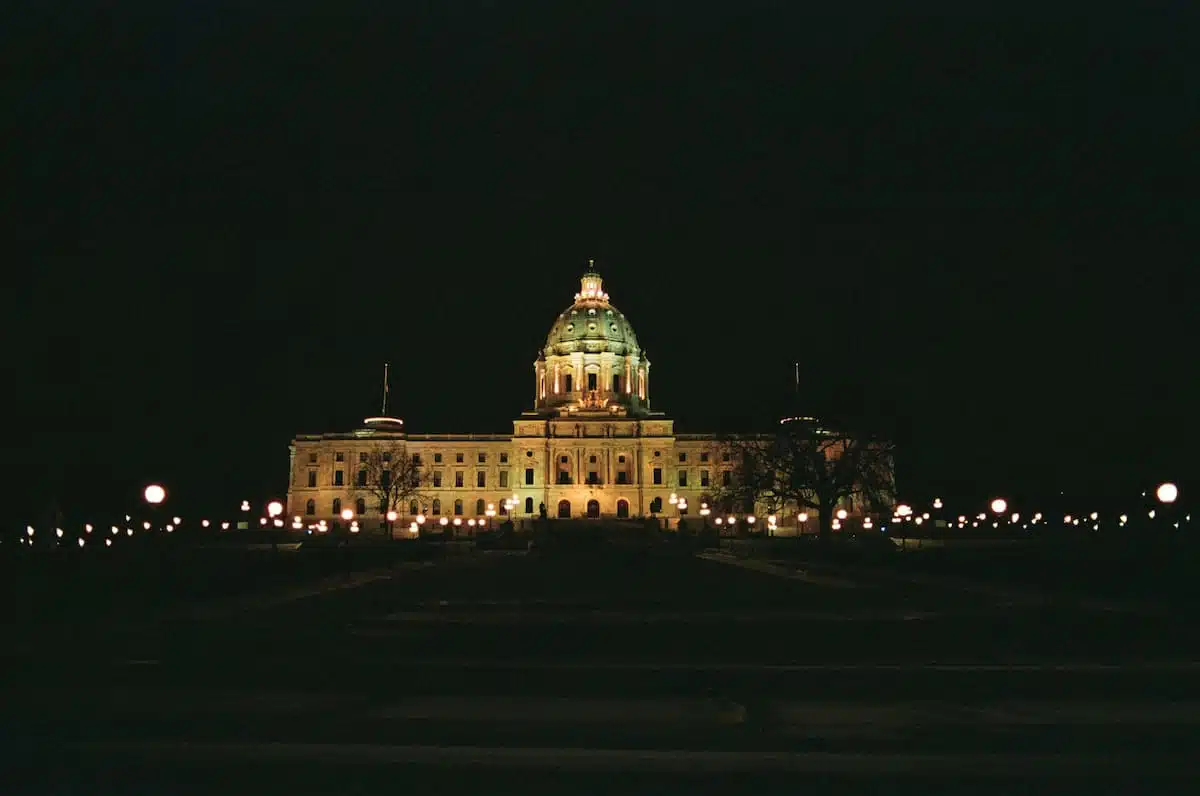
Photo by Urvish Oza on Unsplash
Minnesota lawmakers have introduced two Senate bills targeting sweepstakes casinos and prediction markets, the latest sign that both sectors are becoming a growing focus among lawmakers nationwide.
Both bills were referred to committee, with no hearing dates scheduled yet.
Minnesota Bill Seeks to Ban Online Sweepstakes Casinos
Senate Bill 4474 would prohibit sweepstakes casino platforms that utilize dual-currency systems.
The bill defines an “online sweepstakes game” as a digital game or promotion that:
- Is accessible through the internet or a mobile device
- Uses a dual-currency system, allowing players to exchange currency for prizes or cash equivalents
- Simulates a casino-style or other gambling type.
The bill targets the entire ecosystem. It prohibits anyone from operating, conducting, or promoting sweepstakes games in the state. The restrictions also apply to payment processors, geolocation providers, platform providers, and media affiliates.
The bill directs the commissioner of public safety and the attorney general to deny companies the right to operate if they knowingly derive revenue from sweepstakes casino activity.
It also directs state regulators to impose penalties under Minnesota Statute 325F.755, which sets fines for violations of consumer prize-promotion laws.
The Latest State Targeting Sweepstakes Casinos
With SB 4474, Minnesota follows a broader national trend among lawmakers moving against sweepstakes casinos.
Last week, Indiana became the first state this calendar year and seventh since 2025 to enact legislation targeting the platforms.
In several other jurisdictions, bills have already cleared one chamber. Those include Tennessee, Oklahoma, Iowa, and Maine. In Florida, the legislature recently passed a bill that targets illegal gambling operators, which regulators could potentially apply against sweepstakes casinos.
There are also active bills in states like Maryland, Louisiana, and Illinois.
The push reflects an increasing awareness among lawmakers about sweepstakes casinos, which operate in a legal gray area. Industry representatives have testified in multiple states, calling for regulation, a path some lawmakers have shown interest in.
Separate Bill Targets Prediction Market Contracts
A second Minnesota bill seeks to explicitly prohibit certain prediction market contracts.
Senate Bill 4511 would prohibit individuals from maintaining or operating businesses that allow participants to place wagers, enter trades, enter into contracts, or take other financial positions tied to the outcomes of future events.
The bill outlines several categories of prohibited event contracts, including those tied to:
- Sports events or outcomes within sporting events
- Casino-style contests or gaming promotions
- Events involving specific individuals or groups of people
- Political outcomes, including elections
- Catastrophic events such as wars or natural disasters
- Death or mass casualty events
Senate Bill 4511 would also prohibit the advertisement of these types of prediction markets under certain circumstances, including advertising targeted at younger audiences or near schools.
The prohibition also extends to payment processors, financial institutions, and platform providers that continue facilitating transactions after receiving a cease-and-desist order.
Violations are subject to felony charges.
If enacted, the bill would take effect on Aug. 1.
States Increasing Scrutiny of Prediction Markets
SB 4511 is one of two active bills in Minnesota targeting prediction markets. Earlier this month, lawmakers introduced a sports betting bill that included a prohibition on certain types of prediction market contracts.
The proposals arrive as prediction markets face growing scrutiny from state gambling regulators and lawmakers across several states, as well as at the federal level, where bills targeting the sector have been introduced.
Platforms such as Kalshi have been involved in legal disputes across over a dozen states over whether their sports event contracts fall under federal derivatives regulation or state gambling laws.
Lawmakers in states such as New York, Iowa, New Jersey, Hawaii, Illinois, and Connecticut have introduced legislation to either prohibit prediction markets entirely, certain types of bets, or impose age restrictions.
Additionally, federal lawmakers have introduced several bills. Sen. Richard Blumenthal introduced the Prediction Markets Security and Integrity Act, which bans wagers on war, cracks down on insider trading, and protects consumers from fraud.
Sen. Adam Schiff and Rep. Mike Levin introduced the DEATH BETS Act, which prohibits prediction markets related to terrorism, assassination, war, or an individual’s death.
Additionally, Reps. Blake Moore and Salud Carbajal introduced bipartisan legislation to establish a regulatory framework for prediction markets. Meanwhile, Rep. Dina Titus filed a bill to ban sports event contracts.
Players trust our reporting due to our commitment to unbiased and professional evaluations of the iGaming sector. We track hundreds of platforms and industry updates daily to ensure our news feed and leaderboards reflect the most recent market shifts. With nearly two decades of experience within iGaming, our team provides a wealth of expert knowledge. This long-standing expertise enables us to deliver thorough, reliable news and guidance to our readers.
Latest News