Brazil’s President Wants to Backtrack on iGaming
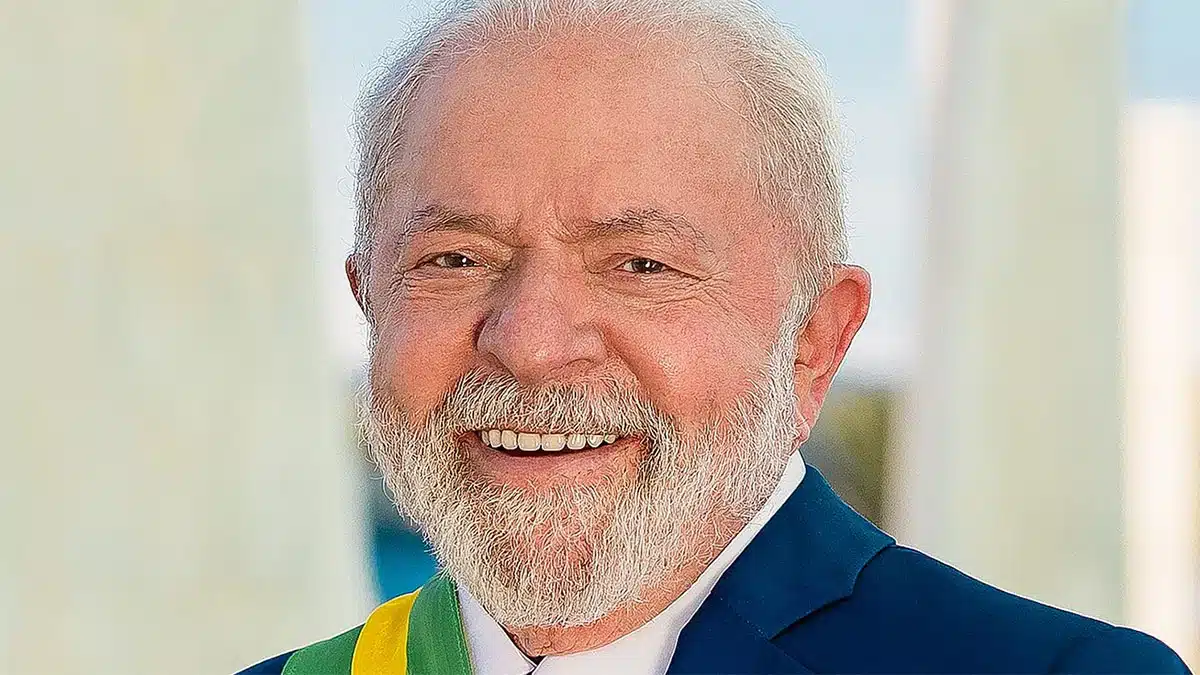
Luiz Inácio Lula da Silva
Brazil’s president, Lula, is suddenly campaigning against the same iGaming industry he personally legalized.
On March 7, Brazil’s President Luiz Inácio Lula da Silva addressed the nation in a broadcast connected to International Women’s Day.
He used the occasion to describe gambling addiction as a “tragedy” for Brazilian households and called on Congress and the judiciary to help him ban digital casinos. His speech singled out a particular slot title, themed around a baby tiger, as a symbol of national ruin.
It’s not the only gambling topic on many Brazilians’ minds as elections loom. Lula has been pushing a gambling revenue tax plan in recent months, one that has received significant pushback.
It was a forceful speech. It was also delivered by the man who signed Brazil’s iGaming framework into law in December 2023, which perplexes analysts and onlookers who watched Lula campaign for the industry with confidence and vigor just a few years ago.
The Law Lula Now Wants to Undo
The legislation Lula himself approved was originally designed to establish oversight of fixed-odds sports betting platforms. The scope expanded during parliamentary debate, when an amendment introduced in the Chamber of Deputies broadened the authorization to include online gaming products. The regulated market went live on January 1, 2025. The first arrivals included international iGaming brands such as SmartSoft and Lotus, which launched in partnership with Caesars Entertainment.
In its first year, it registered 25 million unique bettors and generated approximately $6.6 billion in gross gaming revenue. By any measure, the experiment worked, which makes Lula’s current posture difficult to interpret as anything other than electioneering.
Brazil heads into a general election on October 4, 2026, with Lula seeking another term. Since early in the year, he has taken an increasingly firm stance against online betting platforms, making the sector a focal point of his emerging campaign. In February, he declared himself “no friend to the gambling industry.” The International Women’s Day address was merely the latest and loudest installment in that series.
The political logic is not hard to follow: Lula is in a close race with Flavio Bolsonaro, son of the former president, and gambling addiction carries real emotional weight with voters who have watched household money drain into mobile phones. That is a legitimate concern. What is less legitimate is pretending that a ban is the answer.
The entire point of Law No. 14,790/2023 was to bring that existing activity under supervision. A ban would not make Brazilians stop gambling. It would make them stop gambling on regulated platforms, with consumer protections, responsible gambling tools, and tax obligations attached. That distinction seems to have gone missing somewhere between the policy office and the podium.
Industry advisors are broadly skeptical that a ban is even achievable. Ramiro Atucha, founder of Atucha Strategic Advisory, warned that halting tax collection and triggering investor lawsuits would be severe, and that it would set a damaging precedent for any company considering Brazil as a destination for capital.
The Association of Women in the Gaming Industry, which represents more than 1,400 women working across the Brazilian gambling and betting ecosystem, expressed surprise and concern at the speech, noting, with some irony, that Lula had apparently overlooked the sector’s role in creating employment and professional leadership opportunities for women. It is hard not to read that as the kind of unforced error that comes from treating a policy question as a campaign prop.
Kalshi Picks Its Moment in Brazil
Into all of this walked Kalshi. The same day Lula delivered his Women’s Day address, XP International announced a strategic partnership with the U.S.-regulated prediction market platform, positioning XP as the first financial institution in Brazil to bring that asset class to the country.
It marks Kalshi’s first expansion outside the United States. Initially, the markets will focus on financial and economic events, given their potential to increase pricing efficiency and improve market information quality.
Prediction markets occupy a different legal category than the iGaming products Lula is targeting. Brazil currently lacks a formal regulatory framework governing prediction markets. While the country’s online betting sector has been subject to regulation since January 2025, those rules apply specifically to licensed fixed-odds betting operators.
Kalshi is not, in its own telling, a gambling company. According to Kalshi, it is a CFTC-regulated event-contracts exchange, and it is threading that needle carefully by routing its access to Brazil through XP’s international investment accounts rather than the country’s betting licensing regime.
That is a sensible approach, and the distinction is real. Whether a government in campaign mode will respect it is an entirely separate question.
The Ministry of Finance’s Secretariat of Prizes and Bets stated, on the same day as the XP announcement, that no companies are currently authorized to operate prediction markets in Brazil, stopping short of calling them illegal, but making clear that the regulatory ground is unsettled. Local media reports indicate that licensed betting firms have already asked authorities to ban prediction platforms like Kalshi and Polymarket outright. That last detail is telling. The incumbents are not waiting to see how this plays out.
A Compelling Case at the Worst Possible Time
Kalshi co-founder Luana Lopes Lara, who is Brazilian, has said the company sees Brazil the same way it did the U.S. years ago. That is, it’s an early-stage market where the company expects to be able to grow faster than it can in the more mature domestic market.
That optimism may be well-founded. Prediction markets have a compelling case to make to Brazilian regulators: they are financial instruments, not slot games, and their use cases, hedging against inflation, interest rate movements, and political outcomes, are far removed from the Fortune Tiger problem Lula was describing. If anyone can make that argument credibly in Brazil, a company partnered with the country’s largest brokerage and founded in part by a Brazilian native probably can.
The harder truth is that the argument’s merits may not matter much right now. Lula may not ultimately be able to ban iGaming, since the legal and political obstacles are real, but the rhetorical environment he is creating is not one in which novel gambling-adjacent products will find smooth sailing. The industry built something serious in Brazil.
The president who signed it into law is now campaigning against it, and election day is seven months away.
Image Credit: Luiz Inácio Lula da Silva — official (license)
Players trust our reporting due to our commitment to unbiased and professional evaluations of the iGaming sector. We track hundreds of platforms and industry updates daily to ensure our news feed and leaderboards reflect the most recent market shifts. With nearly two decades of experience within iGaming, our team provides a wealth of expert knowledge. This long-standing expertise enables us to deliver thorough, reliable news and guidance to our readers.
Latest News