Lazcano: How Mexico set itself up for 2026 success
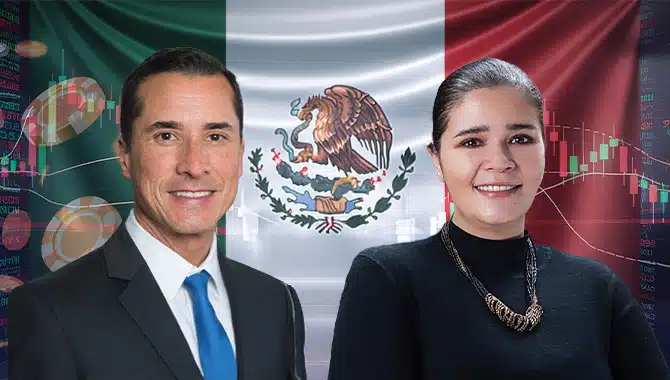
Returning Gaming America contributors from the Lazcano Sámano law firm, Alfredo Lazcano and Andrea Avedillo, reflect on the past 12 months for Mexican gaming.
As 2025 draws to a close, the Mexican gambling industry finds itself reflecting on a year marked not by sweeping legislative reform, but by clear signals that a change is no longer a distant prospect. For decades, the gambling sector in Mexico has operated under the Federal Law on Games and Drawings of 1947, a statute designed for a different era, under a diverse political and social reality, and stretched thin by the digital revolution. Yet this year, through fiscal proposals, policy programs and political declarations, a picture has emerged of a Government increasingly committed to regulatory updates to the sector.
While much remains uncertain (as of writing, likely reforms are being discussed in Mexico), 2025 could be remembered as the year in which the need for legislative change in our country moved from the corridors of industry to the political arena. After a long time, a genuine opportunity for regulatory remodeling appears within reach.
The fiscal debate: IEPS in the spotlight
The most tangible development of the year was the proposal to amend the Special Tax on Production and Services Law (IEPS Law), unveiled in September as part of the 2026 Economic Package. The initiative seeks to raise the tax rate on “games with bets and drawings” from 30% to 50%, while also extending obligations to non-resident operators offering services digitally to Mexican players (i.e., a possible legalisation of foreign or offshore operators on the condition they comply with this potential reform to the IEPS Law).
The measure immediately caught the attention of industry stakeholders. Not only would it represent one of the steepest tax increases in the region, but it would also bring offshore operators squarely into Mexico’s fiscal net; mirroring the amendments on digital services that were successfully imposed by the Mexican Government back in 2019 on technological platforms of other innovative sectors, such as Amazon, Airbnb, Netflix and Uber.
Although still under discussion in Congress, the IEPS drastic increase proposal underscored the Government’s growing focus on gambling as a revenue source. Regarding the new scheme intended for online betting as a ‘digital service,’ it also sparked debate on regulatory harmonization, enforcement challenges, tax implications, fair competition but, above all, the delicate balance between fiscal ambition and market sustainability.
Whether or not the reform is enacted in its current form, the message from 2025 is clear: gambling is now firmly on the public agenda.
Policy commitments:
SEGOB’s Sectoral Program
Another milestone came in the year with the release of the 2025–2030 Sectoral Program of the Ministry of the Interior (SEGOB). In this strategic document, SEGOB outlined its priorities for the next five years and gambling regulation was explicitly addressed.Among its “objectives, strategies and lines of action” was the recognition that Mexico’s gambling framework requires “updating of regulatory frameworks and technological innovation.” Though brief, this acknowledgment represented a formal policy commitment by the current administration, signaling that regulatory reform is no longer merely an industry aspiration but a stated objective of the Government.
Political statements: Law changes on the horizon
If the IEPS proposal was the year’s headline and the Sectoral Program its footnote, the public statements by the Minister of the Interior – Mrs. Rosa Icela Rodríguez – may prove to be the most consequential. In the second half of 2025, the Minister openly declared – during an appearance before the Federal Congress – that she is “working on legislation that provides certainty to investments and sanctions potential illicit acts related to money laundering.” Coming from the head of SEGOB, this declaration fueled expectations that the groundwork is being laid for a more comprehensive overhaul – or at least certain renewal – of Mexico’s gambling regime.
As the year closes, hope runs high that Mexico may soon embrace a regulatory framework fit for the 21st century. But optimism must be tempered with caution.
Industry response: Hope and skepticism
The industry’s reaction to these developments has been mixed: equal parts optimism and apprehension. On one hand, the convergence of fiscal, policy and political signals suggests Mexico is closer than ever to modernizing its gambling framework. We think that a positive legislative reform couldboost legal certainty, promote free competition, introduce more transparency into licensing structures, strengthen consumer protection – and provide a sound regulation for digital channels.
On the other hand, the pace and design of the amendment remain uncertain. The proposed 50% IEPS rate has raised concerns that fiscal priorities may outweigh regulatory coherence. Questions persist about how obligations will be distributed between local permit holders and foreign operators, and whether high tax burdens could push players toward unregulated markets.
The cautious view is that while 2025 brought important declarations and a clear sense of direction, the real challenge lies ahead. The process of translating political intent into concrete legislative and regulatory instruments will demand technical precision, inter-agency coordination and industry consultation. Drafting a new law or renewing a legal framework is only the first step; achieving consensus, ensuring compatibility with existing fiscal and consumer protection frameworks and building the institutional capacity to enforce the new rules will take considerably longer. In that sense, 2025 may be remembered as the year when Mexico set the course for change, but not yet the year when the change was achieved.
Closing thoughts: 2025 as a possible game changer
This year delivered three decisive signals for Mexico’s gaming industry. First, a fiscal proposal that placed gambling squarely in the tax spotlight, introducing measures that, if enacted, could substantially reshape the regulatory landscape for online gambling – in particular, with the inclusion of offshore operators in the formal economy in exchange for paying their respective taxes in Mexico.
Second, a sectoral policy program that explicitly identified modernization of the country’s gaming framework as a governmental objective, marking a clear shift from passive oversight to active reform. And third, a political declaration from the highest levels of Government, affirming the intention to propose a more up-to-date legislation. Taken together, these developments go beyond mere rhetoric: they indicate that transformation is no longer a question of if, but when, and perhaps more importantly, how.
As the year closes, hope runs high that Mexico may soon embrace a Wregulatory framework fit for the 21st century. But optimism must be tempered with caution: The details of any amendment will matter greatly, and the risks of miscalibration are real, as delays or excessive burdens can undermine credibility and market health. The challenge will be to design a framework that strikes the right balance between fiscal goals, consumer protection and industry sustainability. So is Mexico up to that challenge?
Players trust our reporting due to our commitment to unbiased and professional evaluations of the iGaming sector. We track hundreds of platforms and industry updates daily to ensure our news feed and leaderboards reflect the most recent market shifts. With nearly two decades of experience within iGaming, our team provides a wealth of expert knowledge. This long-standing expertise enables us to deliver thorough, reliable news and guidance to our readers.
Latest News