

West Virginia HB 4398 Proposes 25% Sports Betting Tax, a 150% Rate Hike
Key Highlights:
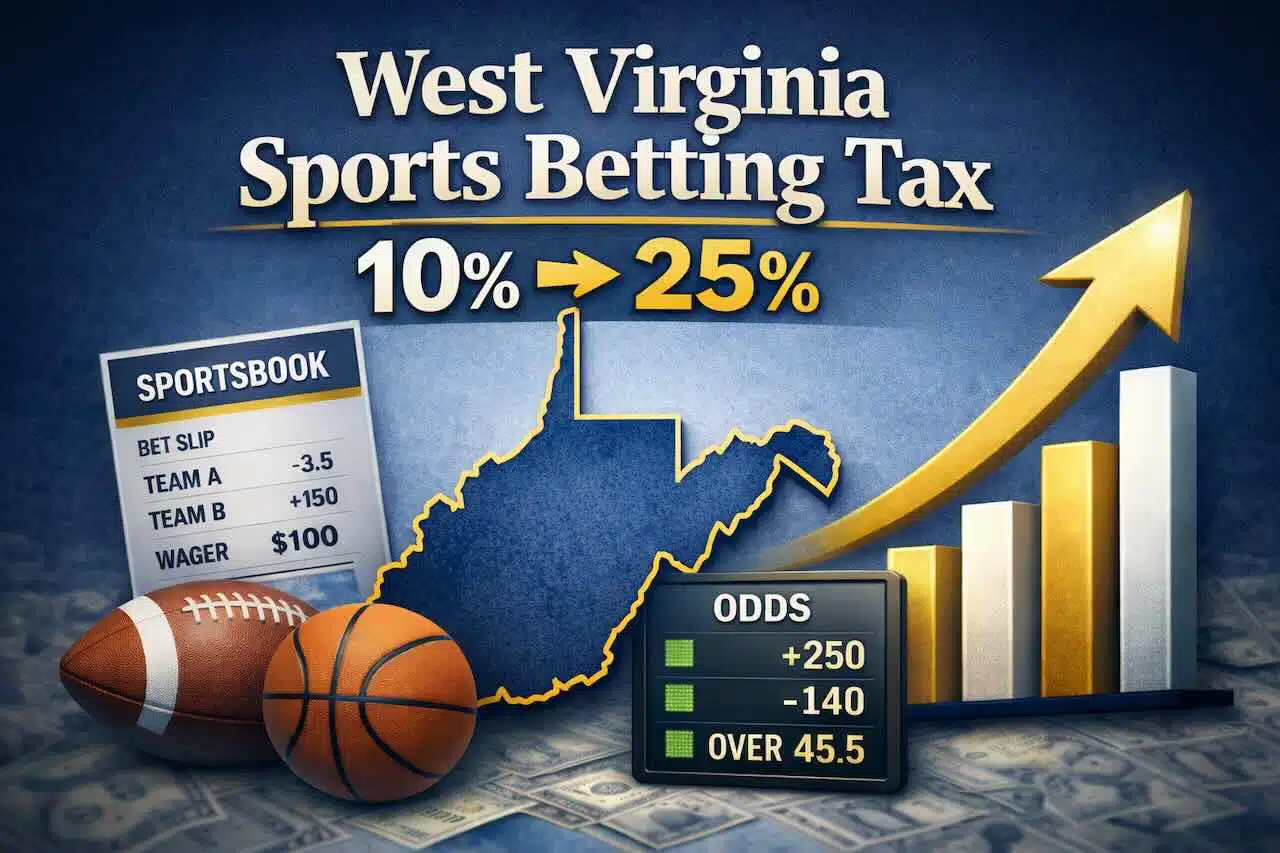
- West Virginia lawmakers introduced HB 4398 to raise the sports betting tax from 10% to 25%
- The increase targets sportsbook net revenue, not total betting handle
- The move would quickly shift West Virginia from low-tax outlier to high-cost market
- If passed, operators could respond with unfavorable odds and fewer promotions
West Virginia’s sports betting industry could soon face its biggest financial shake-up since launch, as a newly introduced bill would more than double the state’s tax on licensed sportsbooks.
On Friday, Delegate Adam Burkhammer, a Republican member of the West Virginia House of Delegates, proposed a bill that would raise the state’s sports betting tax by 150%
House Bill 4398 aims to increase the state’s sports wagering “privilege tax” from 10% to 25% of adjusted gross sports wagering receipts, a move that could change how the best online sportsbooks operate in the Mountain State.
Currently, the median tax rate among over 30 states who have legal statewide mobile wagering is 15%.
The bill was formally introduced during the 2026 regular legislative session and has been referred to the House Government Organization Committee.
If enacted, it would turn one of the nation’s most operator-friendly states into one of the least profitable for sportsbooks, nearly overnight.
What This Means For Bettors
If the tax increase becomes law, sportsbooks would have less revenue left after paying taxes, which could affect the overall product offered in West Virginia.
For bettors, that could mean:
- Fewer bonus offers
- Less favorable promotions
- Tighter betting odds
- Fewer new features
While none of those changes are guaranteed, they are common responses when sportsbooks face higher operating costs.
Tax Increase Could Have Unintended Consequences
With online sports betting now a proven and predictable revenue stream, lawmakers appear to be revisiting whether the state is capturing enough value from licensed operators.
The newly proposed tax hike would put West Virginia among the highest-taxed sports betting jurisdictions in the country.
Betting apps typically price in tax expenses when setting promotions, odds, and marketing strategies. A significantly higher tax rate could force sportsbooks to tighten promotional offerings or offer unfavorable odds, especially compared to neighboring states.
Industry analysts warn that steep tax burdens can have unintended consequences, such as reducing operator profitability, discouraging new market entrants, and potentially pushing bettors toward offshore sportsbooks.
Bottom Line
As state budgets face pressure in other areas, lawmakers are hoping that raising taxes on sports betting can generate more revenue without increasing taxes on residents.
How operators respond could reshape promotions, odds, and the overall betting experience in West Virginia for years to come
Players trust our reporting due to our commitment to unbiased and professional evaluations of the iGaming sector. We track hundreds of platforms and industry updates daily to ensure our news feed and leaderboards reflect the most recent market shifts. With nearly two decades of experience within iGaming, our team provides a wealth of expert knowledge. This long-standing expertise enables us to deliver thorough, reliable news and guidance to our readers.
Latest News