
Best Online Poker Sites for Real Money in 2026
Online poker sites operating outside state-regulated frameworks give people in the US access to larger player pools, higher stakes, and larger tournament guarantees than domestic rooms offer. The best online poker sites for real money cover everything from micro-stakes cash games at $0.01/$0.02 up to nosebleed tables, and MTTs ranging from those with buy-ins under a dollar to events with multi-million-dollar prize pools.
State-regulated online poker sites remain available in only a handful of states with small, fragmented player pools, which is why most US players use internationally licensed platforms that serve the entire country. We pick the best online poker sites based on factors like player pool size, cash game and tournament variety, banking options, withdrawal speed, and software quality.


Some links on our site are affiliate links, meaning we may earn a commission if you sign up, at no additional cost to you. Our in-house experts ensure all recommendations remain independent and are based on thorough research and analysis. For more information, please see our Affiliate Disclaimer and Editorial Policy.
Top Online Poker Sites in July 2026










Key Takeaways
-
CoinPoker is the strongest overall option for US online poker in 2026, offering softer fields, fast crypto payouts, bonuses suitable for both recs and grinders, and excellent mobile poker apps.
-
Offshore poker remains the most practical option in the US because of significantly higher traffic, packed tournament schedules, bigger and more frequent bonuses, and flexible banking options that regulated rooms still can’t match.
-
Choosing the right site matters far more in poker than in casino sites, with traffic, rakeback, software, and player pool softness shaping your online poker experience.
Best Online Poker Sites – Best Features Compared
- CoinPoker Crypto Poker Room with $7M in Weekly CoinRewards
- ACR Poker Home Of The Venom Series Tournaments With its Multi-Million Dollar Guarantees
- Stake.us Poker Via Social Sweepstakes Model with Daily Reward Drops
- Ignition Anonymous Poker Room With Straightforward Mobile Software & $1,500 Welcome Bonus
- Bovada Anonymous Poker Pools With Zone Fast-Fold And Soft Recreational Fields
- BCPoker New Poker Room with Easy Bonuses for Beginners
- Black Chip Poker High-Traffic WPN Skin With up to 65% Rakeback for Grinders
- BetOnline Chico Network Poker With Soft Cash Games And Full Crypto Banking
- Ya Poker Latin America-Focused WPN Skin With $2,000 Bonus And 27% Rakeback
- Jack Poker Poker Room with a Fantastic Welcome Bonus and Instant Cash Offer
Games Available at the Best Poker Sites
Texas Hold’em

Texas Hold’em is the variant you’ll find at every online poker site, and is by far the most popular option for beginners and pros. You’ll get two hole cards face down, then five community cards are dealt in the middle – three cards with the flop, one more on the turn, and another on the river – with betting rounds in between. You make the best five-card hand using any combination of your hole cards and the board. It’s the easiest variant to pick up and what you should play if you’re just starting out.
Omaha
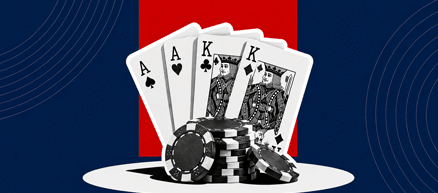
Omaha is Hold’em’s wilder, more action-packed cousin. The hand rankings and general gameplay are the same. But you’re dealt four hole cards instead of two, which makes it easier to make big hands, so pots get massive, and swings get crazy. But the catch is that you must use exactly two of them combined with exactly three community cards to make your final hand.
Pot Limit is the standard betting structure, meaning you can only bet up to the size of the current pot. If you love hitting draws and constant action, Omaha is your game.
PLO5

PLO5, or 5-Card Omaha, is similar to the standard variant. But you get five hole cards instead of four, which means even more combinations and the possibility of even more monster hands. You still have to use exactly two of your hole cards with three from the board. It’s a high-variance version that’s recently become more popular on online poker sites, especially in cash games where the action stays nonstop.
Omaha Hi/Lo

Omaha Hi/Lo adds a split-pot twist on classic Omaha that doubles the strategy. The pot gets divided between the best high hand and the best qualifying low hand (five unpaired cards all eight or lower, with aces counting as low). If nobody qualifies for low, the high hand takes the whole thing. You’re still working with four hole cards, using exactly two, with three from the board. The best outcome is “scooping,” where you end up winning both halves with one hand.
7-Card Stud

Before Hold’em took over, 7-Card Stud was the most popular poker variant in the US. There are no community cards here. Each player receives seven of their own cards over five betting rounds, with two face down, four up, and then one final card face down. You pick your best five-card hand from those seven. Since some of everyone’s cards are visible, paying attention and remembering folded cards gives you a huge edge. It’s slower-paced and more analytical, which is why it’s fallen out of favor. But you’ll still find decent action at some major online poker sites.
Short Deck

Short Deck, also known as 6+ Hold’em, is basically Hold’em with all the deuces, threes, fours, and fives removed, leaving just 36 cards. Hand rankings also differ slightly, with flushes beating full houses, and an ace can play low to make A-6-7-8-9 the lowest straight. Everything feels like a big hand, so there’s constant action and big bets. It got famous through high-stakes Asian cash games before spreading worldwide.
| Poker site | Available Poker Games |
| CoinPoker | Texas Hold’em, Omaha, PLO5, PLO6, Short Deck |
| ACR Poker | Texas Hold’em, Omaha, PLO5, Omaha Hi/Lo, 7-Card Stud |
| Stake.US | Texas Hold’em, Omaha |
| BCPoker | Texas Hold’em, Omaha, Short Deck |
| Ignition | Texas Hold’em, Omaha, Omaha Hi/Lo |
How to Find The Right Poker Format
You’ll find a variety of online poker formats available at the top online poker sites. The growing popularity of crypto poker has also expanded the range of available games, giving you faster transactions and more privacy while you play. Picking the right one depends on what kind of action you’re looking for, how much time you have to play, and your bankroll.
Cash Games vs Tournaments vs Sit & Gos
- Cash Games: Cash uses fixed blinds and real chip values. You can also leave whenever you want, allowing you to stick to any set time limits or enjoy short sessions. It’s best for anyone looking for steady progression instead of the boom-or-bust nature of tournaments. Cash games have the calmest swing profile, are the easiest to schedule around, and don’t require you to factor in ICM or any other late-stage tournament math. In a sense, it’s poker at its purest. It’s also the best option if you prefer playing on poker apps on your phone, since the time commitment is up to you.
- Tournaments (MTTs): Tournaments don’t use real cash values, but instead, give you a fixed number of chips after you buy in. You’re eliminated from the tournament once you run out of chips, and the winner is the last person standing. Payouts are top-heavy, so it can be really exciting when you run deep and make it in the money, but it’s difficult to maintain consistency. They require a significant time commitment, and while payouts are rare, they are much larger.
- Sit & Gos (SNGs): SNGs fill as soon as seats are taken and wrap up much more quickly than traditional MTTs. They’re still strategic, but don’t require hours of commitment. Variance lands between cash and MTTs.
Tournament Structures Explained (Freezeout, Bounty, Turbo, Satellites)
Once you dive into tournaments, the structure matters almost as much as the buy-in. Here are the main types of MTTs you’ll find at the best online poker sites.
- Freezeouts: You’ll only get one shot at a freezeout tournament. You can’t punt early and rebuy your way out of trouble, so freezeouts reward discipline and deeper postflop play.
- Bounty/PKO: Bounties pay you an instant cash prize for knocking players out, which adds a refreshing layer of aggression and risk-management. PKOs ramp this even harder, with bounty sizes growing as the tournament progresses. You’ll still win cash for finishing in the top slots, as you would with a normal tournament.
- Turbos/Hypers: Blind levels climb quickly, squeezing out deep postflop lines and forcing sharper short-stack decisions. Edges are narrower, but volume is higher, making it the best option for grinders.
- Satellites: Play for a seat rather than cash, making survival more valuable than chip dominance. Satellites stretch bankrolls by letting players take shots at bigger events for less. Some satellites will earn you entry to another online tournament with a bigger buy-in, while others get you a seat at a live event.
Poker Bonuses, Rakeback, and Rewards
Bonuses in online poker aren’t as straightforward as casino promos. They tie into rake, volume, and clearance rates in ways that reward consistent play. Understanding how they work will help you avoid inflated “headline offers” and instead focus on rewards that actually translate into bankroll.
Welcome Bonus
Welcome or sign-up bonuses are what bring you in the door, with many of the best poker sites featuring fantastic offers. These are usually deposit match bonuses, with the poker room matching your first deposit 100% or more, up to a fixed amount, like $2,000.
But these bonuses aren’t released upfront. Instead, the bonus unlocks in increments, depending on how much rake you generate. They also usually have an expiry period, usually 30 or 60 days after your first deposit.

Rakeback
Rake is the fee you pay for every cash game hand or MTT you join, and with rakeback, the poker room returns a percentage of that fee. You’ll find lots of options here, ranging from just 5% at Stake to 65% at ACR and Black Chip.
While some sites offer a flat rakeback to everybody, others use a tiered system linked to their VIP programs. Rakeback is added to your balance once a week at most poker sites.
Free Tournament Tickets
Free tournament tickets are another great way to keep playing at a poker site, giving players access to MTTs without spending anything on buy-ins. Unlike freerolls, these tournaments have real cash value; you’re just not paying the entry fee to join.
Some sites offer tournament tickets to their low- to mid-level MTTs as a part of the welcome bonus, while others provide tickets to exclusive events based on your VIP level.
No-Deposit Bonus
No-deposit bonuses are super rare, because you don’t have to spend any of your own money to get them. These won’t be the biggest amounts, and you won’t be able to withdraw it. But you’ll be able to use it right away for cash games or MTT entries.
BCPoker is one of the best online poker sites offering a no-deposit bonus right now, with $5 available when you sign up through its mobile poker apps.

Loyalty Programs
Loyalty programs are a way for the best poker sites to reward regular players and grinders. It can take a lot of time at the tables to reach the highest tiers, but every level you unlock has something to offer.
At most poker sites, climbing the ranks will open up cash rewards and increase your rake percentage, along with giving you access to exclusive high-value freerolls or tournament tickets.

Bonuses Available at the Best Poker Sites
| Poker Site | Welcome Bonus | Rakeback | Other Bonuses |
| CoinPoker | 150% up to $2,000 | Folded in CoinRewards | $7 million in CoinRaces leaderboards,Splash Pots, and Balance Boosters |
| ACR Poker | 100% up to $2,000 | 27-65% | Elite Benefits VIP program |
| Stake.US | 25 Stake Cash & 250,000 Gold Coins | 3.5-5% | Leaderboards |
| BCPoker | 10% up to $200 | 10-50% | $5 no-deposit bonus, $130 in Newcomer Challenges |
| Ignition Poker | 150% up to $1,500 | N/A | Loyalty program |
Mobile Poker Apps
Mobile poker is convenient, fast, and perfect for squeezing hands into short windows. But real money poker isn’t the same as normal casino app action. Decisions take time, and tournaments can run for hours. Before you commit to playing on your phone, it’s worth knowing how mobile apps handle multi-tabling and payments.
- Multi-tabling and table switching: Most poker apps limit how many tables you can play at once. That’s fine for casual players, but a serious handicap for those of you looking to boost your hourly ROI.
- HUD and hand histories: Poker apps on mobile rarely support HUD tools and often hide hand history views. But some, like CoinPoker, still offer them.
- Time banks and action speed: Mobile inputs can slow down decision-making, especially on short clocks or turbo structures. It’s pretty common to tap the wrong button a couple of times throughout an MTT.
- Connection stability in tournaments: Mobile phones are more vulnerable to dropouts and jittery connections. That’s mildly annoying in cash games, but can be a serious problem if you’re deep in a tournament.
- Cashier limitations: Some poker rooms restrict payout methods on mobile, forcing withdrawals to desktop. It’s usually a bit better when using crypto, but can still be a pain.
- Screen space: Poker needs space to show stacks, pot sizes, and action prompts clearly. Small screens make this harder, especially when multi-tabling, trying to place intricate and precise bets, or bringing up the tournament lobby mid-hand.
Is Online Poker Legal in the US?
Online poker sits in a complicated legal space in the US. The main restrictions come from the Unlawful Internet Gambling Enforcement Act of 2006 (UIGEA), which targets payment processing for unlicensed online gambling rather than just banning real money poker altogether.
The Department of Justice (DOJ) later interpreted the Federal Wire Act of 1961 as covering most interstate wagering, which added a bit of uncertainty for a while. But this was cleared up in 2011, when the DOJ issued a revised opinion, making it clear that the Wire Act applied only to sports betting sites. That opened the doors for individual states to legalize and regulate online poker independently.
At the moment, only a small group of states operates legal poker rooms, including New Jersey, Michigan, Pennsylvania, Delaware, Nevada, and West Virginia. But even in regulated markets, growth has been slow.
The Multi-State Internet Gaming Agreement (MSIGA) between New Jersey, Nevada, Michigan, and Delaware allows shared player pools, which is definitely a good thing for players. But, even with these states banding together, they’re no match for the player numbers you’ll find at international sites like CoinPoker.
Key Milestones for Online Poker in the US
Each state in the US sets its own rules for real money online poker, rather than a fixed national framework. While there are some federal laws, states have the control to license and operate real-money online poker. The timeline below includes key highlights, from laws that restricted markets to the states that most recently created regulated poker rooms.
Three More States Sign the Multi-State Internet Gaming Agreement (MSIGA)
Michigan and West Virginia signed the MSIGA in 2022, followed by Pennsylvania in 2025.
Scope of the Wire Act Clarified, More States Legalize Online Poker
After years of conflicting interpretations within the Department of Justice, the First Circuit settled the key question for operators: the Wire Act applies to sports betting, not to online casino or poker, removing any legal uncertainty with regard to interstate poker arrangements. Michigan introduces regulated online poker, while Connecticut opened a limited-license online market.
Supreme Court Repeals PASPA, Regulated Online Poker Expands to More Markets
The US Supreme Court struck down the Professional and Amateur Sports Protection Act, ruling that Congress could not forbid states from setting their own gambling policy. While the decision directly concerned sports betting, it granted state autonomy to all forms of online wagering, including poker. West Virginia and Pennsylvania introduce regulated online poker.
Nevada and Delaware Sign the First Interstate Online Poker Agreement, NJ follows
In 2014, Nevada and Delaware signed the Multi-State Internet Gaming Agreement (MSIGA), creating a shared player pool at regulated online poker sites. New Jersey joined the MSIGA in 2017.
Three US States Legalize Online Poker
Nevada, Delaware, and New Jersey were among the first states in the US to legalize igaming and online poker.
The Offshore Poker Option
For anyone outside those regulated states, offshore poker is the best alternative. These international platforms grab a license from Curaçao or Anjouan and can then deliver premium online poker to the entire U.S. market without geofencing.
This creates deeper traffic pools, larger tournament guarantees, and softer fields. Offshore rooms are also more comfortable trying out cryptocurrency banking, anonymous tables, and alternative payout systems that rarely appear at heavily regulated U.S. sites.
Choosing the Best Banking Methods for Online Poker
Banking matters more for online real money poker than most casino games because payout speed, fees, and minimums directly influence how you deposit, grind, and withdraw.
Debit/Credit Cards
Cards are the most familiar option for those in the US, and remain the easiest way to deposit at online poker sites. Deposits clear instantly, and minimums are usually low at around $5 or $10. The drawbacks are fees, occasional declines from banks, and slower payout times with withdrawals.

Cryptocurrency
Crypto is the most efficient way to move money at our recommended poker sites. Deposits and withdrawals are fast, fees are low, and there’s no interference from banks. Stablecoins like USDT and USDC are ideal for larger bankrolls because they reduce market volatility.
The only learning curve is managing wallets and transfers safely, which becomes second nature after a few uses.
E-wallets
E-wallets bridge the gap between cards and crypto, offering quick deposits and clean interfaces without requiring blockchain knowledge. Unfortunately, you won’t find too many options in the US, but it’s well supported in Europe and Asia.
Bank Transfer
Bank transfers are slow but reliable, typically reserved for larger withdrawals or for players who don’t want to use crypto at all. Transfer fees and processing times can take several days, and operators may require minimal documentation for larger cashouts.

Latest Poker News
From major upcoming events to legal changes in the US and around the world, here’s what’s happening the world of online poker right now:
- CoinPoker introduces the Battle of Malta Online series. After the immense success of the World Poker Masters series, CoinPoker is raising the bar once again with the Battle of Malta Online series, with a $30 million GTD prize pool. The event will run from July 12 to August 3, and the winners will have the opportunity to join the action at the Battle of Malta live event later this year.
- Daniel Negreanu becomes the first to cross $25 million in WSOP earnings. The ongoing WSOP event in Las Vegas has all the big names in action, and Canadian Hall of Famer Daniel Negreanu is the first to earn more than $25 million in total from bracelet events.
Check out more breaking poker news here at Gaming America.
Types of Real Money Poker
Playing online poker for real money comes in three very different flavors. Most gravitate toward genuine online poker because it offers real opponents, strategy, and long-term progression. But live dealer poker and video poker both have their place, especially if you want a slower pace or a more casino-style experience.
| Type | Main Takeaway | Pros | Cons |
| Online Poker | Real poker against real opponents with skill and strategy involved | Skill-based depth, player liquidity, tournaments + cash formats, long-term improvement | Variance, time commitment, learning curve, tougher games at higher stakes |
| Live Dealer Poker | Casino-style poker dealt by a real host with simplified choices | Slower pace, tactile feel, good for beginners, low-pressure decision spots | Not true poker, no player-vs-player edge, fewer stakes/formats, limited long-term appeal |
| Video Poker | RNG-driven casino game with simple math-based strategy | Fast sessions, clear paytables, good for casual play | No opponents, no tournaments, limited skill ceiling, more like slots than poker |
Online Poker: Best for Real Poker Players
Online poker is for anyone looking for rapid decision-making, long-term skill progression, and real competitive stakes. It’ll suit you if you can handle a fair few losses in your pursuit of a big tournament victory. It’s by far the most immersive and interactive type of poker, with tournaments, SNGs, cash games, and fast-fold variants all played against real human opponents.
Live Dealer Poker: Best for Low-Pressure Games
Live dealer poker will suit you if you’re looking for the feel of a real table without needing to know advanced strategy. The host-led format slows the pace and keeps choices simple, removing pressure and making mistakes cheaper. It works well if you’re crossing over from casino tables or sports betting.
Video Poker: Best For Fast-Paced, Fixed Odds Poker
Video poker works for players who want speed, simplicity, and sessions that don’t require planning around opponents. With clear paytables and straightforward math, it feels closer to blackjack or real money online slots than actual poker.
How We Review Online Poker Sites
Poker isn’t a fixed-odds game where outcomes only depend on house math. Traffic, field composition, rakeback, software quality, and tournament scheduling all change how playable a poker site feels day to day.
We put all of this together when recommending the best online poker sites for each type of player to make it easy for you to find the right fit.

Player Traffic and Liquidity
Traffic dictates how often you can get the games you actually want. Strong liquidity means regular cash tables at your preferred stakes, multiple tournaments during peak hours (usually based on ET), and niche games like Stud and 6+ Hold’em that actually have players sat at the tables. International rooms have the advantage here because they aren’t geofenced by state borders, allowing larger player pools and better time-zone coverage.
Field Softness and Competition Level
Field strength – aka the quality of your opponents – varies massively across online poker sites. Some rooms have softer games due to sportsbook or casino crossover traffic, while others attract more grinders chasing major tournament guarantees. Softer fields typically mean looser play, which will benefit you regardless of your skill level.
Tougher poker rooms aren’t bad and usually have huge MTT prize pools and consistent cash game traffic, but they require more study, patience, and bankroll.
Tournament Depth, Guarantees, and Formats
If you’re a tournament grinder, MTT guarantees and weekly schedules matter just as much as bonuses. At our recommended online poker sites, you’ll find headline series like the CSOP with $6M+ GTD, stronger Sunday majors (like the $300,000GTD Sunday Moneymaker at ACR), and a broader mix of formats including PKOs, turbos, hypers, satellites, and freerolls.
Cash Game Stakes and Game Variety
Stakes, liquidity, and available game types are all really important, especially for cash games. While Hold’em is popular across the board, you’ll also find lots of Omaha action at our recommended poker sites. Variants like PLO5, PLO6, Omaha Hi/Lo, 7-Card Stud, and Short Deck aren’t as popular, but you’ll find a few active tables at sites such as CoinPoker and ACR, especially during peak hours.
At the best online poker sites, stakes start from just $0.01/$0.02, and most of the action is at the micro-, low-, and mid-stakes. You’ll also find fast-fold variants, Sit & Go Jackpots, and All-in or Fold events if you’re looking for shorter sessions and fast-paced action.
Bonuses, Rakeback, and Playthrough Requirements
Poker bonuses aren’t like casino bonuses. They clear through rake contribution rather than wagering, and clearance speed depends on how much you play. Rakeback can also affect long-term value, especially if you play a lot of poker.
Flat systems like CoinPoker’s 15% rakeback are simpler, but tiered VIP programs are better for regulars, with higher rakeback and more rewards up for grabs. If you prefer MTTs, you should also look for ticket promos, free satellite entries, and leaderboard bonuses.
We also look at playthrough requirements to ensure that bonuses can actually be cleared. Most bonuses have fixed time periods, like up to 30 or 60 days to claim welcome bonuses.
Software Stability and Multi-Tabling Experience
Poker software can make or break your online poker experience. Stable apps with intuitive table layouts, clear bet controls, and reliable multi-tabling support make the game feel effortless. Notes, color tags, time banks, and easy table switching all matter once you start playing more than one table.
Lots of clutter can impact your decision-making, while unstable clients can ruin tournament runs. Fast-fold tables need smooth transitions. If you plan to play frequently, picking poker sites with the best software will make a huge difference.
HUD Policy and Third-Party Tools
Some online poker sites allow basic HUDs and tracking tools, while others ban them entirely or anonymize player pools to stop data collection. HUD-friendly poker sites typically attract grinders and study-focused players, raising average competition levels, while anonymous pools and HUD restrictions tend to benefit recreational players.
Mobile Poker and App Playability
Mobile poker has improved dramatically, and many players now rely on phones for shorter sessions, especially for fast-fold, turbos, and low-stakes cash games. The best apps replicate desktop functionality with clean table navigation, intuitive bet sizing, and stable connectivity.
Some sites also give you the option to either download a full app, or just play in your mobile browser. CoinPoker added these options in April 2026, giving you more flexibility to play online poker the way you actually want to play it.
Banking, Withdrawals, and Crypto Support
Choosing a poker site with solid payment methods will make that next big win much more satisfying. Crypto deposits and withdrawals are faster, avoid card declines, and reduce issues when cashing out winnings. USDT and BTC are the two most common tokens, but most of our recommended online poker sites also support ETH, USDC, and a handful of other popular coins. You’ll even see some meme coin options, like TRUMP and PEPE.
Traditional cards still work at several poker sites, but withdrawals can take longer and may require extra verification checks.
Responsible Gambling
Responsible gambling matters in online poker because sessions can run long, variance can disguise losses, and the convenience of online offshore casinos makes it easy to keep playing without pausing. Even when skill plays a role, outcomes fluctuate heavily in the short term, and maintaining control over time and bankroll is what keeps the game enjoyable.
Setting personal limits is an easy way to keep control on your gaming. Time limits prevent marathon sessions from bleeding into the rest of your day, while deposit and loss limits help contain bankroll swings.
Emotional decision-making is the biggest leak in poker and gambling generally. Tilt, frustration, or chasing a tournament exit rarely leads anywhere positive. Stepping away or closing the app is often the correct move. Treat the game like entertainment and keep financial expectations realistic.
Check the following resources for more help:
- National Council on Problem Gambling (1-800-GAMBLER, 1-800-426-2537)
- Gamblers Anonymous
- GambleAware
- Responsible Gambling Council
- American Gaming Association Responsible Play
Our Verdict
Online poker in the US remains a mixed landscape: regulated sites are limited by geography and liquidity, while offshore platforms are where most real player pools, tournaments, and cash games actually live. We’ve covered how things work, what really matters when choosing a site, and the formats, banking options, bonuses, and mobile considerations that will shape your poker experience.
FAQs
What is the best online poker site for real money?
While the sites we recommend are among the top online poker sites around, the best one depends on your needs. Sites like BCPoker are more beginner-friendly, while CoinPoker is known for game variants like Omaha and Short Deck. Meanwhile, ACR is a great choice for MTT grinders, with its signature events boasting multi-million dollar prize pools.
Can US players play real-money online poker?
Yes, all our recommended online poker sites accept players in the US. While there are local restrictions in some states, these poker rooms operate internationally.
Are online poker sites legit?
Yes, plenty of online poker sites are legit. Our top picks are licensed by international gaming authorities and feature independently-tested RNG certification. You’ll also find safety and security features at these sites to help protect your information and transactions.
What is the biggest poker site in the world?
GGPoker is one of the biggest poker sites in the world, with some of the highest traffic around, and is known for its packed tournament schedule and fun, fast-paced cash games. Unfortunately, it’s not available in the US, but you can enjoy similar action at sites like ACR for tournaments and CoinPoker for cash games.


Our expert editorial team is here to provide trusted, research-driven content on all things online gambling in the Americas. We cover news, reviews, guides, and recommendations, all driven by strict editorial standards.
Learn more about us